Cookie size has an impact on the entire batches of cookies that are baked. The size of the cookies that are baked will determine the way that the cookies will look when they are finished baking. If large size of cookies are selected for the recipe, it is possible that the cookies will spread into one another during the baking process.
However, if small sizes of cookies is selected, then its possible to produce more cookies from the same amount of dough. In order to determine the size of the cookies that will be baked, it is first important to consider the portion weight of the dough that will be used for each batch of cookies. The spread of the dough can also be considered.
How Cookie Size Affects Baking
Finally, the baker can consider the layout of the cookies that will be baked on each baking pan. Each of these factor will impact the baking process of the cookies. The portion of dough that is used to create each cookie will determine the size of each cookie.
Additionally, that same portion of dough will determine the total number of cookies that can be created from that quantity of dough. You can determine the number of cookies that can be made from the dough with the use of a cookie calculator. Each gram of dough that is used to make one cookie are a gram of dough that is no longer available for the baking of other cookies.
Spread is a term that can be used to describe the way that the dough will spread when baked on a baking pan. Dough that contains high amount of butter will spread more then dough that contains extra flour or extra oats. The baker can also use chill time for the dough to control the spread of the baked cookies.
Pan size and the layout of the cookies on the baking pan will determine how many cookies can be baked on each baking pan. It is important to leave margins along the edges of the baking pan and to leave gaps between each cookie when they are placed on the pan. The baker can arrange the cookies in either rows of straight cookies or rows of staggered cookies.
Rows of staggered cookies allows for more cookies to be baked on each baking pan. In addition to the calculations of the amount of cookies that will be baked with the available amount of dough, it is important to use a reserve percentage for the recipe. Some of the dough will stick to the bowl in which it is mixed.
Some of the dough may also stick to the scoop of dough used to portion out the baking recipe. The reserve percentage accounts for this lost dough. Using a reserve percentage will ensure that the number of cookies that will be baked is accuracy.
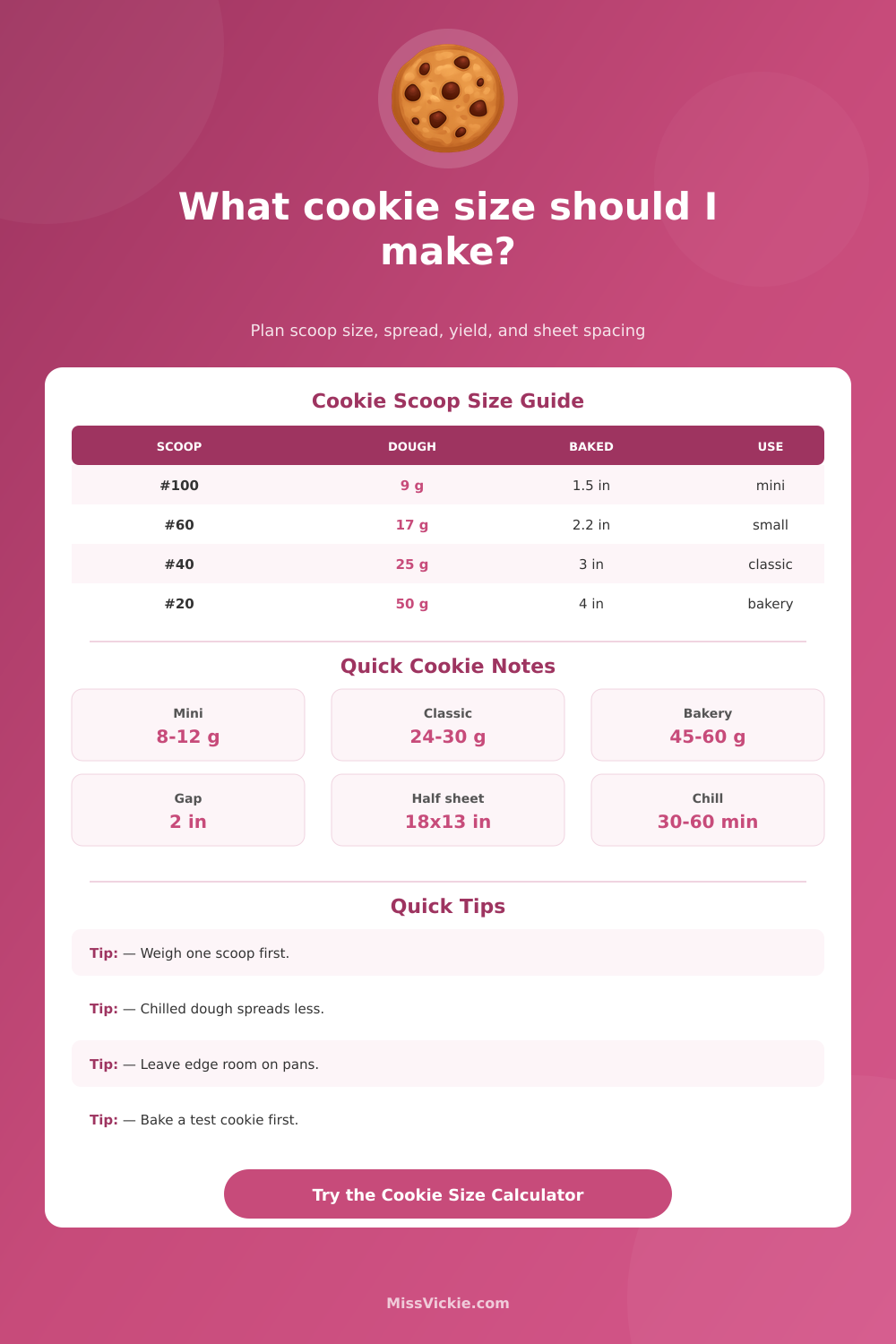
Additionally, it will allow for the baker to avoid running out of dough before baking all of the pans of cookies that are needed. Tables can be used within the recipe to provide information regarding the sizes of the disher and pans. For instance, a #40 scoop will create a cookie that is three inches in size, while a #20 scoop may create a cookie that is four inches in size (after considering spread).
These tables can be used to determine how many cookies of a specific size will fit on a standard half sheet pan. It is important to weigh the dough that is used for each batch of cookies. The number indicated on the disher may not be the weight of the baked cookies.
If the dough is aerated, it may weigh less then the weight indicated on the disher. If the dough is more dense, it may weigh more than the weight indicated on the disher. Additionally, the baker should consider the temperature of the dough.
Warm dough will spread more than dough that is chilled. While the cookie calculator cant measure the temperature of the kitchen in which the cookies are being baked, the user can adjust the chill input for the cookie calculator to ensure that the spread of the cookies accounts for the actual temperature of the dough. When baking cookies, it is important to consider the size of the cookies, the spread of the dough, and the baking pan size and layout.
Each of these factors will impact the baking process. A gap can be left between each cookie that is baked on the baking pan. If a large gap is left between each cookie, it is guaranteed that the cookies will not spread into one another.
However, fewer cookies will be able to be baked on each baking pan. If a small gap is left between each cookie, it is possible to bake as many cookies as possible on each baking pan. However, the spread of each cookie may cause the cookies to touch one another prior to setting.
Considering the size of the cookies that will baked will allow for bakers to know the number of cookies that will be produced, the number of baking pans that will be needed to bake all of the cookies and the size of each cookie after they are baked. The size of the cookie will depend upon the type of dough that is used to bake the cookies, the type of baking pans that are used for baking and the desired outcome of the baking recipe. The baker should of considered these factors early in the process.