☕ How Many Cups of Coffee Can Kill You?
Educational caffeine toxicity calculator — enter your weight and coffee type to see the LD50 threshold
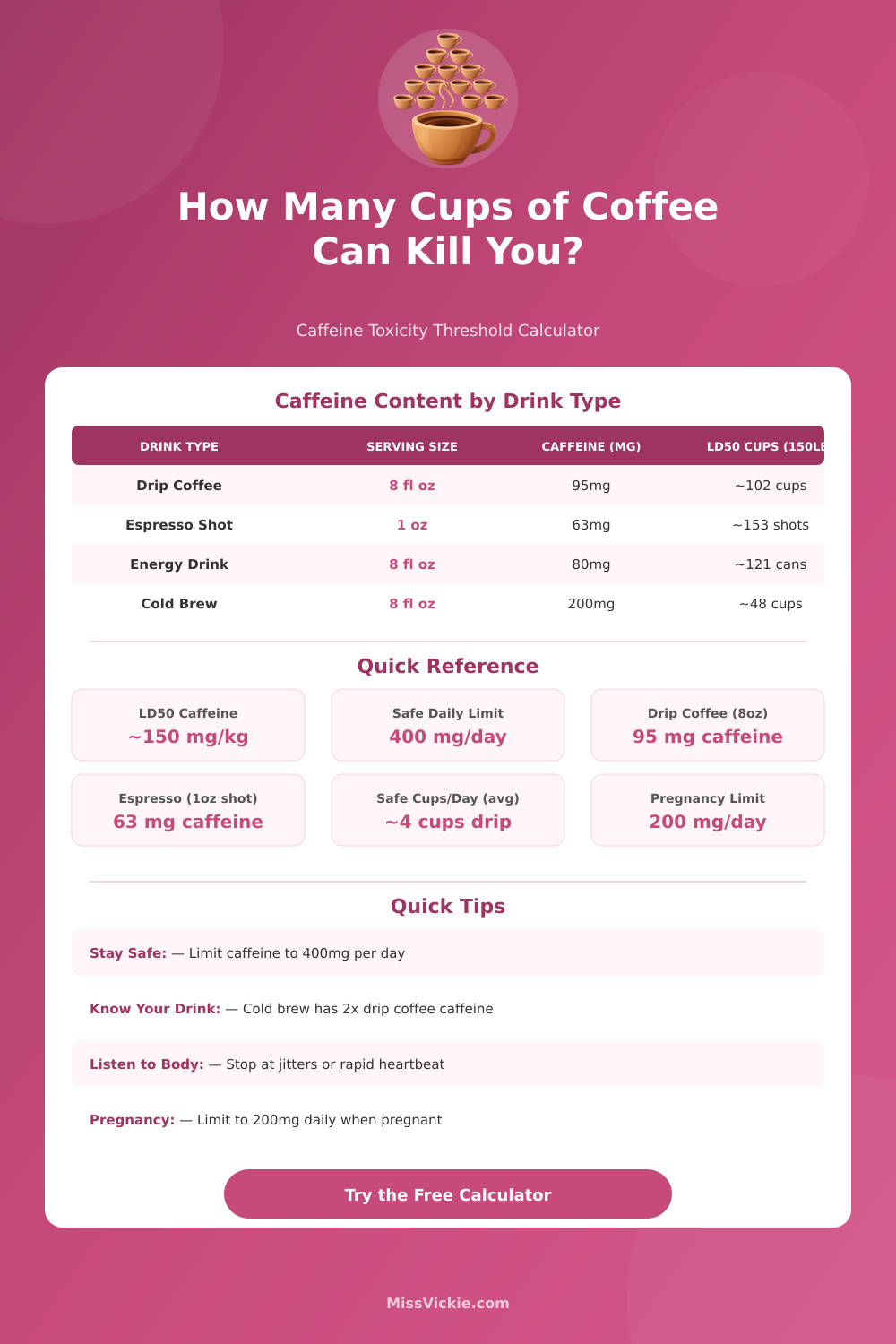
| Drink Type | Serving Size | Caffeine (mg) | Safe Daily Servings |
|---|---|---|---|
| Drip Coffee | 8 fl oz | ~95mg | ~4 cups |
| Espresso Shot | 1 fl oz | ~63mg | ~6 shots |
| Cold Brew Coffee | 8 fl oz | ~200mg | ~2 cups |
| Instant Coffee | 8 fl oz | ~60mg | ~6 cups |
| Energy Drink (small) | 8 fl oz | ~80mg | ~5 cans |
| Energy Drink (large) | 16 fl oz | ~160mg | ~2.5 cans |
| Decaf Coffee | 8 fl oz | ~5mg | ~80 cups |
| Black Tea | 8 fl oz | ~47mg | ~8 cups |
| Green Tea | 8 fl oz | ~28mg | ~14 cups |
| Caffeine Pill | 1 pill | ~200mg | ~2 pills |
| Body Weight | LD50 Dose (mg) | Drip Coffee Cups | Espresso Shots |
|---|---|---|---|
| 100 lbs (45 kg) | ~6,800mg | ~72 cups | ~108 shots |
| 120 lbs (54 kg) | ~8,100mg | ~85 cups | ~129 shots |
| 140 lbs (64 kg) | ~9,600mg | ~101 cups | ~152 shots |
| 160 lbs (73 kg) | ~10,900mg | ~115 cups | ~173 shots |
| 180 lbs (82 kg) | ~12,200mg | ~129 cups | ~194 shots |
| 200 lbs (91 kg) | ~13,600mg | ~143 cups | ~216 shots |
| 220 lbs (100 kg) | ~15,000mg | ~158 cups | ~238 shots |
| 250 lbs (113 kg) | ~17,000mg | ~179 cups | ~270 shots |
| Caffeine Intake | Risk Level | Symptoms | Action |
|---|---|---|---|
| Up to 400mg/day | Safe | Normal alertness, mild diuretic effect | Continue as normal |
| 400–600mg/day | Caution | Jitteriness, insomnia, increased heart rate | Reduce intake |
| 600–1,200mg/day | High Risk | Anxiety, tremors, nausea, palpitations | Stop immediately |
| 1,200mg+ | Dangerous | Seizures, vomiting, rapid heartbeat, confusion | Seek emergency care |
Caffeine is a chemical substance that affect the central nervous system. Caffeine act as a stimulant in the body. Caffeine works by mimic a chemical in the body known as adenosine.
Since caffeine mimic adenosine, it prevents adenosine from sending signal to the brain that indicate to the body that the person should slow down. By blocking adenosine, caffeine allow a person to increase there focus and alert. However, if a person consume too much caffeine, it can cause physical agitation in the body.
Caffeine: How It Affects Your Body and How Much Is Safe
Too much caffeine can cause a racing heart or muscle tension. The amount of caffeine that is safe for an adult human being depend on a variety of different factors. The main factor include the body weight of that person and the type of caffeine drink that they consume.
A caffeine calculator can help to determine how much caffeine is safe for an individual human being. These calculator use the body weight of an individual to calculate how much caffeine is safe for that specific individual. A second factor that these calculators may use is the LD50 metric for toxicity.
The LD50 metric determine the dose of a substance that will kill 50% of the test group. For caffeine, the LD50 is approximately 150 mg of caffeine per kg of body weight for most human being. Not all drink contain the same amount of caffeine.
Therefore, it is essential for individuals to understand the amount of caffeine that is in different type of beverages. For example, drip coffee contains a certain amount of caffeine. However, cold brew coffee contains more caffeine than drip coffee.
Because cold brew coffee is more concentrated, individuals will ingest more caffeine from cold brew coffee than drip coffee. Additionally, the liver metabolize caffeine. The liver can break down approximately 95% of the caffeine in the blood every five hours.
If an individual consume drinks with a high amount of caffeine over a short period of time, that individual may consume caffeine at a faster rate then there liver can process it. Biological factor will affect the way caffeine affects an individual. These biological factor include the genetics of that person and the medications they take.
For example, some human beings possess liver enzyme that allow the body to metabolize caffeine quickly. For others, the liver enzyme allow caffeine to remain in the body for longer periods. Additionally, there are medications that will slow the metabolism of caffeine in the body.
Examples of such medications include birth control pill and antibiotics. Other biological factor include tolerance to caffeine. If an individual drink caffeine every day, their body will develop a tolerance to the chemical.
As a result, they may not feel the effect that caffeine produces; however, caffeine could still be causing toxicity in their body. If an individual consume too much caffeine, it can lead to a caffeine overdose. A caffeine overdose pass through a variety of stage.
The early stage of a caffeine overdose will feature symptom such as jitters and a racing heart. If an individual consume more than 600 mg of caffeine per day, they may begin to feel nauseous and develop tremor. Consuming even more caffeine can result in vomiting, confusion, and even seizure.
If an individual experience any of these symptom, they should of seek medical help for caffeine overdose. Certain group of individuals must limit their caffeine intake to that of others. For example, pregnant individual should limit their caffeine intake to 200 mg per day since caffeine can impact fetal development.
Other individual with heart condition or anxiety may need to limit their caffeine intake since caffeine can increase the heart rate or increase feeling of anxiety. Lastly, children should avoid caffeine altogether since their body are smaller and their developing organ are more sensitive to caffeine. There are some mistake that an individual can avoid when consuming caffeine.
For example, individuals should avoid drinking caffeine on an empty stomach since the body absorb caffeine faster on an empty stomach. An individual should also avoid mixing alcohol and caffeine since it can mask the effect of alcohol and cause the individual to drink too much alcohol. Finally, to avoid the negative effect of caffeine, individuals can space out their caffeine intake or consume caffeine with food to slow the absorption of the chemical in the blood.