🥥 Protein in Coconut Milk Calculator
Calculate exact protein content for any coconut milk type & serving size
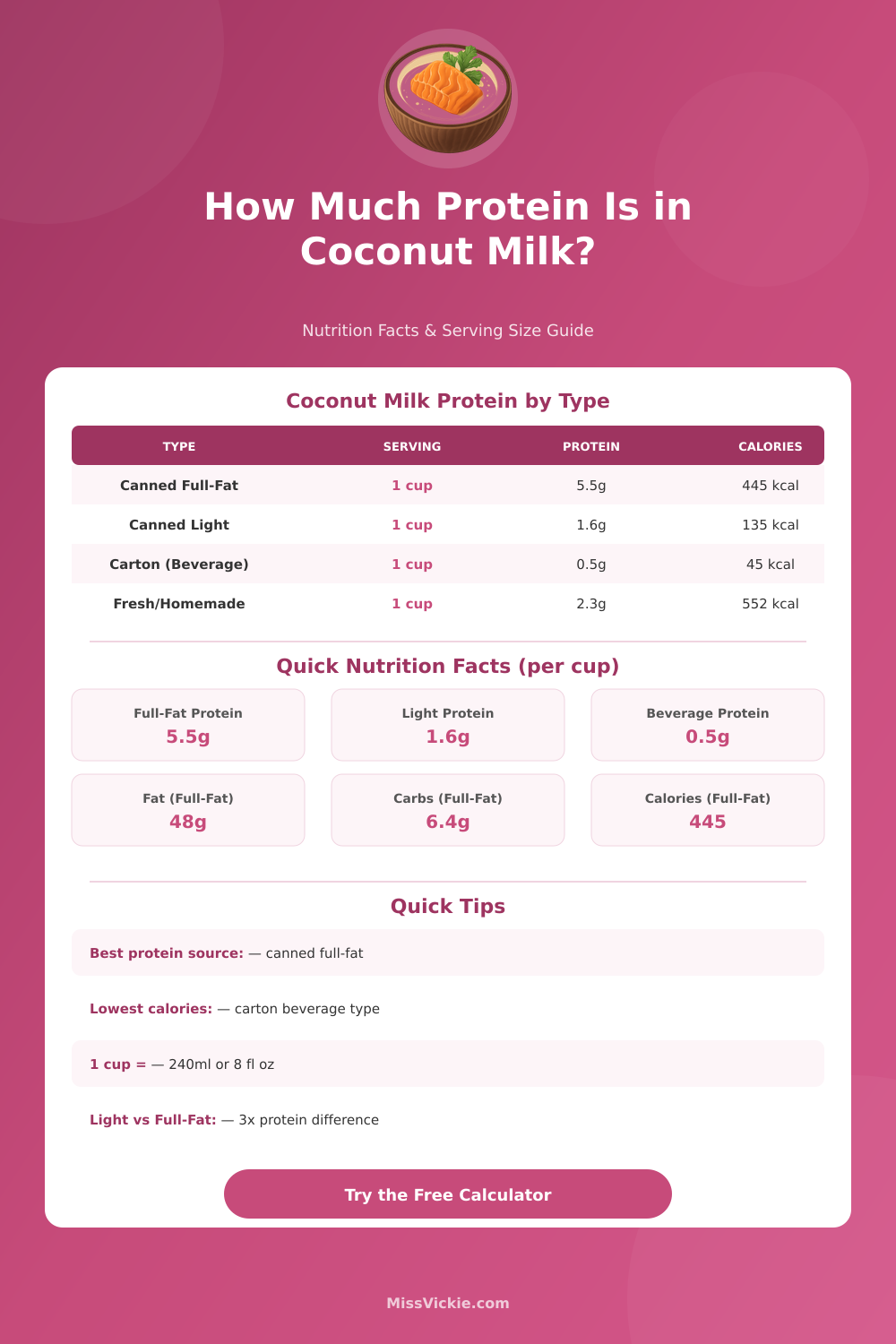
| Type | Protein | Fat | Carbs | Calories | Fiber |
|---|---|---|---|---|---|
| Canned Full-Fat | 5.5g | 48.0g | 6.4g | 445 kcal | 2.7g |
| Canned Light | 1.6g | 14.0g | 3.9g | 135 kcal | 0.0g |
| Carton Beverage | 0.5g | 4.5g | 1.0g | 45 kcal | 0.0g |
| Fresh / Homemade | 2.3g | 57.0g | 13.3g | 552 kcal | 5.3g |
| Coconut Cream | 3.6g | 83.0g | 14.8g | 792 kcal | 0.0g |
| Serving | Imperial | Metric (ml) | Grams (approx) |
|---|---|---|---|
| 1 teaspoon | 1 tsp | 5 ml | 5g |
| 1 tablespoon | 1 tbsp | 15 ml | 15g |
| Quarter cup | ¼ cup | 60 ml | 60g |
| Half cup | ½ cup | 120 ml | 120g |
| One cup | 1 cup | 240 ml | 240g |
| Standard can | ~1.7 cups | 400 ml | 400g |
| Large can | ~2.5 cups | 600 ml | 600g |
| Type | Protein / 100ml | Protein / 200ml | Protein / 400ml (1 can) |
|---|---|---|---|
| Canned Full-Fat | 2.3g | 4.6g | 9.2g |
| Canned Light | 0.7g | 1.4g | 2.7g |
| Carton Beverage | 0.2g | 0.4g | 0.8g |
| Fresh / Homemade | 1.0g | 2.0g | 3.8g |
| Coconut Cream | 1.5g | 3.0g | 6.0g |
Coconut milk is made from liquid that one gets from the grated pulp of mature coconuts. It has a white colour, and the rich taste with thickness comes from the high content of oil. The biggest part of that oil is packed fat.
To prepare it, one cracks the coconut, grates it and digs in chips. Later the meat one presses to pull out the liquid. The first pressure uses a bit of water or even none, what gives tasty and rich result.
Coconut Milk: How It Is Made, Stored and Used
Coconut milk forms a traditional ingredient in the cooking of Southeast Asia, Oceania and South Asia. One finds it commonly in Thai dishes and also in Caribbean recipes. It works well for salty dishes like curries or rice, but also for sweet foods, for instance desserts or blended drinks.
Even in steel-cut oats one can use it, if one swaps water in equal amount of coconut milk.
When one opens a box of coconut milk, usually shows thick deposit on the top and more watery part below. The thick deposit is coconut cream, that carries a lot of fat. The watery part even so is coconut water.
When one mixes them, one receives coconut milk. That separation is fully normal and does not show, that the milk went bad. Cold storage makes the thick part hard, while heat helps it stay liquid.
Fully thick coconut milk best served in the most many cooking times. The thin coconut milk is more diluted, so it has fewer protein, fat and nutrients. When buying preserved coconut milk, choose the unsweetened type, unless the recipe requires sweet.
Ideally, on the label shows only coconut as ingredient.
Coconut milk can replace heavy cream or dairy milk in various recipes. It gives creamy texture and deep taste too foods. Also it works as a dairy-free option for vegan cooking.
For instance, coconut yoghurt one prepares from fermented coconut milk or cream, and commonly one adds good bacteria. In coffee coconut milk also works well, it makes it creamy without dairy.
Homemade coconut milk is a good option. Grated coconut one soaks in water, later press and filter. Bags for nut milk help to filter easily, but a screen with good mesh, covered with cheesecloth or thin fabric, also works.
Fresh coconut milk one keeps in a sealed jar, like a mason jar, in the fridge. Adding toasted coconut flakes or chips is another way, that results in less diluted mix and commonly costs less thanpreserved.
The content of packed fat in coconut milk deserves to mind. That packed fat consists mostly of short and medium chain fatty acids, that the body does not store as fat. Even so, one serving can hold enough packed fat, so that matters to recall.