🥣 MissVickie coconut flour math
Coconut Flour Converter
Convert coconut flour between cups, grams, ounces, tablespoons, teaspoons, and milliliters, then scale recipes with a method-aware view of how this absorbent flour behaves.
Each preset fills a real coconut-flour scenario, from pancake batter to breading and sauces, then runs the conversion automatically.
Choose a coconut flour format, the way you measured it, and the moisture setting in your kitchen so the conversion reflects how this flour actually behaves.
| Format | 1 cup | 1 tbsp | 1 oz equals | Best use |
|---|---|---|---|---|
| Standard coconut flour | 128 g | 8 g | 0.22 cup | Pancakes, muffins |
| Sifted coconut flour | 118 g | 7.4 g | 0.24 cup | Cakes, custards |
| Spoon-filled coconut flour | 124 g | 7.8 g | 0.23 cup | Cookies, bars |
| Lightly packed coconut flour | 136 g | 8.5 g | 0.21 cup | Breading, dough |
| Ultra-fine coconut flour | 132 g | 8.3 g | 0.22 cup | Breads, batters |
| Toasted coconut flour | 122 g | 7.6 g | 0.23 cup | Toppings, bakes |
| Kitchen amount | Tablespoons | Teaspoons | Metric | Imperial |
|---|---|---|---|---|
| 1 teaspoon | 0.33 tbsp | 1 tsp | 3 g | 0.1 oz |
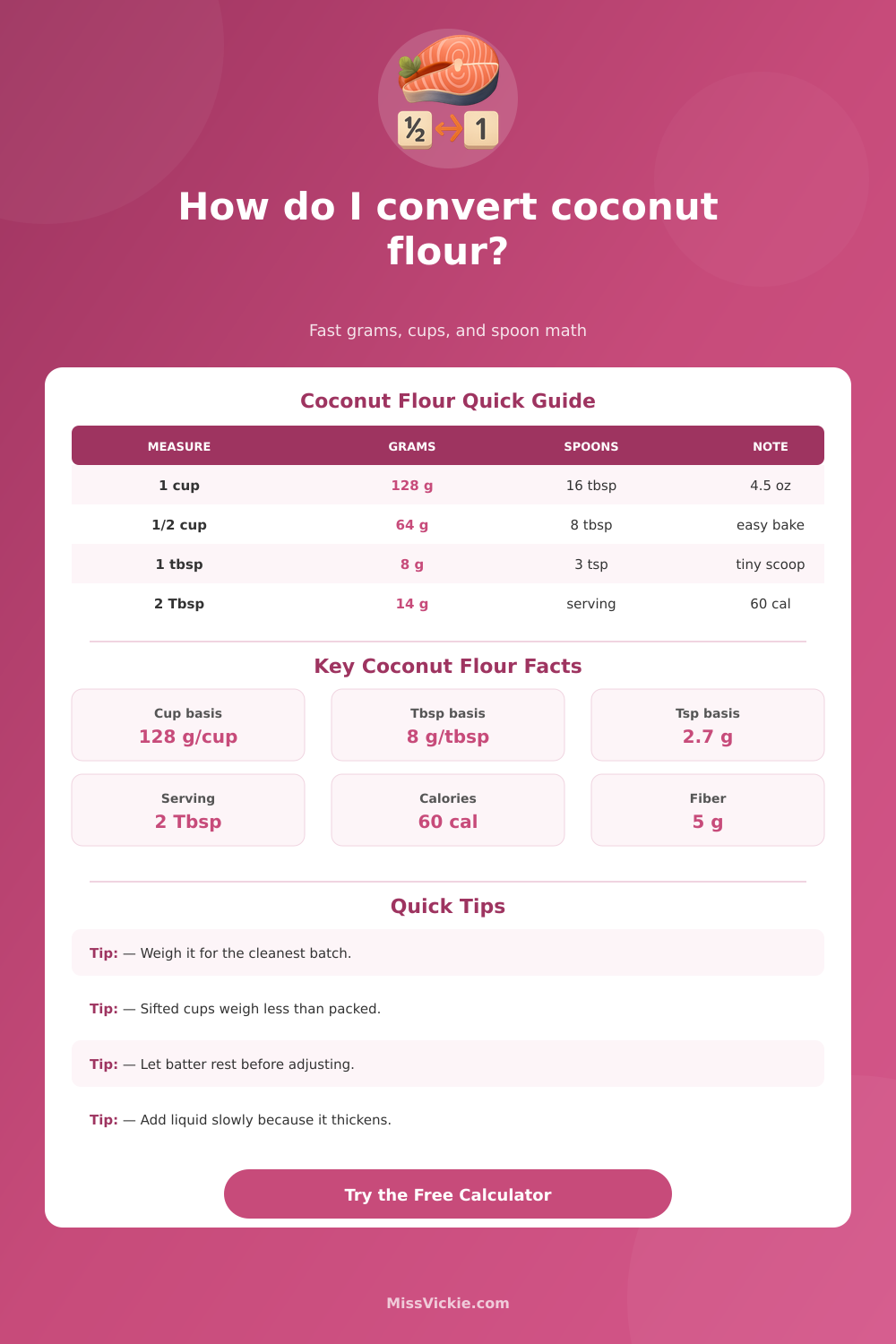
| 1 tablespoon | 1 tbsp | 3 tsp | 8 g | 0.3 oz |
| 1/4 cup | 4 tbsp | 12 tsp | 32 g | 1.1 oz |
| 1/3 cup | 5.33 tbsp | 16 tsp | 43 g | 1.5 oz |
| 1/2 cup | 8 tbsp | 24 tsp | 64 g | 2.3 oz |
| 1 cup | 16 tbsp | 48 tsp | 128 g | 4.5 oz |
| Original | Target | Multiplier | Shortcut | Kitchen note |
|---|---|---|---|---|
| 4 servings | 6 servings | 1.5x | Add half again | Good for weekend breakfast bakes |
| 6 servings | 12 servings | 2x | Double everything | Great for pancakes, muffins, and bars |
| 8 servings | 12 servings | 1.5x | Add half again | Useful for brunch and dessert trays |
| 12 servings | 18 servings | 1.5x | Half plus full | Keep leavening close, then tweak liquid |
| 12 servings | 24 servings | 2x | Double batch | Best time to switch coconut flour to grams |
| 24 pieces | 36 pieces | 1.5x | Half extra dough | Coconut flour needs a little extra moisture |
| Use case | 1/4 cup | 1/2 cup | 3/4 cup | 1 cup |
|---|---|---|---|---|
| Sweet batters | 30 g | 60 g | 90 g | 128 g |
| Extra-light cups | 29 g | 59 g | 88 g | 118 g |
| Spoon-filled cups | 31 g | 62 g | 93 g | 124 g |
| Lightly packed | 34 g | 68 g | 102 g | 136 g |
| Ultra-fine grind | 33 g | 66 g | 99 g | 132 g |
| Toasted finish | 31 g | 61 g | 92 g | 122 g |
Fast for home baking, but coconut flour shifts a lot when the cup is scooped, packed, or sifted.
Best for coconut flour because density changes less once everything is weighed directly.
Useful when a recipe mixes U.S. labels and scale checks, especially for low-carb baking.
Ideal for thickening, coatings, and test batches where a teaspoon or tablespoon matters.
These totals update from the converted amount so you can estimate the impact of scaling a single coconut flour amount in the batch.
Coconut flour is made from dried coconut meat. Unlike wheat flour, coconut flour are highly absorbent. Because of this, if you dont use the correct amount of coconut flour, it can change a texture of the batter.
If you use too much coconut flour, the batter will become crumbly. Additionally, using the wrong ratio of coconut flour to liquid will lead to the batter becoming gluey. To avoid these outcomes, it is essential to use the precise amount of coconut flour for each recipe to ensure that your recipe work correctly.
How to Measure and Use Coconut Flour
Coconut flour change in density when it is packed or sifted. For instance, if someone packs coconut flour, one cup will weigh 128 gram. However, one cup of less compacted coconut flour will weigh less.
This is due to the fiber in the coconut flour that trap air. Because coconut flour changes in weight based on how it is measured, it is essential to use the weight of coconut flour in grams in the recipe rather than using volume measure like cups. Using the weight in grams will allow coconut flour to remain consistenly in the recipe.
To scale a recipe, you must adjust all the ingredients. Recipes using coconut flour has different ratios of coconut flour to liquid. Specifically, coconut flour require more liquid than all-purpose flour.
Additionally, coconut flour requires approximately four times as much eggs and moisture as are needed for all-purpose flour. If you double the recipe using coconut flour, you must adjust the amount of liquid for the recipe. If you do not adjust the amount of liquid, the center of the baked good will remain raw in the middle while the outside burn.
Coconut flour is often used in low-carb diet because of the high amount of fiber and the low amount of carbohydrates in this ingredient. For example, a two-tablespoon serving of coconut flour contain 60 calories and 5 gram of fiber. Because each serving of coconut flour contains 5 grams of fiber, the product will help keep an individual’s blood sugar steadier.
Additionally, coconut flour contains 14 grams of fat per 100 grams of the ingredient and 21 gram of protein per 100 grams of coconut flour. These two components of coconut flour will help an individual feel full after eating the food product. Common mistakes when using coconut flour include adding all of the liquid to the coconut flour at once.
However, it is important to add the liquid and allow the coconut flour to sit for five minute to allow the ingredient to absorb the liquid. Additionally, the weight of the coconut flour changes with the humidity of the air and how it is prepare. For instance, toasted coconut flour will weigh less then coconut flour that is not toasted.
Specifically, toasted coconut flour will weigh approximately 122 grams per cup instead of 128 grams. Depending on the recipe, there is several measuring tools to use when measuring coconut flour. You can use a kitchen scale to measure the amount of coconut flour in grams.
Additionally, measuring spoon can be used to measure smaller amounts of coconut flour. For instance, one teaspoon contain 3 grams of coconut flour. Additionally, one quarter-cup of coconut flour contains 32 grams of coconut flour.
Measuring cups can also be used for speed, but they are less accurate in measuring the ingredient. Using these measuring tools and understanding how much coconut flour absorbs how much liquid for the recipe will allow an individual to ensure the success of their coconut flour recipe.