Serving volume, banana, yogurt, protein, cocoa intensity, bitterness, sweetener, liquid ratio, blender loss, and caffeine
Cocoa Powder in Smoothie Calculator
Estimate how much cocoa powder belongs in a smoothie after serving size, banana ripeness, yogurt tang, protein powder cocoa, desired chocolate intensity, bitterness tolerance, sweetener, liquid ratio, blender loss, and caffeine.
Choose a smoothie style, then fine-tune the serving volume, base ingredients, cocoa intensity, bitterness, sweetener, liquid ratio, and blender loss.
Smoothie Breakdown
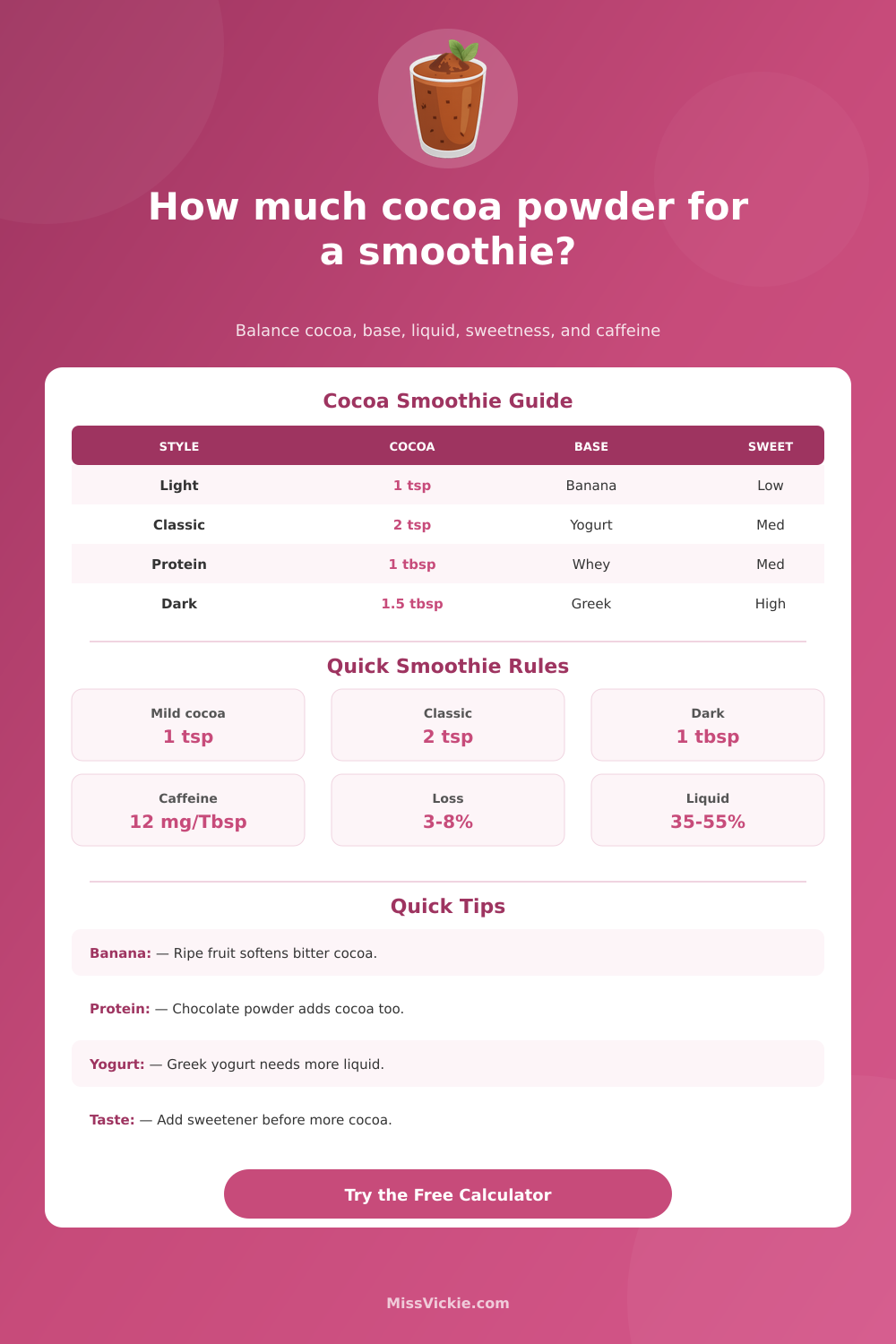
| Intensity | Cocoa per 12 fl oz | Approx grams | Flavor result | Best base |
|---|---|---|---|---|
| Mild background chocolate | 1 to 1 1/2 teaspoons | 1.8 to 2.7 g | Light chocolate note without bitterness | Banana, vanilla yogurt, almond milk |
| Classic smoothie chocolate | 2 teaspoons | 3.5 g | Clearly chocolate but still breakfast-friendly | Banana, milk, yogurt, whey |
| Rich cocoa flavor | 1 tablespoon | 5.3 g | Deep cocoa with noticeable dryness | Greek yogurt, dates, oat milk |
| Dark chocolate smoothie | 1 1/3 tablespoons | 7.1 g | Adult dark chocolate taste | Ripe banana, coffee, sweet yogurt |
| Dessert shake style | 1 1/2 tablespoons | 8.0 g | Thick, dark, milkshake-like cocoa | Frozen banana, milk, sweetener |
Unsweetened cocoa powder is strong in cold drinks because sugar dissolves slowly and fat is low; start lower if your blender base is tart or unsweetened.
| Base ingredient | How it affects cocoa | Liquid adjustment | Sweetness effect | Calculator factor |
|---|---|---|---|---|
| Ripe banana | Softens bitterness and adds body | May reduce liquid slightly | High natural sweetness | Reduces cocoa harshness score |
| Plain Greek yogurt | Makes cocoa taste tangier and drier | Add 1 to 3 fl oz for pourability | Needs extra sweetener | Raises bitterness and liquid need |
| Chocolate protein powder | Contributes cocoa-like flavor already | Needs more liquid, especially casein | Often pre-sweetened | Subtracts from cocoa target |
| Oat milk | Rounds cocoa and gives mild sweetness | Works in classic or thin ratios | Moderate sweetness | Lowers sweetener guidance |
| Cold brew coffee | Makes cocoa darker and more bitter | Counts as liquid | No sweetness unless added | Adds caffeine and bitterness |
| Cocoa or liquid | Kitchen measure | Estimated caffeine | Bitterness level | Smoothie note |
|---|---|---|---|---|
| Natural unsweetened cocoa | 1 tablespoon, about 5.3 g | About 12 mg | Medium-high | Classic brownie-like flavor |
| Dutch-process cocoa | 1 tablespoon, about 5.1 g | About 10 mg | Medium | Smoother and less sharp in cold milk |
| Raw cacao powder | 1 tablespoon, about 5.5 g | About 13 mg | High | Fruitier, can taste more tannic |
| Sweetened drinking cocoa | 1 tablespoon, about 8 g | About 4 mg | Low | Mostly sugar, needs less added sweetener |
| Cold brew coffee | 8 fl oz | About 95 mg | Medium | Use less cocoa for a mocha smoothie |
A balanced starting point for one ripe banana, milk, and yogurt.
Use less cocoa when the protein powder is already chocolate flavored.
Classic chocolate level for two 12 fl oz servings before blender loss.
Add enough liquid because cocoa and protein thicken overnight.
Cocoa powder is one of an ways to add chocolate flavor to a smoothie. Using cocoa powder allow you to add chocolate flavor to a smoothie without adding syrup or sugar. The amount of cocoa powder you use is important to the flavor and texture of the smoothie.
If you add too much cocoa powder to a smoothie, the smoothie may become bitter or thick to pour. Because people often guess at how much cocoa powder to use in a smoothie, many smoothie is made with cocoa powder require several adjustments to reach the desired flavor. To help smoothie makers avoid these adjustments, a cocoa powder calculator can be used to determine the proper amount of cocoa powder to use in a smoothie.
How to Use a Cocoa Powder Calculator for Smoothies
The cocoa powder calculator require the user to provide several inputs to provide an accurate calculation of the proper amount of cocoa powder to use in a smoothie. These inputs include the number of servings of smoothie to make, the total volume of smoothie to make, the number of banana to use, the type of yogurt to use, the amount of protein powder to use, the desired strength of chocolate flavor in the smoothie, and the bitterness of the smoothie. The type of yogurt impacts the flavor of the smoothie.
Greek yogurt contain more protein than other yogurts, and this protein can provide a tangy flavor to the smoothie. Because of the tangy flavor of Greek yogurt, the cocoa powder calculator will reduce the amount of cocoa powder to balance the smoothie. If chocolate protein powder is used, the protein powder will add its own chocolate flavor.
Therefore, the cocoa powder calculator will reduce the amount of cocoa powder that must be added to the smoothie. Bitterness tolerance is a setting that many smoothie makers tend to ignore when making a smoothie. However, bitterness is an important aspect of flavor to consider when creating a smoothie.
Using a low bitterness setting will reduce the amount of cocoa powder and increase the amount of sweetener that must be added to the smoothie. A high bitterness setting will allow smoothie makers more cocoa powder at the expense of sweetener for those who enjoy the bitter flavor of dark chocolate. The other setting that must be considered is the type of liquid to use in a smoothie.
A thick smoothie that can be easily scooped with a spoon will have more liquid than a smoothie that is thickened with cocoa powder and protein powder. A thinner smoothie that can be easily poured through a straw will contain less liquid, and a less thick smoothie will be created when using this setting. This setting is helpful for people who would like a thinner smoothie that do not require scooping with a spoon.
Another ingredient that must be considered when using a cocoa powder calculator is the caffeine content of the smoothie. Cocoa powder contain a small amount of caffeine. Additionally, cold brew contains caffeine.
If cold brew is used in place of milk, the amount of caffeine in the smoothie will increase. The cocoa powder calculator will calculate the amount of caffeine that will come from the cocoa powder and the liquid to be used to help smoothie makers determine the total amount of caffeine that will be contained in the smoothie prior to blending it. Some smoothies will contain more caffeine than others because of the different types of powders or liquids used.
Because smoothie makers will lose some of the smoothie when pouring it into a blender, it is important to account for this when using the cocoa powder calculator. A percentage of the amount of cocoa powder and the amount of liquid will be added to account for the loss of smoothie to the blender. Smoothie makers must also take into account the texture of a smoothie and how long the smoothie will be sitting.
Smoothies made in advance for meal prep will thicken more then smoothies that are blended and consumed immediately. If a smoothie contains high amount of protein and cocoa powder, more liquid must be added to balance the texture of the smoothie. Bananas that are frozen will behave differently than fresh bananas.
Frozen bananas will add body to a smoothie but contain less sweetness than fresh bananas. To account for this difference in texture, the cocoa powder calculator has a setting to account for the ripeness of the bananas to use in the smoothie. The smoothie also contains a table that demonstrates different levels of cocoa powder and how much smoothie will result.
Additionally, the table demonstrate the levels of caffeine that will be present in the smoothie based on the type of cocoa powder used. These tables allow smoothie makers to compare the cocoa powder calculator to a standard smoothie and understand small changes in the recipe. These tables also show smoothie makers the differences between sweetened drinking cocoa and raw cacao powder.
As with all baking products, cocoa powder can behave differently in smoothies than it does in baked goods. When used in smoothies, cocoa powder does not contain the fat that would normally mask the bitter taste of the cocoa powder. Additionally, the sugar does not readily dissolve into the smoothie when blended.
To avoid an unpleasant flavor when drinking a smoothie with cocoa powder, smoothie makers should start with a low setting for cocoa powder. Using too much cocoa powder at the start of blending a smoothie can lead to a bitterness that is difficultly to balance with the addition of sweeteners. After using the cocoa powder calculator a few times, it can become a quick and easy way for smoothie makers to ensure that the smoothie contains the amount of cocoa powder needed to achieve the desired flavor.
The goal in using the cocoa powder calculator is to ensure that each smoothie has the proper amount of chocolate flavor, sweetness, and texture to the ingredients used to prepare the smoothie.