🧁 Cocoa Powder for Muffins Calculator
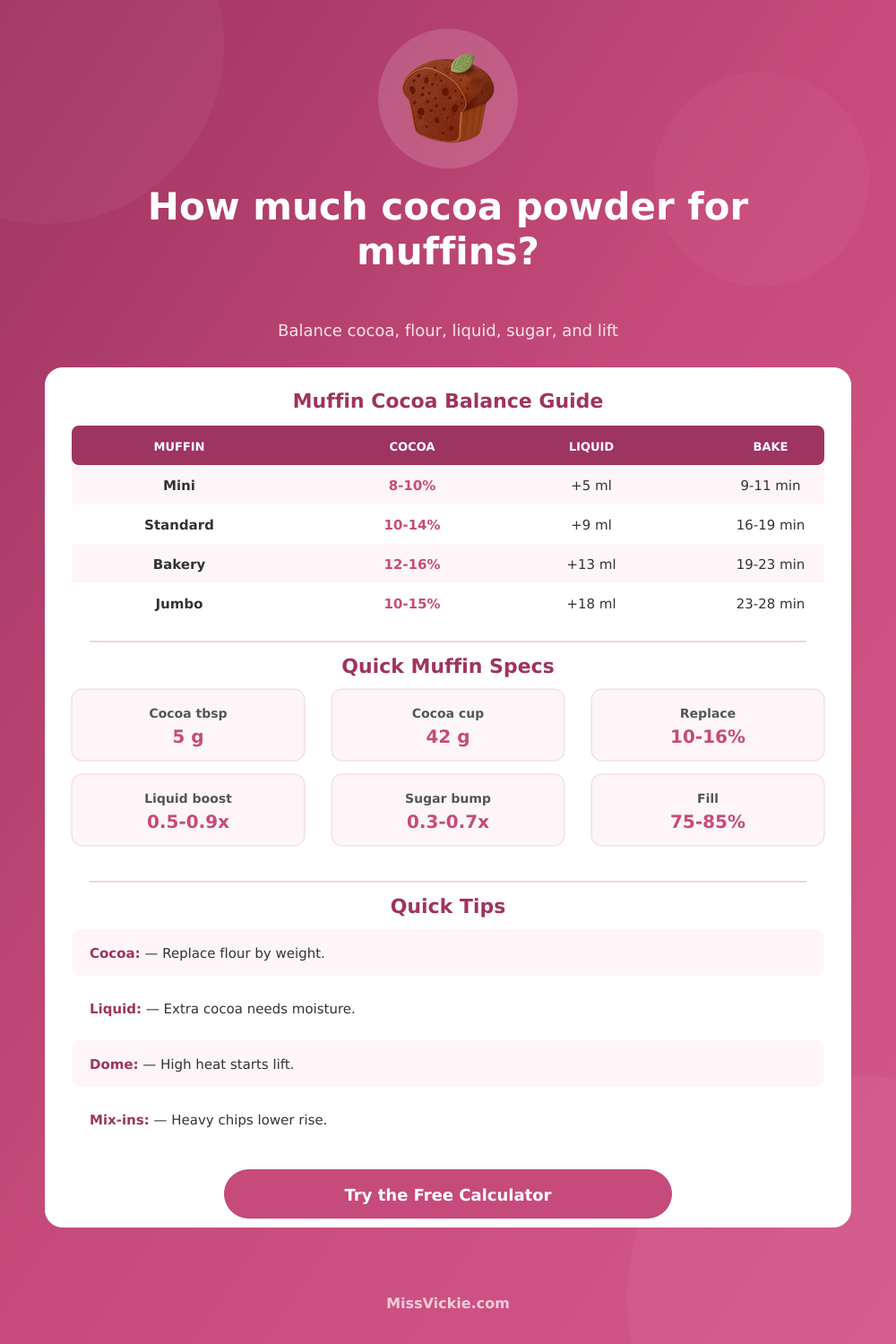
Balance chocolate muffin batter by muffin count, flour weight, cocoa replacement, extra liquid, sugar, leavening, mix-ins, dome height, and bake moisture.
Choose a common muffin batch, then fine-tune the cocoa percentage, hydration, fill level, and add-ins for your pan.
Cocoa muffin formula breakdown
Light cocoa flavor, soft crumb, and less sugar adjustment.
Balanced color and flavor for standard muffin tins.
Needs more liquid, sugar support, and enough leavening.
Keep chips moderate so domes do not sink.
Cocoa style adjustments
| Cocoa type | Hydration | Sugar need | Leavening note |
|---|---|---|---|
| Natural cocoa | Moderate | Medium | Pairs with a little baking soda |
| Dutch-process cocoa | Moderate-high | Medium-low | Usually relies on baking powder |
| Black cocoa blend | High | High | Use with regular cocoa for better crumb |
| High-fat alkalized | Moderate | Low | Richer, softer, and darker batter |
| Cocoa plus espresso | High | Medium | Bloom cocoa in hot coffee when possible |
Muffin size baking guide
| Size | Flour each | Fill guide | Bake guide |
|---|---|---|---|
| Mini | 6-9 g | 70-80% | 9-11 minutes |
| Standard | 16-23 g | 75-85% | 16-19 minutes |
| Bakery cup | 32-45 g | 80-90% | 19-23 minutes |
| Jumbo | 42-60 g | 75-85% | 23-28 minutes |
Liquid boost reference
| Cocoa added | Lean batter | Oil batter | Yogurt batter |
|---|---|---|---|
| 15 g | 12 ml | 9 ml | 7 ml |
| 25 g | 20 ml | 15 ml | 12 ml |
| 40 g | 32 ml | 24 ml | 19 ml |
| 60 g | 48 ml | 36 ml | 29 ml |
Common muffin batches
| Batch | Flour | Cocoa at 12% | Extra liquid |
|---|---|---|---|
| 6 standard | 125 g | 15 g | 8-12 ml |
| 12 standard | 250 g | 30 g | 16-24 ml |
| 24 mini | 180 g | 22 g | 12-18 ml |
| 6 jumbo | 300 g | 36 g | 19-29 ml |
Kitchen estimates vary by cocoa brand, flour protein, pan color, oven calibration, and mixing style. Use the calculator as a batter-balancing guide, then adjust after your first test batch.
To bake chocolate muffins, you need to understanding how cocoa powder will affect the batter. Cocoa powder will affect the batter because cocoa powder is an dry ingredient that can replace some of the flour in the batter. By using cocoa powder as a replacement for some of the flour in the recipe, the cocoa powder will change the structure of the muffin and change the way the moisture interact with the cocoa powder in the batter.
If you use cocoa powder but do not increase the amount of liquid in the batter, the resulting chocolate muffins will be more dry and bitter. To compensate for the fact that cocoa powder absorbs moisture, you must calculate the correct amount of liquids to add to the batter along with the cocoa powder. Additionally, you must also consider the amount of sugars to use in the muffin recipe.
How Cocoa Powder Affects Chocolate Muffins
Because cocoa powder has a bitter taste, the cocoa powder require more sugar to balance out the bitterness of the cocoa powder. If you use a high percentage of cocoa powder but do not increase the amount of sugar in the recipe, the resulting chocolate muffins will have a bitter taste. Furthermore, you must also take into consideration the type of cocoa powder that you will use in the recipe.
Natural cocoa powder is acidic while Dutch-process cocoa powder is not acidic. Natural cocoa powder recipes requires baking soda to activate the baking powder to make the muffins rise, but Dutch-process cocoa powder recipes usually require baking powder to make the muffins rise. If you use the wrong type of leavening agent for the type of cocoa powder that you are using, your chocolate muffins will not rise proper and may have a gummy texture.
The size of the muffin tin can affect how the chocolate muffins bake. The size of the muffin tin will affect how much batter you should use for each cup of the muffin tin. Mini muffin tins has a greater amount of surface area for the muffin to bake than jumbo muffins, so the percentage of cocoa in the recipe will impact mini muffins different than it will impact jumbo muffins.
Additionally, if you use too much batter for each jumbo muffin cup, the muffin may collapse due to the weight of the batter. You can use a calculator to determine the appropriate amount of batter for each cup of the muffin tin. The dome score of the muffin is determined by the amount of batter that are used for each cup of muffin tin.
A high dome score indicates that the muffins will have a rounded top once they are baked, while a low dome score will result in muffins with a flat top. Other ingredients that may impact the baking of chocolate muffins include any type of mix-ins. Any type of chocolate chips or nuts can add to the weight of the muffin batter.
The more chocolate chips that you add to the batter, the more the batter may weigh down and prevent the muffins from rising as they should. Consequently, if you use alot of chocolate chips you may have to adjust the recipe to reduce the amount of chips you use or you may have to accept that the chocolate muffins will have a flat top. Additionally, the type of fat that is used can impact the amount of moisture that is contained in the muffins.
Using oil or melted butter will add more moisture to the muffins than if milk were used. In recipes that use yogurt or bananas the moisture content of those ingredients must also be accounted for in the recipe. Many people make mistake when baking chocolate muffins because they treat cocoa powder as if it is just an ingredient that adds flavor to the muffins rather than an ingredient that replace some of the flour in the recipe.
If people treat cocoa powder as an ingredient that adds flavor, they will not change the amount of liquid in the recipe. If they do not change the amount of liquid in the recipe, the resulting muffins will be dry. Before you begin to make the chocolate muffins, you should of calculate the amount of each ingredient that is needed so as to avoid these type of mistakes.
Once you have a thorough understanding of how cocoa powder, liquid, sugar, and leavening agents interact in the recipe, you can make choice regarding the ingredients when you begin to bake your chocolate muffins.