Cocoa Powder for Cupcakes Calculator
Estimate cocoa powder for cupcake batter, then balance flour replacement, extra liquid, leavening direction, chocolate intensity, fat level, pan size, and oven temperature.
Load a cupcake scenario with count, batter weight, cocoa type, chocolate level, fat style, pan size, and bake temperature.
Cupcake Cocoa Breakdown
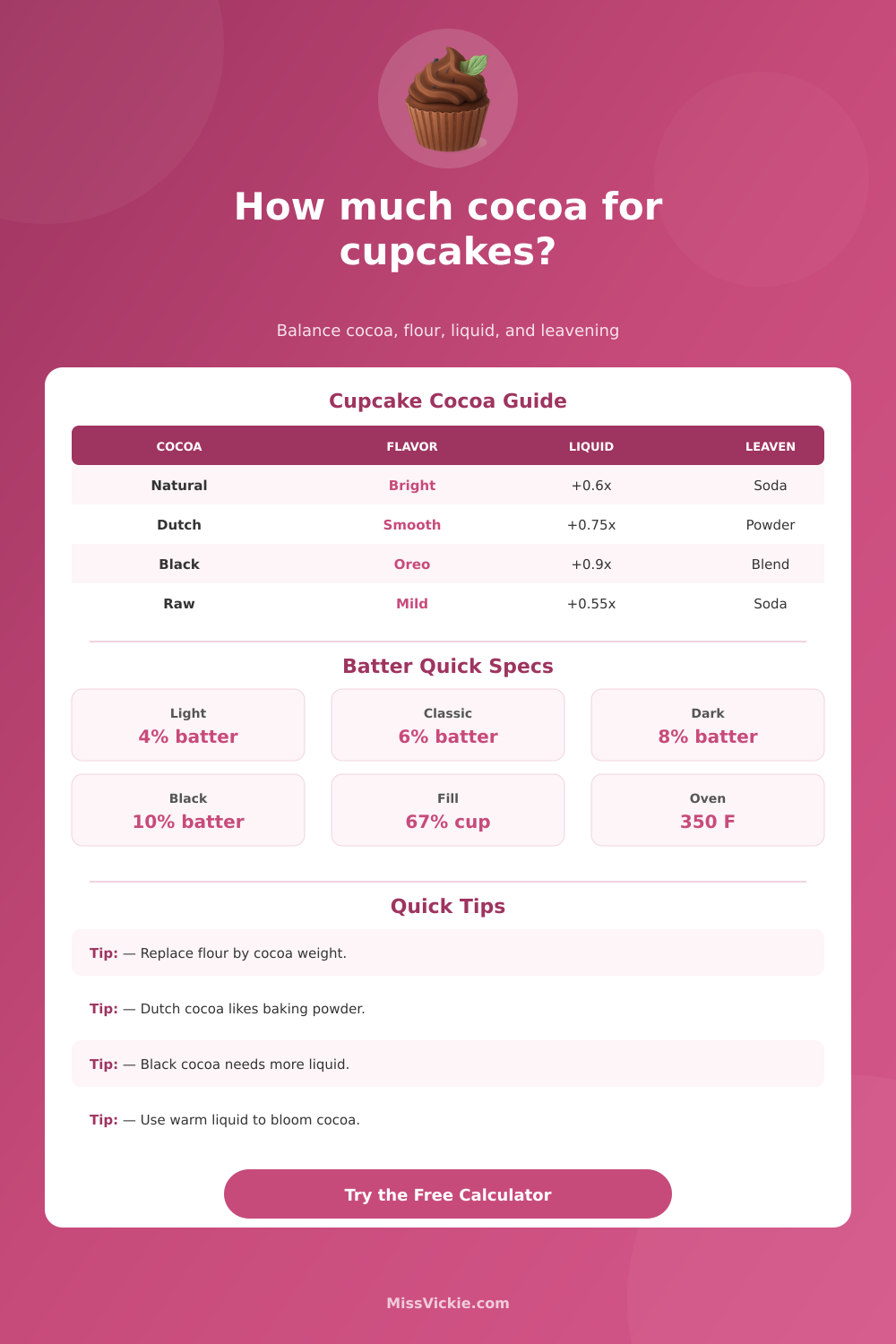
| Cocoa Type | Best Cupcake Use | Liquid Add Per 10 g Cocoa | Leavening Direction |
|---|---|---|---|
| Natural cocoa powder | Classic bright chocolate flavor with reddish-brown crumb | 6 ml | Works well with baking soda because natural cocoa is acidic |
| Dutch-process cocoa powder | Smoother, darker chocolate cupcakes with less sharpness | 7.5 ml | Usually prefers baking powder or a balanced powder/soda blend |
| Black cocoa powder | Deep color and sandwich-cookie style flavor in small portions | 9 ml | Blend with regular cocoa and rely more on baking powder |
| Raw cacao powder | Milder chocolate notes in tender batters and small batches | 5.5 ml | Treat close to natural cocoa, then taste for bitterness |
| Chocolate Intensity | Cocoa As Batter Percent | Flour Replacement | Cupcake Texture Goal |
|---|---|---|---|
| Light cocoa note | 4% | Replace all or 85% of cocoa weight | Vanilla-style cupcake with a gentle chocolate tint |
| Classic chocolate cupcake | 6% | Replace cocoa weight 1:1 with flour | Balanced crumb, clear chocolate flavor, easy doming |
| Dark bakery chocolate | 8% | Replace 1:1 and add liquid gradually | Moist bakery cupcake with a darker color |
| Fudge-style deep chocolate | 9% | Replace 1:1, bloom cocoa, watch batter thickness | Richer crumb that may bake slightly flatter |
| Pan Size | Typical Batter Each | Fill Target | Cocoa Baking Note |
|---|---|---|---|
| Mini cupcake pan | 18 to 24 g | 62% to 66% | Dark cocoa can dry quickly, so check early |
| Standard cupcake pan | 45 to 55 g | 65% to 70% | Works well around 350°F for most cocoa batters |
| Tall bakery liner | 60 to 75 g | 68% to 72% | Use enough liquid so cocoa does not tighten the crumb |
| Jumbo cupcake pan | 95 to 125 g | 62% to 68% | Lower heat helps centers bake before edges dry |
Add cocoa powder to cupcake batter and everything else about the recipe has to change. How much flour can stays in the bowl? How much water will the batter need? Will the rising agents produce a proper dome? These is things most bakers discover by trial and error. Many times they will end up with a flat batch (or one that’s too dry).
The type of Cocoa: Because natural cocoa is still acidic, it reacts well to baking soda; the crumb tends to lean brighter. Dutch-process cocoa has been neutralized, meaning that you’ll need baking powder not soda, resulting in a darker, smoother crumb. And black cocoa? It is even darker then regular cocoa, like sandwich cookie dark, and tighter. So you has to use more liquid or it will be tough.
How to Change a Recipe for Chocolate Cupcakes
Once you choose your cocoa strength and type, the calculator takes care of the math. You won’t have to guess how much liquid to add or how much flour to take away.
Cocoa also imparts structure (not just taste), so we need some way to replace the flour. Because cocoa absorbs liquid, remove the same weight in flour as the base recipe to keep the batter weights equal. You can tweak the percentage to get the dome height you want or to make the texture slightly more or less cakey. That’s handy when filling jumbo vs. Regular-sized cupcake liner.
Same goes for adjusting liquids. If you bloom your cocoa, it will soak up even more water. The math accounts for that later. This ensures you don’t end up with pasty batter while mixing so it remains pourable.
The same applies to leaveners. Typically, natural/raw cacao needs more baking soda; black/dutch cocoa depends on baking powder. Rather than specifying a set quantity the result suggests tilting one way or another. Why? Because other factors come into play, not just mixology but other ingredients as well. And that flexibility make it a useful tool in many recipes. It stops you from committing to a specific formula.
Cocoa bakes faster then vanilla batter (and darkens faster). Moisture escapes fast from smaller cupcakes. So higher heat might work for a standard pan, but it risks making mini cupcakes taste chalky since they lose moisture so quickly. Bigger cups require more gentle heat to ensure they’re done by the time their sides seal shut. This shows up in the final recommendations and in the clues provided by the calculator.
It is no surprise when you pull that initial tray from the oven. But it’s when you begin tinkering that the real value becomes apparent. When you know the relationship between liquid increase, flour reduction, and cocoa percentage, then you’re able to turn your vanilla into chocolate without starting over. You should of known that. The relationships become clear.
This tool prevents you from having to do trial-and-error each time you alter your batch size or type of cocoa. It helps when you are working with different than usual ingredients. Actualy, it is most helpful for moddern recipes.