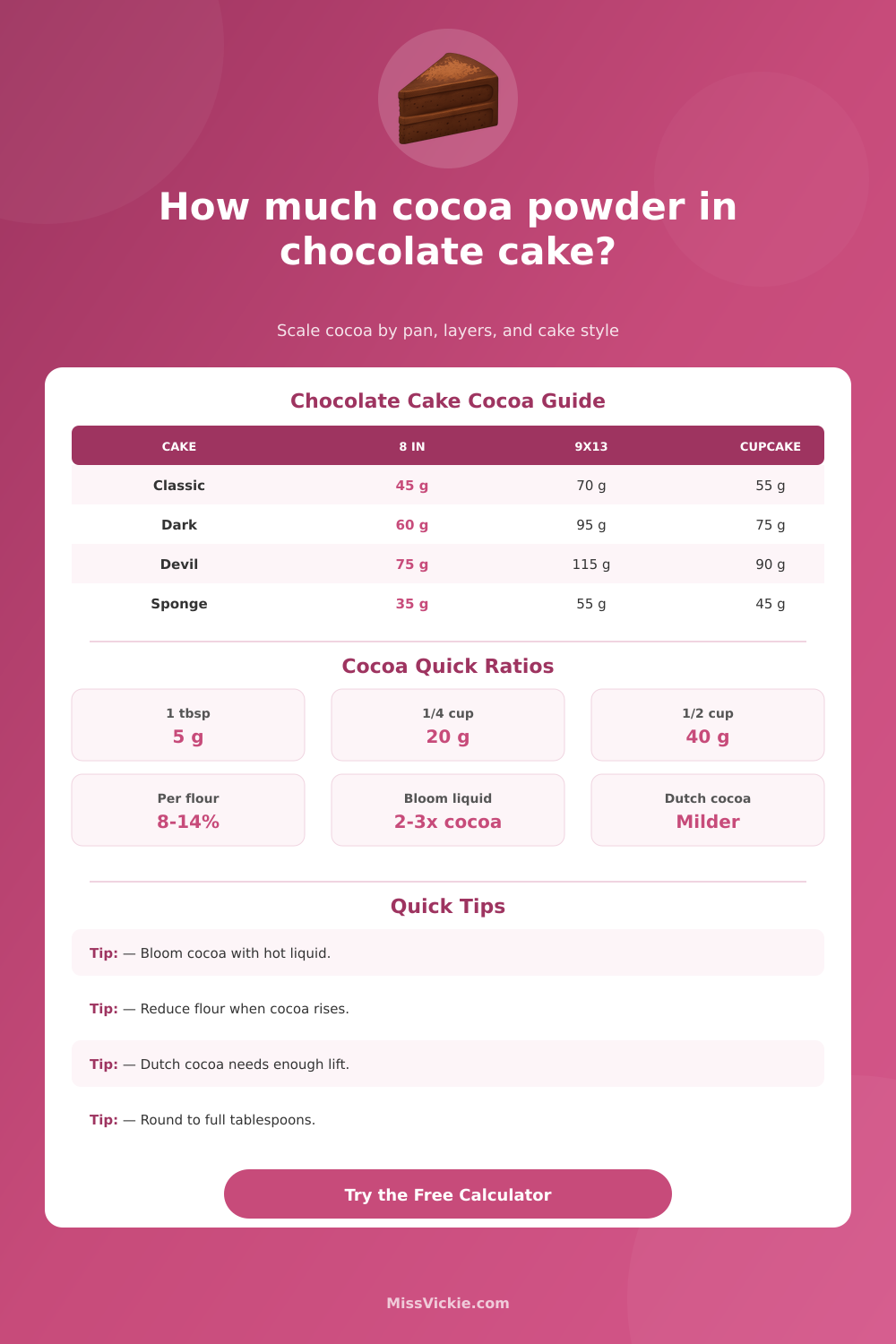
How Much Cocoa Powder in Chocolate Cake?
Estimate cocoa powder for chocolate cake by pan area, layers, cake style, cocoa type, sweetness, flour balance, fat type, and bloom liquid so the batter stays rich without turning dry.
Choose a starting point, then adjust the pan, layer count, cocoa style, and batter balance to match your recipe.
Chocolate Cake Cocoa Breakdown
| Cake Style | Cocoa Per 8-Inch Layer | Best Cocoa Type | Moisture Note |
|---|---|---|---|
| Classic chocolate layer | 45 to 55 g | Natural or mixed | Use warm milk or coffee to bloom. |
| Dark chocolate cake | 60 to 75 g | Dutch-process | Add enough liquid so the crumb stays soft. |
| Devil's food cake | 70 to 85 g | Dutch or black blend | Oil and buttermilk keep the cocoa from drying. |
| Chocolate sponge | 30 to 42 g | Natural cocoa | Keep cocoa lower so the foam structure holds. |
| Red velvet | 12 to 25 g | Natural cocoa | Cocoa is a background flavor, not the main note. |
| Cocoa Type | Flavor Strength | Typical 1 Cup Weight | Best Use |
|---|---|---|---|
| Natural unsweetened | Bright and acidic | 80 g | Classic cake with baking soda. |
| Dutch-process | Smooth and round | 82 g | Dark cakes with balanced bitterness. |
| Black cocoa blend | Very dark and mild | 78 g | Use as part of the cocoa, not all of it. |
| Raw cacao powder | Sharp and fruity | 75 g | Use a slightly lighter hand. |
| High-fat cocoa | Rich and plush | 86 g | Good for moist layer cakes and bundts. |
| Pan or Batch | Area Factor | Classic Cocoa | Deep Cocoa |
|---|---|---|---|
| 6-inch round layer | 0.56x | 25 to 31 g | 36 to 42 g |
| 8-inch round layer | 1.00x | 45 to 55 g | 65 to 75 g |
| 9-inch round layer | 1.27x | 57 to 70 g | 82 to 95 g |
| 9x13-inch sheet | 2.33x | 105 to 128 g | 150 to 175 g |
| 24 cupcakes | 1.85x | 83 to 102 g | 120 to 140 g |
| Adjustment | Use When | Cocoa Change | Recipe Balance |
|---|---|---|---|
| Light cocoa note | Chocolate is secondary | Multiply by 0.82 | Keep flour nearly unchanged. |
| Deep chocolate | Layer cake needs stronger flavor | Multiply by 1.18 | Swap some flour for cocoa. |
| Extra dark | Bittersweet cake or ganache filling | Multiply by 1.35 | Add liquid and check sugar. |
| Black cocoa blend | Oreo-style color | Use 15% to 35% of cocoa | Pair with Dutch or natural cocoa. |
Works well with baking soda, but tastes sharper if overused.
Gives darker color and mellow flavor, often with baking powder support.
Deepens color fast, so blend it with regular cocoa for cake softness.
Adds richness and helps cakes feel less dry at higher cocoa levels.
The amount of cocoa powder that is used in a chocolate cake can have an impact upon the color of that cake, as well as the texture of that cake. The cocoa powder isnt a substitute for the flour that is used in the recipe, since the cocoa powder dont contain the same amount of structure that the flour provide to the cake; the cocoa powder contains a high amount of starch. Furthermore, the starch contained within the cocoa powder will absorb some of the liquid from the other dry ingredient within the cake recipe.
Thus, if more cocoa powder is added to the recipe, more fat and liquid will have to be added to the batter to ensure that the batter is wet enough to properly cook the cake. The type of cocoa powder that is used in the chocolate cake will also have an impact upon the reaction of that cocoa powder to the other ingredient in the cake. If natural cocoa powder is used, the cocoa powder has not been treated with alkali and will react with the baking soda to enable the cake to rise.
How to Use Cocoa Powder in Cake
However, if too much of the natural cocoa powder are used, the cocoa powder may impart a tangy taste to the cake. Dutch process cocoa powder has been neutralized with alkali. In this case, baking powder must be used to enable the cake to rise.
Black cocoa powder is also neutralized with alkali but is added to recipes primarily to provide a dark color to the baked goods. The calculator allows for the type of cocoa powder to be selected so that the calculation of the amount of cocoa powder needed for the cake will correspond to the type of cocoa powder to be used in the cake. The size of the pan in which the cake will be cooked will also impact the amount of cocoa powder that is needed in the recipe.
The larger the surface area of the pan in which the cake will be baked, the more cocoa powder will be required per bite of the cake. For instance, a large sheet pan will hold more batter than a small round pan. Thus, you will have to adjust the amount of cocoa powder according to the size of the pan in which the cake will be cooked.
The calculator tracks the size of the pan and the amount of cocoa powder that will be required for that pan. Furthermore, the number of layers of the cake will also impact the cocoa powder requirement for the cake. The more layers of the cake that are baked, the more cocoa powder will be required to flavor each layer of cake.
However, the more layers of cake that are baked, the more surface area the cake will have that may dry out during baking. The type of fat that is included in the chocolate cake recipe will interact with the cocoa powder that is included in the cake recipe. If oil is used instead of butter, the oil will coat the proteins in the flour more completely than the butter will coat the proteins in the flour.
Oil will help to keep the crumb of the cake supple if the level of cocoa powder in the cake is high. The calculator can be used to calculate how the fat in the cake will interact with the cocoa powder in the recipe. One way of blooming the cocoa powder is to stir the cocoa powder into a hot liquid prior to adding the cocoa powder to the rest of the cake batter.
Blooming the cocoa powder will soften the cocoa powder and release its flavor. Coffee can be one of the liquid used to bloom the cocoa powder. The bitterness of the coffee may work well with the bitterness of the cocoa powder to create a balanced flavor.
The calculator can be used to calculate how much liquid the recipe will require for blooming the cocoa powder. The amount of sugar that will be included in the cake recipe will impact the flavor of the cocoa powder in the cake. If the level of sugar in the cake is low, the resulting chocolate cake may have a flat flavor.
However, if the level of sugar is too high, the sugar may mask the flavor of the cocoa powder. The calculator allows the baker to adjust the target amount of cocoa powder and the estimated amount of sugar in the recipe to ensure that the two ingredient balance to create the desired flavor of the baked good. Additionally, the type of flour that is used in the cake will also impact the type of cocoa powder that is used in the recipe.
If cake flour is used in the recipe, the cocoa powder will remain in the cake recipe and will not impact the texture of the crumb. Cake flour contains less protein than all-purpose flour, so it will remain tender when baked. All-purpose flour contains more protein and can handle more cocoa powder before the texture of the cake change.
Finally, the cocoa powder should of been weighed in grams with a scale rather than by scooping the cocoa powder from the scoops. Using scoops may introduce error in the amount of cocoa powder that is added to the recipe. Therefore, errors in measuring the cocoa powder will impact the baking of the cake.
Therefore, weighing the cocoa powder ensure that the amount of cocoa powder is accurate. The amount of cocoa powder that is used can also impact the aging of the cake. Because cocoa powder pulls moisture out of the cake, cakes with high amount of cocoa powder may become dry after sitting for a few days.
Therefore, if the cake will be stored for a lengthy period of time, a simple syrup may have to be added to the cake containing cocoa powder to ensure that the cake remains moist after storage for several days.