🍸 Cocktail ABV Calculator
Calculate the total alcohol by volume, pure alcohol content, and standard drinks in any cocktail
| Spirit / Ingredient Name | Volume (fl oz) | ABV % | Remove |
|---|
| Cocktail | Total Volume | Approx. ABV | Std Drinks |
|---|---|---|---|
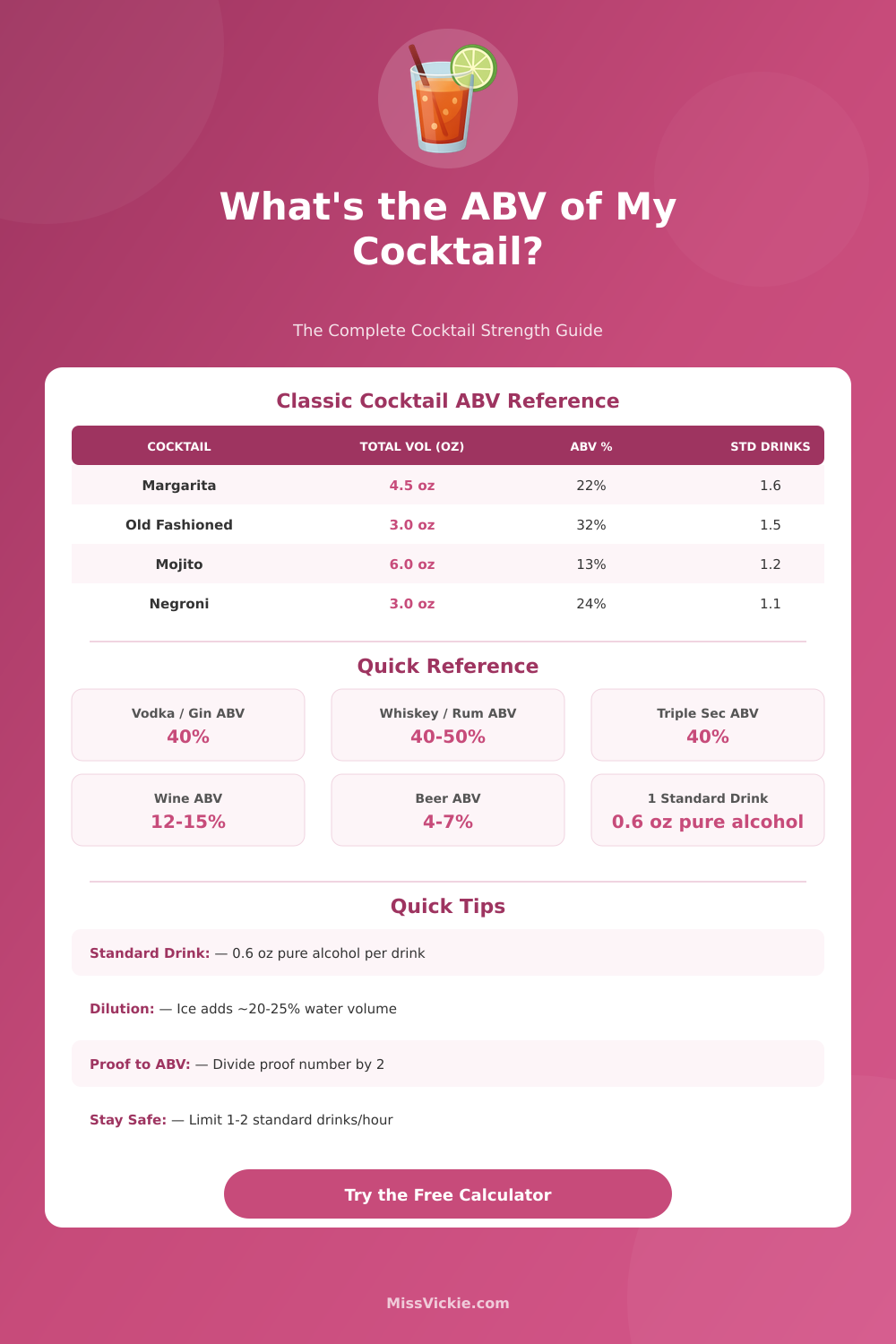
| Margarita | 4.5 oz (133 ml) | ~22% | ~1.6 |
| Old Fashioned | 3.0 oz (89 ml) | ~32% | ~1.5 |
| Mojito | 6.0 oz (177 ml) | ~13% | ~1.2 |
| Negroni | 3.0 oz (89 ml) | ~24% | ~1.1 |
| Manhattan | 3.5 oz (104 ml) | ~30% | ~1.6 |
| Daiquiri | 3.5 oz (104 ml) | ~20% | ~1.1 |
| Cosmopolitan | 4.5 oz (133 ml) | ~20% | ~1.4 |
| Long Island Iced Tea | 8.0 oz (237 ml) | ~22% | ~2.8 |
| Beverage | Volume | ABV | Pure Alcohol |
|---|---|---|---|
| Regular Beer | 12 fl oz (355 ml) | 5% | 0.6 fl oz |
| Wine | 5 fl oz (148 ml) | 12% | 0.6 fl oz |
| Distilled Spirit | 1.5 fl oz (44 ml) | 40% | 0.6 fl oz |
| Malt Liquor | 8-9 fl oz (237-266 ml) | 7% | 0.6 fl oz |
| Craft Beer (IPA) | 12 fl oz (355 ml) | 7% | 0.84 fl oz |
| Fortified Wine | 3-4 fl oz (89-118 ml) | 17% | 0.6 fl oz |
| Spirit | Typical ABV | Proof (US) | Notes |
|---|---|---|---|
| Vodka | 35-50% | 70-100 | Usually 40% (80 proof) |
| Gin | 37.5-47% | 75-94 | London Dry often 47% |
| White Rum | 37.5-40% | 75-80 | Dark rum can be higher |
| Tequila / Mezcal | 38-55% | 76-110 | Reposado typically 40% |
| Bourbon / Whiskey | 40-65% | 80-130 | Cask strength up to 65% |
| Triple Sec / Cointreau | 30-40% | 60-80 | Used in Margaritas |
| Vermouth (Dry) | 15-18% | 30-36 | Used in Martinis |
| Campari / Aperol | 11-24% | 22-48 | Aperol 11%, Campari 24% |
| Sweet Vermouth | 15-17% | 30-34 | Used in Manhattans |
| Kahlua / Baileys | 17-20% | 34-40 | Coffee & cream liqueurs |
Alcohol by volume, or ABV, is the percentage of pure ethanol that exists within a total volume of liquid. The strength of a cocktail is determine by its ABV. Cocktails are deceptive in that they contain ingredient that contain juice, syrups, and sodas that contain less ABV than the other ingredients in the cocktail.
However, cocktails also often contain liqueurs and fortified wines that contain high level of ABV. Therefore, it is important to understand how the ingredients in a cocktail can affect its ABV. In order to calculate the ABV of a cocktail, it is important to use a specific mathematical formula.
How to Calculate a Cocktail’s Alcohol Strength
The formula asks that you determine the volume of pure alcohol in each ingredient in the cocktail, and then divide that volume by the total volume of the cocktail. You are to multiply the result of this division by 100 to determine the percentage of ABV in the cocktail. For instance, if a cocktail contains two ounces of an 40% ABV spirit, there are 0.8 ounces of pure alcohol in that ingredient.
However, adding juice or syrup will dilute the alcohol in the cocktail. Additionally, ABV can be used to calculate the number of standard drink in a cocktail. A standard drink contains 0.6 ounces of ethanol.
Another factor that can change the ABV of a cocktail is dilution. As ice melts, it add water to the cocktail when cocktails are shaken or stirred with ice. This water increases the total volume of the cocktail, which decrease the ABV of the cocktail.
For instance, two ounces of a spirit may dilute to two-and-a-half ounces when pour into a cocktail and chilled with ice. While dilution with ice is necessary to balance cocktails, dilution also weaken the alcohol in cocktails. The ABV levels of spirits also change the strength of cocktails made with those spirits.
For instance, vodka and gin both typically has 40% ABV. However, whiskeys can range between 40% and 50% ABV. Additionally, certain spirits, like overproof rum, can have ABV level as high as 75%.
Other ingredients, like vermouth, have approximately 16% ABV. Aperitifs, like Aperol, have an ABV of approximately 11%. Thus, cocktails that use ingredients of different ABV levels will contain a different ABV.
For instance, cocktails that use overproof rum will contain a more higher ABV than cocktails that use standard spirits. Many mixologists make cocktails with mistake due to not measuring the ingredients precise. For instance, if vermouth or bitters are pour into a cocktail without precisely measuring the amount to be pour, the ABV will change.
Additionally, cocktails shaken with ice will tend to have lower ABV than cocktails stirred with ice because shaking cocktails with ice will dilute the cocktail. Finally, understanding the ABV of cocktails can aid in one’s safety while drinking cocktails. Because cocktails often contain several serving of alcohol, a person may consume many standard drink with one cocktail.
For instance, a Long Island Iced Tea contains five different spirits, and can contain over 2.5 standard drink. Since the blood alcohol concentration of an individual increase with the consumption of alcohol, it is important to understand how many standard drinks to consume. Experts recommend that individuals consume one standard drink every hour, and drink water while consuming alcohol for the same reasons.
Additionally, understanding the ABV levels of cocktails can allow individuals to adjust the recipe to their taste.