🍺 Cider ABV Calculator
Calculate alcohol by volume using original gravity and final gravity readings
| OG | FG (Dry) | FG (Semi) | ABV Dry | ABV Semi |
|---|---|---|---|---|
| 1.035 | 1.000 | 1.005 | 4.6% | 3.9% |
| 1.045 | 1.000 | 1.008 | 5.9% | 4.9% |
| 1.050 | 1.002 | 1.010 | 6.3% | 5.3% |
| 1.055 | 1.002 | 1.010 | 7.0% | 5.9% |
| 1.060 | 1.000 | 1.010 | 7.9% | 6.6% |
| 1.065 | 1.000 | 1.010 | 8.5% | 7.2% |
| 1.075 | 0.998 | 1.005 | 10.1% | 9.2% |
| 1.090 | 0.998 | 1.010 | 12.1% | 10.5% |
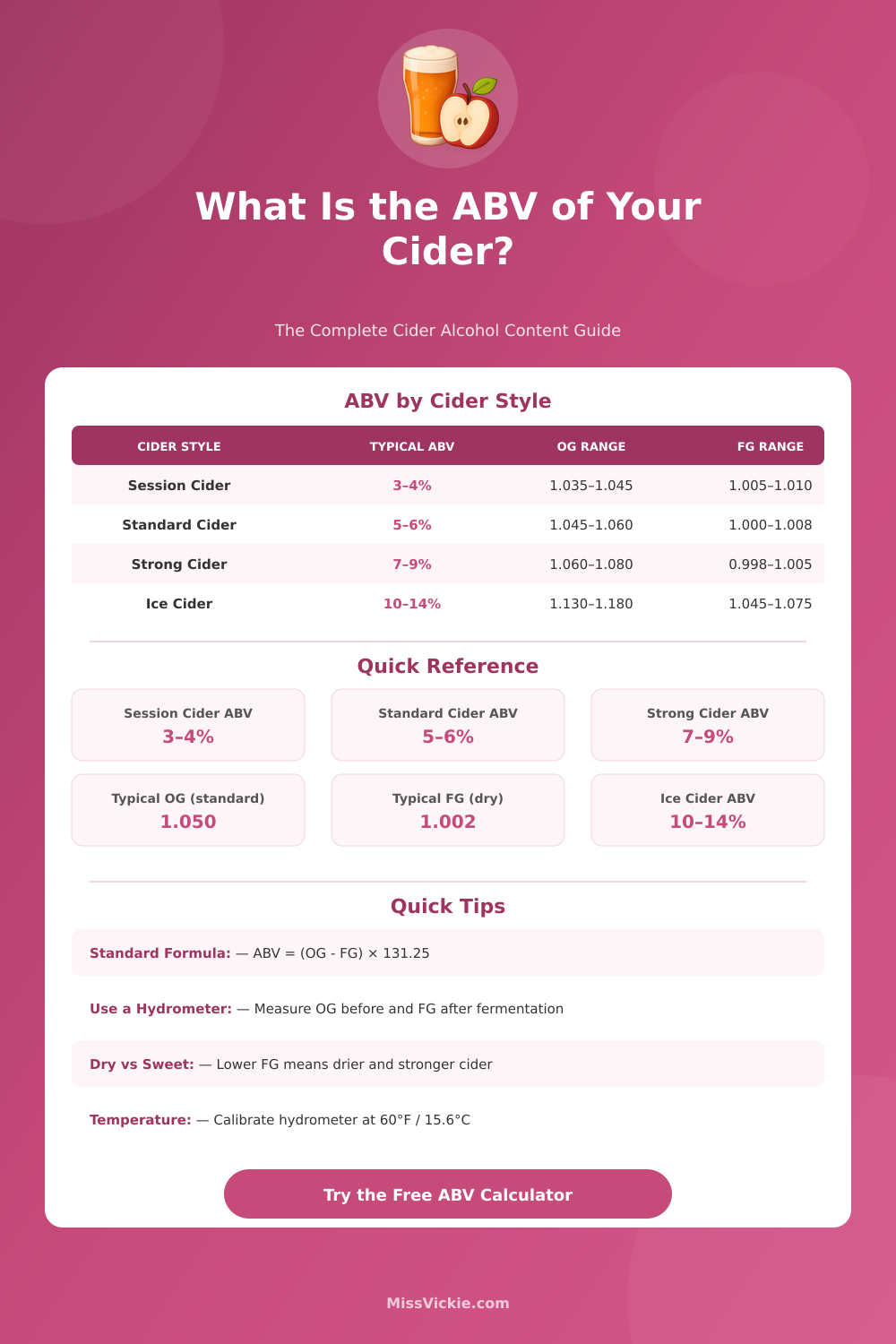
| Style | OG Range | FG Range | ABV | Character |
|---|---|---|---|---|
| New England Session | 1.035–1.045 | 1.005–1.010 | 3–4% | Light, refreshing |
| Standard Still Cider | 1.045–1.060 | 1.000–1.008 | 5–6% | Balanced, versatile |
| English Farmhouse | 1.050–1.065 | 0.998–1.005 | 6–8% | Dry, tannic |
| French Cidre | 1.045–1.060 | 1.005–1.015 | 4–6% | Semi-sweet, effervescent |
| Strong Cider | 1.060–1.080 | 0.998–1.005 | 7–9% | Bold, warming |
| Ice Cider | 1.130–1.180 | 1.045–1.075 | 10–14% | Sweet, concentrated |
| Cider Brandy Base | 1.080–1.100 | 0.995–1.000 | 10–13% | Very dry, distillable |
| Brix (°Bx) | Specific Gravity | Potential ABV (to dry) | Sugar (g/L approx.) |
|---|---|---|---|
| 8° | 1.032 | 4.2% | 80g |
| 10° | 1.040 | 5.3% | 100g |
| 12° | 1.049 | 6.4% | 120g |
| 14° | 1.057 | 7.5% | 140g |
| 16° | 1.066 | 8.7% | 160g |
| 18° | 1.074 | 9.7% | 180g |
| 20° | 1.083 | 10.9% | 200g |
| 24° | 1.100 | 13.1% | 240g |
Cider is alcohol from fermented apple juice. In United Kingdom it is very popular, especially in the West Country and Ireland. Here you consume it most in the whole world and the land ranks among the top producers.
Really, cider is made of fermented fruit juice, usually from apples according to tradition, although also from peaches or other fruits
What is Cider and How to Use It
Cider is different from beer. Beer you make from grains like oats, wheat, rye, rice, corn and barley. Cider is more like wine, and above a certain alcohol level it is classed as wine in United Kingdom.
Bought cold from pub, it tastes fruity, refreshing and pure.
Cider does not match apple juice. It comes from whole apples with stems and seeds almost left in, so more like puree. Juice instead is made by screening.
If through the bottle you see the label, it is juice; if the liquid is cloudy, it is cider. In United Kingdom asking for cider means an alcoholic fermented apple drink, while elsewhere the word commonly points only to unfiltred apple juice.
CAMRA defines real cider or perry as fermentation from whole juice of fresh pressed apples or pear, without concentrated or sugar additions.
Orchard-based ciders are not beer alternatives and too strong for pint-size servings. A serving of six to eight ounces works for such eight percent ABV. For session ciders of four and half to six percent a bit bigger pours suit.
A standard 125-gram serving has around 70 calories. A cup of apple cider has approximately 117. If you take cider from fridge, let it stand around 15 minutes before serving for a good temperture.
Cider you use also in cooking. For pulled pork recipe you need two cups cider. Chops you cook with sweet cider, caraway seed and sauerkraut, laying them on top, covering and cooking on medium heat eight to twelve minutes until ready.
Apple cider vinegar commonly replaces in BBQ sauces.
Slow cooker apple cider is a great winter drink. It requires nine medium apples of different types, one orange, three cinnamon sticks and whole nutmeg. Warm spiced cider you make from a gallon cider, preserved orange juice and cinnamon sticks.
Some producers use traditional ways with only natural ingredients without extra sugar. Homebrewing of cider is popular, for instance by means of using yeast, letting it ferment and eventual sweetener by means of xylitol.