Chili Simmer Time Calculator
Estimate chili simmer time from meat and bean style, batch volume, meat cut, bean state, vessel, heat level, lid position, target thickness, spice bloom, and resting time.
🍲 Chili Simmer Presets
Choose a real chili scenario, then adjust the batch volume, meat cut, bean state, pot setup, lid, thickness, spice bloom, and rest time.
⚖ Chili Batch Details
Chili simmer plan
Your chili timing estimate will appear here.
Timing Breakdown
Flavor And Texture Factors
Simmer Schedule
📊 Chili Timing Snapshot
🌶 Chili Style Simmer Table
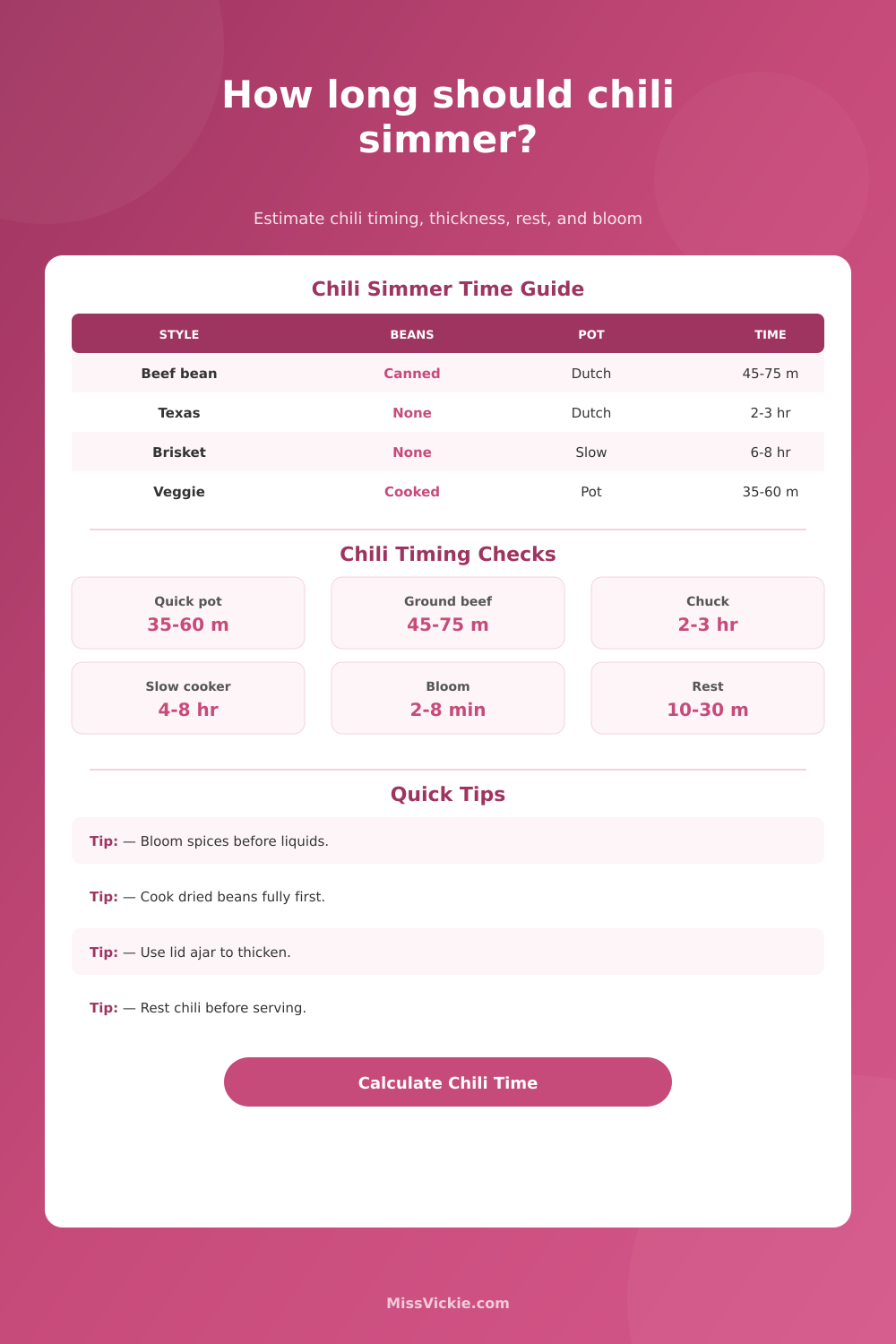
| Chili Style | Typical Simmer | Best Bean State | Best Lid Setup | Finish Cue |
|---|---|---|---|---|
| Ground beef with beans | 45-75 minutes | Canned or fully cooked | Lid ajar | Tomato edge softens and beans taste seasoned. |
| Texas red with chuck | 2-3 hours | No beans | Mostly covered, then uncovered | Meat cubes press tender and sauce turns glossy. |
| Turkey or chicken chili | 35-65 minutes | Canned beans | Mostly covered | Lean meat stays moist and broth tastes rounded. |
| Brisket or smoked beef chili | 1-2 hours stovetop | No beans or cooked beans | Lid ajar | Smoked meat softens without shredding apart. |
| Vegetarian bean chili | 35-60 minutes | Cooked beans or lentils | Lid ajar | Vegetables soften and some beans thicken the pot. |
| Slow cooker chili | 4-8 hours | Canned or cooked beans | Lid on | Flavor melds, but reduce separately if too loose. |
🫘 Meat Cut And Bean State Table
| Ingredient | Timing Role | Simmer Need | Risk If Rushed | Best Check |
|---|---|---|---|---|
| Ground beef or pork | Flavor melding | Moderate | Harsh tomato and raw spice flavor | Fat is integrated and chile tastes round. |
| Chuck cubes | Tenderizing collagen | Long | Meat stays chewy even if sauce tastes done | Cube yields when pressed with spoon. |
| Brisket or short rib | Softening smoked meat | Medium to long | Dry strands or tough edges | Meat holds shape but bites cleanly. |
| Canned beans | Seasoning absorption | Short | Beans split if boiled too hard | Beans taste seasoned in the center. |
| Par-cooked beans | Finishing tenderness | Longer | Skins stay firm in acidic sauce | Mash a bean against the pot wall. |
| Dried soaked beans | Full cooking | Very long | Tomatoes can keep beans firm | Cook beans tender before acidic chili when possible. |
🔥 Vessel, Lid, And Heat Table
| Setup | Evaporation | Stirring | Timing Effect | Best Use |
|---|---|---|---|---|
| Heavy Dutch oven, lid ajar | Moderate | Every 12-18 minutes | Balanced baseline | Most stovetop chili batches. |
| Wide braiser, lid off | Fast | Every 8-12 minutes | Shorter but needs attention | Thick topping chili or quick reduction. |
| Thin stock pot | Moderate | Every 6-10 minutes | Scorch risk can slow you down | Large batches with lower heat. |
| Slow cooker low | Very low | Once or twice | Much longer, little reduction | Game day chili that holds warm. |
| Oven-safe covered pot | Low | Every 45-60 minutes | Gentle and even | Chuck chili or long Texas red. |
⏱ Thickness And Rest Table
| Target | Reduction Goal | Rest Time | Texture Cue | Adjustment |
|---|---|---|---|---|
| Brothy bowl chili | 5-10% | 10-15 minutes | Spoon leaves a light trail | Keep lid mostly on. |
| Classic spoonable chili | 10-18% | 15-25 minutes | Spoonful mounds softly | Use lid ajar and stir often. |
| Thick topping chili | 18-28% | 20-30 minutes | Holds on hot dogs or potatoes | Uncover late and mash some beans. |
| Competition tight sauce | 20-30% | 25-40 minutes | Glossy sauce clings to meat | Reduce gently, avoid scorching spice. |
| Cincinnati sauce chili | 5-12% | 20-30 minutes | Loose sauce coats spaghetti | Keep fine texture and skim fat. |
🔍 Chili Method Comparison Grid
Best for canned beans, browned meat, and a classic weeknight pot with balanced tomato flavor.
Needs time for connective tissue to relax, especially when chuck cubes are not pressure cooked first.
Excellent for holding and melding, but it barely reduces, so start with less liquid.
Already-tender beans and vegetables finish faster, with thickness coming from mashing or reduction.
💡 Chili Simmer Tips
This calculator estimates cooking windows for planning. Cook raw meat safely, keep chili at a gentle simmer, and cool leftovers promptly in shallow containers.
Even when a chili smells great, it can be watery and thin. Sometimes you’re not sure it’s ready, either, because all of the components hasn’t combined yet. It should reach a thick, glossy consistency that blends all those flavors into one profile. Time does the trick (and controlled heat and a bit of patience). Use the calculator on this page to find out how long yours will take with your unique ingredients.
For many of us, a chili is an ingredient-mixing-and-wait operation. It doesn’t work for dried beans or other tough meats such as brisket. The connective tissues in tough cuts must be cooked at low heat over time to turn them into gelatin. Cook too fast, and even though the sauce may seem done the meat will still be chewy. By contrast, ground beef tenderizes rapidy. It’s mostly there to meld flavor, not to break down its own structure. When you choose the type of protein, the calculator narrows the timing window accordingly.
Why Time Is Important for Good Chili
And then there’s the part people forget about: adding complexity to beans. Softened canned ones only has to soak up the flavored liquid. If you boil your beans, be gentle, they might split them apart or even burn. With dried beans, which keep their firm cell wall structure thanks to the acid from tomatoes, more care are required. That’s why most recipes call for cooking dried beans ahead of time. This chart explains it all, how long should soaked beans simmer? Ten minutes? An hour?
But also: How you cook it is just as important than what goes into it. For home cooks, a suitable cooking setup is a heavy Dutch oven with a semi-open lid, which holds in some heat but lets some steam out. This allows the sauce to gradually simmer, thickening and reducing without burning or boiling dry. Alternatively, a wider skillet will burn off moisture more quickly, accelerating the reduction process; but only if stirred continuously. Depending on what you use, the calculator updates its recommendations to match. If you’re using a slow cooker, it knows that won’t behave like a stovetop pot.
Do bloom the spices: Fry some garlic, cumin and chili powder in fat, then add liquid. Bloom is what happens to those spices. It is the release of their essential oils into the dish. Without this, spices can taste raw or even dusty when combined with acidic tomatoes. A couple minutes is all it takes but it sets down the basic flavors of the dish. And there’s a field on the tool where you enter bloom time to work it into the day.
And finally: Resting. When you remove it from heat, there’s still some warmth in the pot, and the chili will keep cooking a bit more. It will also thicken up and hydrate the starches in tomatoes and beans as it sits. If you serve it right away, it might be loose and all-out-of-whack. Covering it and letting it sit for 20 minutes helps the flavors come out and makes it firmer.
At a glance, all these variables might be intimidating. But break them down into their individual parts, evaporation concentrates flavors; heat transfer breaks fibers… And things get a lot easier to wrap your head around. You’re also giving the fat and spices time to meld together. The calculator does the math for you while you taste and stir instead of staring at the clock.
The good news is that chili is an easy dish. There are few failures, except perhaps with seasoning adjustments. You might use a little too much chili powder here or not enough salt there. The secret: Timing matters. There’s nothing like a perfectly simmered pot of chili, a depth of flavor that doesn’t come from rushing anything.
You can taste the texture clinging to your bite instead of slipping away. Rest and reduction are balanced just right. This unifies the flavors into something rich and rounded. It is all well worth the work because it completes the dish and makes it appealing.