Chili Per Person Calculator
Plan chili portions from guest count, bowl size, meat-to-bean ratio, toppings, sides, appetite, simmer loss, leftovers, pot capacity, and cooked yield per person.
🌶Chili crowd presets
Choose a starting plan, then tune the bowls, sides, topping bar, simmer loss, leftover target, and pot size for your actual chili night.
⚖Chili portion units
🥣Guest count, bowl size, and appetite
🥩Meat, beans, toppings, and chili thickness
🍲Pot size and batch fill
Chili portion plan
Detailed chili breakdown
A simmering chili pot needs open headspace so it can bubble and stir without spilling.
📋Chili serving size guide
Use for cook-offs, samplers, and multi-dish parties.
Best with cornbread, rice, potatoes, or a buffet table.
A reliable dinner serving for mixed adult crowds.
Use for tailgates, cold weather meals, and hungry guests.
📊Bowl size and crowd reference
| Chili situation | Cooked chili per person | Side dish effect | Leftover target |
|---|---|---|---|
| Chili with crackers or salad | 10 to 12 fl oz | Neutral | 10% to 15% |
| Chili over baked potatoes or nachos | 6 to 9 fl oz | Portion drops because the base is filling | 5% to 10% |
| Tailgate or game day bowls | 12 to 16 fl oz | Snacking can still increase seconds | 15% to 25% |
| Cook-off tasting cups | 3 to 6 fl oz | Many other foods are sampled | 5% to 10% |
| Meal-prep containers | 12 to 16 fl oz | Fixed containers reduce waste | 0% to 5% |
🫘Meat and bean ratio reference
| Ratio setting | Best use | Texture result | Ingredient note |
|---|---|---|---|
| 70% meat / 30% beans | Meaty dinner chili | Dense and rich | Raw meat is back-calculated for cooking shrinkage |
| 50% meat / 50% beans | Classic crowd chili | Balanced spoonfuls | Works well for potlucks and family meals |
| 35% meat / 65% beans | Stretching a large batch | Bean-forward | Needs enough sauce to keep the pot loose |
| No-bean meat chili | Texas-style bowls or hot dogs | Thicker and heavier | Plan more raw meat and more pot headspace |
| Meatless bean chili | Vegetarian or lentil chili | Hearty but lighter | Use drained cooked beans as the solids base |
🥣Common chili quantities
| Guest count | 10 oz bowls | 12 oz bowls | 15% extra with simmer loss |
|---|---|---|---|
| 6 people | 1.9 qt cooked | 2.3 qt cooked | About 2.8 qt starting chili |
| 12 people | 3.8 qt cooked | 4.5 qt cooked | About 5.4 qt starting chili |
| 25 people | 7.8 qt cooked | 9.4 qt cooked | About 11.3 qt starting chili |
| 50 people | 15.6 qt cooked | 18.8 qt cooked | About 22.5 qt starting chili |
| 100 people | 31.3 qt cooked | 37.5 qt cooked | About 45 qt starting chili |
🔥Simmer, pot, and topping checks
| Planning item | Typical range | Calculator use | Kitchen check |
|---|---|---|---|
| Simmer loss | 8% to 20% | Raises starting batch volume | More uncovered simmer means more loss |
| Safe pot fill | 80% to 90% | Compares starting volume to pot capacity | Thick chili needs room to stir |
| Classic toppings | 1.5 to 2.5 oz per bowl | Adds cheese, onion, sour cream, and garnish weight | Plan more for self-serve bars |
| Cooked beans | About 9.5 oz per drained can | Converts bean weight to can count | Rinse if the chili is already salty |
| Raw ground meat | 72% to 82% cooked yield | Back-calculates raw purchase weight | Drain or retain fat based on style |
💡Chili planning tips
Portion tip: If chili is the entire meal, start around 12 fl oz per adult and then increase for hearty appetites or cold-weather events.
Pot tip: Compare starting volume, not finished volume, to pot capacity because the batch is largest before evaporation.
Bean tip: Drained canned beans are already cooked, so add them late enough to stay intact while still absorbing chili flavor.
Topping tip: Cheese-heavy topping bars can add several pounds of food for large crowds, even when the chili batch is already sized correctly.
A pot of chili seem like easy planning for a group (that is), until you start considering all its moving parts. How many people? What size bowl do you think everyone can finish? Is this meant as a topping, or a main course? Do you even care if there’s enough left for tomorrow?
With a few clicks of a button on the calculator above, math takes care of itself. Plug in how much people eat, how you serve it, and how many guests is coming. Let the batch planning and portion adjustment guesses go out the window.
Easy Ways to Plan Your Chili Party
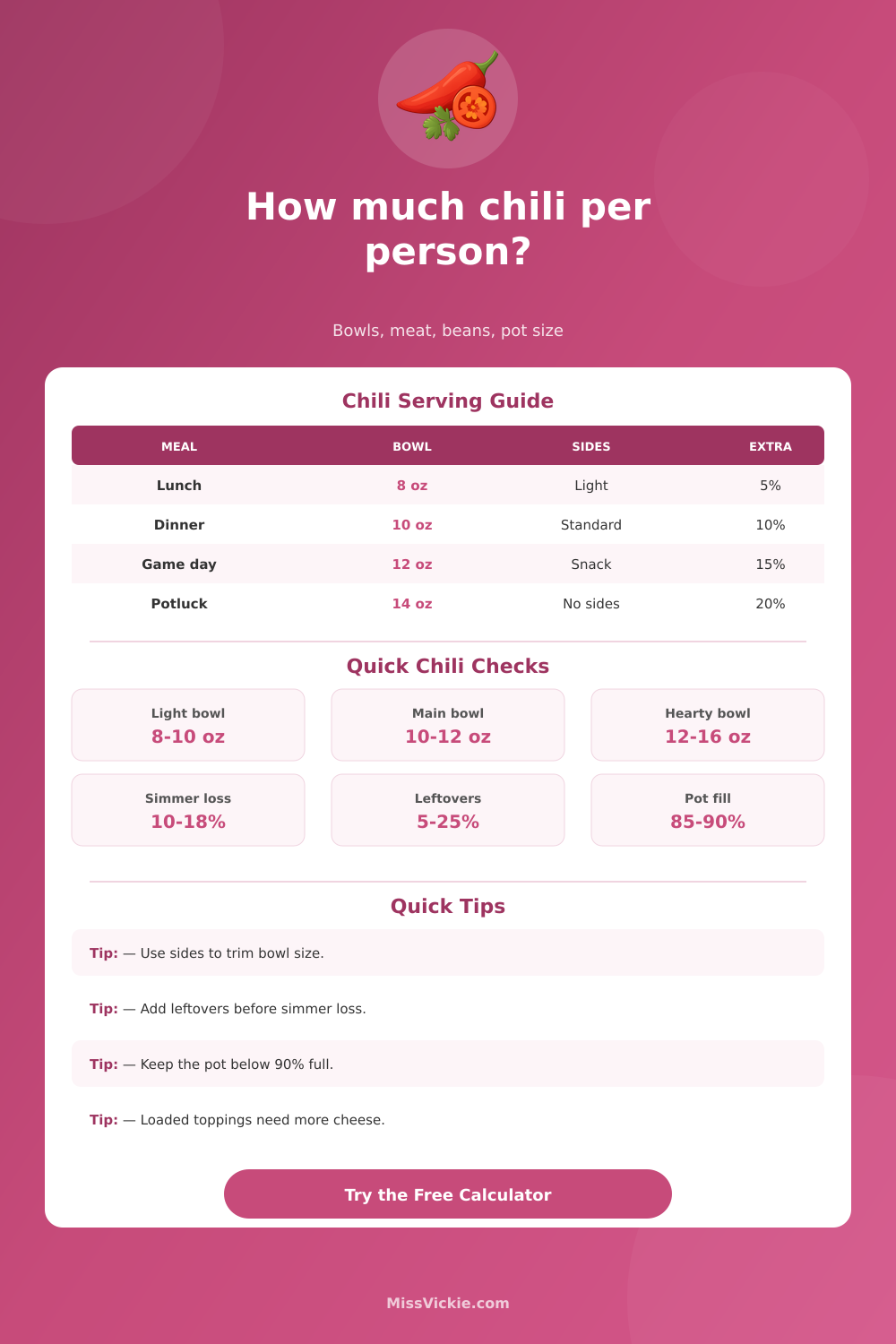
Sides go a long way because they can be surprising. A scoop of chili is going to look much smaller next to a baked potato or slice of cornbread. Our calculator assumes that more substantial sides like these will reduces the amount each person has, and it’ll adjust accordingly. But ultimately, that’s where choice resides (on your kitchen table). If there’s a whole buffet table, feel free to budget light bowls of chili. But if all you’ve got on the table is chili, especially on a chilly evening, most grown-ups is going to be looking at something more like a full twelve ounces.
Another option are the meat-to-bean ratio, which also changes the amount and flavor. If you add a lot of meat, it will cook down compared to a batch loaded with beans. The calculator reflects this by adjusting the estimated amounts based off raw meat weights and how many beans is added. If you know Texas style, you might ask, no beans? You’ll have to buy extra meat and pay closer attention to the pot since there’s not as much bulk to soak up liquid. Going vegetarian turns all the math upside-down, using beans (and lentils) for texture rather than for protein, so they’ll need some help.
The thing everyone forgets (until there’s only half a pot left) is simmer loss. Left uncovered, a pot of chili will give up between twelve and eighteen percent of its volume after an hour or two… And the calculator accounts for that and puts it right back in at the beginning. What this translates to practically: If you’d like to finish with ten quarts, you’ve got to start off with more.
And here’s another practical note: You’ll want some headroom in your pot, too. Chili thickens as it simmers and gets bubbly and spattery. When you leave the fill line well under ninety percent full, you have room to stir without spilling, and you won’t make a mess on your stove.
Then there’s the toppings. That loaded bar of jalapeños, onions, sour cream, and cheese? Those add a few ounces apiece to each bowl. So does the calculator estimate your total so you don’t end up running out of shredded cheese half-way down the line. And it separates the cheese part from the rest of it, which is why you want to shop separately; as soon as people start personalizing, the cheese goes first.
On the page there are reference tables that lay out serving ranges in various situations: hearty tailgate bowls, or taste-size cups for cook-off competitions. It is meant to give you a quick sense of scale so you don’t have to enter numbers until you need to. Treat it like a starting point, then tweak the calculator according to your actual menu and crowd.
Ultimately, it is less about getting the math to work out perfectly. It is about having a pot of chili that look generous, but does not leave you with three days’ worth of unexpected leftovers. After some practice and a sense of how long your chili will be on the stovetop, as well as how much your guests typically consume, the math should of been easier then it initially seems.