🍒 Cherry Pie Filling for a Pie Calculator
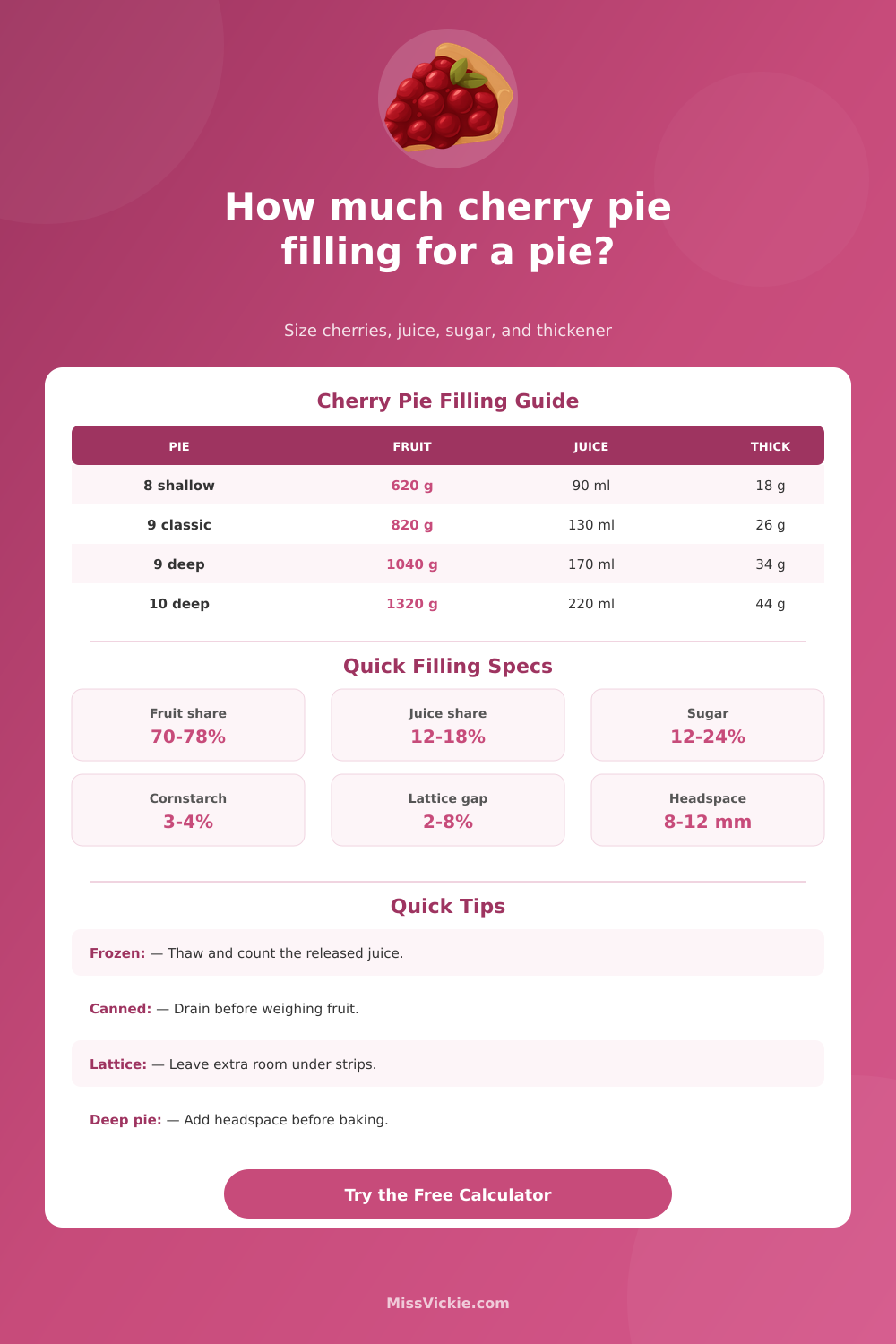
Calculate cherry pie filling by pie diameter, depth, fruit state, pitted cherry weight, juice volume, lattice displacement, thickener type, sugar level, and overflow headspace.
Measure the pie plate inside the rim. The calculator uses a shallow bowl volume model, then subtracts lattice or top crust displacement and keeps headspace so bubbling cherry juice does not overflow.
Cherry filling breakdown
Cherry format adjustments
| Cherry format | Fruit share | Juice behavior | Sugar cue |
|---|---|---|---|
| Fresh tart cherries | 72% to 76% | Moderate release | Use classic or tart profile |
| Fresh sweet cherries | 73% to 78% | Lower acid, softer gel | Reduce sugar, add lemon |
| Frozen cherries, thawed | 68% to 73% | High released juice | Count thaw liquid |
| Canned drained cherries | 66% to 72% | Soft fruit, packed liquid | Reduce sugar in syrup |
Thickener starting points
| Thickener | Per cup liquid | Texture | Best use |
|---|---|---|---|
| Cornstarch | 2.0 tbsp | Glossy, set | Classic cherry pie |
| Instant tapioca | 2.4 tbsp | Clear, springy | Juicy fruit pies |
| ClearJel | 1.6 tbsp | Stable, smooth | Pre-cooked filling |
| Flour | 3.5 tbsp | Soft, opaque | Rustic fresh fruit |
Top crust displacement
| Top style | Displaces | Headspace | Notes |
|---|---|---|---|
| Open or crumb | 0% to 2% | 8% | Filling can dome gently |
| Light lattice | 2% to 4% | 9% | Thin strips leave room |
| Classic lattice | 4% to 7% | 10% | Best all-purpose setting |
| Full top crust | 6% to 10% | 12% | Vent well before baking |
Batch equivalents
| Measure | Approx weight | Volume | Use in calc |
|---|---|---|---|
| 1 cup pitted cherries | 140 g | 236 ml | Fruit weight |
| 1 cup cherry juice | 240 g | 236 ml | Reserved juice |
| 1 tbsp cornstarch | 8 g | 15 ml | Thickener |
| 1 cup sugar | 200 g | 236 ml | Sugar output |
Kitchen weights and fruit juiciness vary. Use the overflow risk and status note as a baking-plan guide, especially with deep plates, frozen cherries, or very juicy canned fruit.
Cherry pie filling contain cherries, sugar and thickening agent. The balance of these ingredient will determine the texture of the finished pie. For instance, if there is too much liquid in the pie filling the result will be thin and runny pie.
However, if you use the correct amount of thickener the pie will hold its shape when it is sliced. Many home cook experience problems with cherry pie filling because the amount of liquid contained in the cherries can change depending on the type of cherries that are used. Cherries that are purchased frozen contain more water than cherries that is picked and dried.
How to Make Good Cherry Pie Filling
Additionally, canned cherries may have lost some of their liquid during the canning process. Because of these different liquid contents, the amount of thickener that must be added to cherry pie filling will change depending on the type of cherries that are used. The type of container in which the pie are baked will also change the amount of pie filling that may be contained within the pie.
For instance, a pie that is baked in a sloped pie dish will have different dimensions than one that is baked in a deep dish pan. Additionally, a deep dish pan will allow the pie filling to push against the top of the crust because there is more volume created within that pan than in a more standard pan. Therefore, some headspace must be provided for the pie filling to allow the pie filling expand while baking; headspace is the empty space between the top of the pie and the crust.
If headspace isnt provided the pie will bubble over the edge of the pan and leak onto the baking oven floor. The thickener that is used will change the way that the pie looks and the way that it feels when it is eaten. For instance, using cornstarch will create a glossy pie that is easy to cut; cooks who want a clean cherry pie often use it.
Instant tapioca will create a clear pie that contains a springy texture; it is a good option for cooks who use very juicy cherries. Additionally, using flour will create a soft pie that may appear cloudy; cooks who desire a rustic flavor for their cherries often use it. Each thickener will create different results so the thickener that is chosen will change the amount of thickener that is used in the recipe.
Sugar is an ingredient in cherry pie that affects the flavor of the pie in more than just the level of sweetness. The sugar will help to control the amount of liquid that the cherries release; the more sugar used the less liquid the cherries release when baking the pie. Additionally, sugar will help to form the gel that is created within the pie filling.
Using less sugar will create a cherry pie that is less sweet and acidic; using more sugar will balance out the acidity and create a cherry pie that is noticeabley sweet. Pre-cooking the cherry pie will reduce the amount of juice that the cherries will release during baking; however, because the thickener will have begun to bind to the cherries during the pre-cooking phase, there will be less thickener required. Because there are various factor that relate to cherry pie filling, the other components of the pie must be adjusted.
For instance, if the pie filling contains more liquid, there will be more thickener that is required. Additionally, if the pie contains a lattice top crust there will be more headspace required since the crust will press against the pie while baking. Furthermore, because cherries that are purchased frozen will change their weight when they are defrosted, the amount of frozen cherries that are used in the recipe may change the amount of cherries that is defrosted and used in the pie.
Finally, using a calculator for the recipe will help the cook to adjust the pie for the type of pan that will be used and the amount and type of cherries that will be used in the pie.