
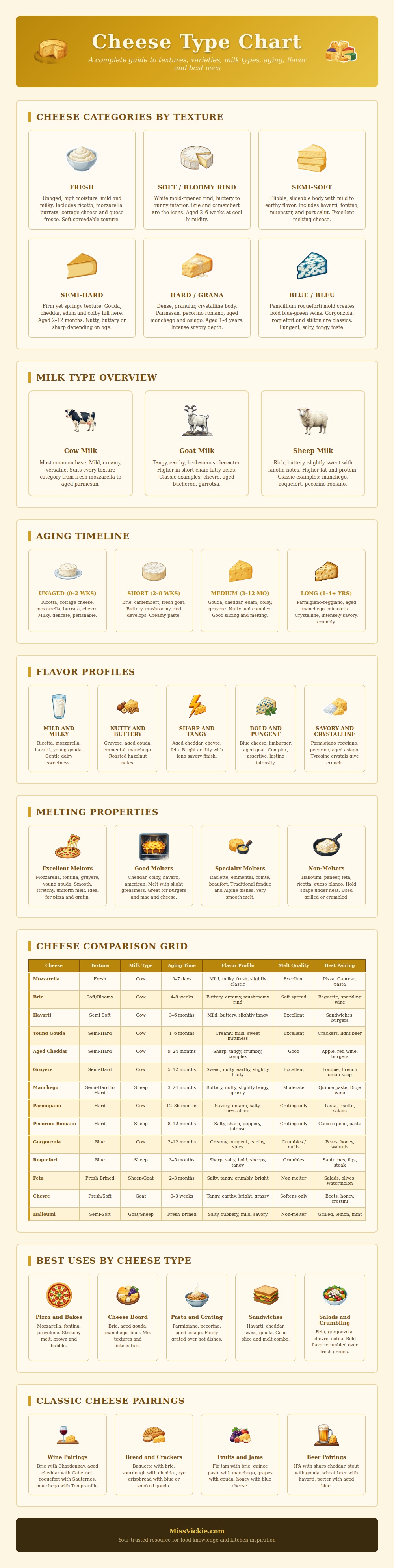
On the grocery store cheese aisle, who knew so many items looked alike? And then when you get them home they don’t melt nicely or even separate into a unattractive pool of oil. It doesn’t have to go that way. Knowing which factors influences a cheese’s texture will help you make a better choice.
This handy chart classifies cheese not by name but by what it does, more helpful for cooking than remembering which is which. Best to start with fresh cheeses: those that aren’t aged. Why? Because they’re full of moisture, they spoil easily, so enjoy them while they still taste clean and fresh. Mozzarella on top of a pasta dish are no good. It will smear rather then melt. Soft cheese are best warmed gently or eaten cold. The gentle sweetness of these types matches strong tastes such as tomato or basil but doesn’t overwhelm them.
How to Choose Good Cheese
As the cheese ages, it loses moisture, which alters the flavor. A safe bet is semi-hard cheeses like gouda and cheddar. On one hand, they’re easy to cut into neat slices for your sandwich need. But because they don’t get aged quite so long, they’ll melt well in your casserole dish, too.
As cheese gets older, its protein bonds tightens up, making it harder to melt smoothly. This results in a grainier texture, which leads some to believe their cheese has gone off. In reality, this is just a normal chemical response, even if it do ruin the mouthfeel of macaroni and cheese.
Animal fats also vary in flavor prior to being fermented, so the milk source are equally important. Most of us like the creamy, neutral notes of cow milk. Because of different fats present before fermentation begins, goat milk carries an earthy tanginess from short-chain fatty acids; sheep milk is richer and sweeter, often with a buttery depth that stands up to bolder seasonings. Try a side-by-side comparison of parmesan reggiano and pecorino romano: both are hard grating cheeses, but pecorino is made off sheep milk, which has a peppery bite that the cow milk doesn’t reproduce.
And, then there’s the useful lesson in melting: certain cheeses stretch like rubber bands as they melt; others maintain form at high temperatures. Paneer and halloumi have protein structures that resist breaking down, which is why they don’t fall apart; they’re good to fry or grill with a toothsome chew rather than a runny goo. Knowing that should of saves meals from falling apart.
To plan a meal, or build your cheese board, think contrast: Soft-sweet (e.g., Fig jam) alongside salty-sharp (e.g., Aged Cheddar). Pair a creamy counterpart (e.g., Brie) against a crunchy complement (e.g., Crisp Bread). The idea is to combine elements of varying intensities and mouthfeels. And don’t think you need pricey imports to make this happen. Pick simple store varieties that provide contrasts in experience. For instance, combining a mild Havarti with a bold Blue Cheese results in more interesting profile than three comparable Yellow Blocks.
Once you learn the basics, however, grocery shopping becomes less guesswork and more strategy. Instead of looking at a wedge only as something on a list, you start seeing its possibilities: do you want it to melt, or be crumbled, or remain firm? A few seconds of thought enhances your food’s quality.
At first glance, all the variety is overwhelming. But once you know where to look, the patterns is simple.