
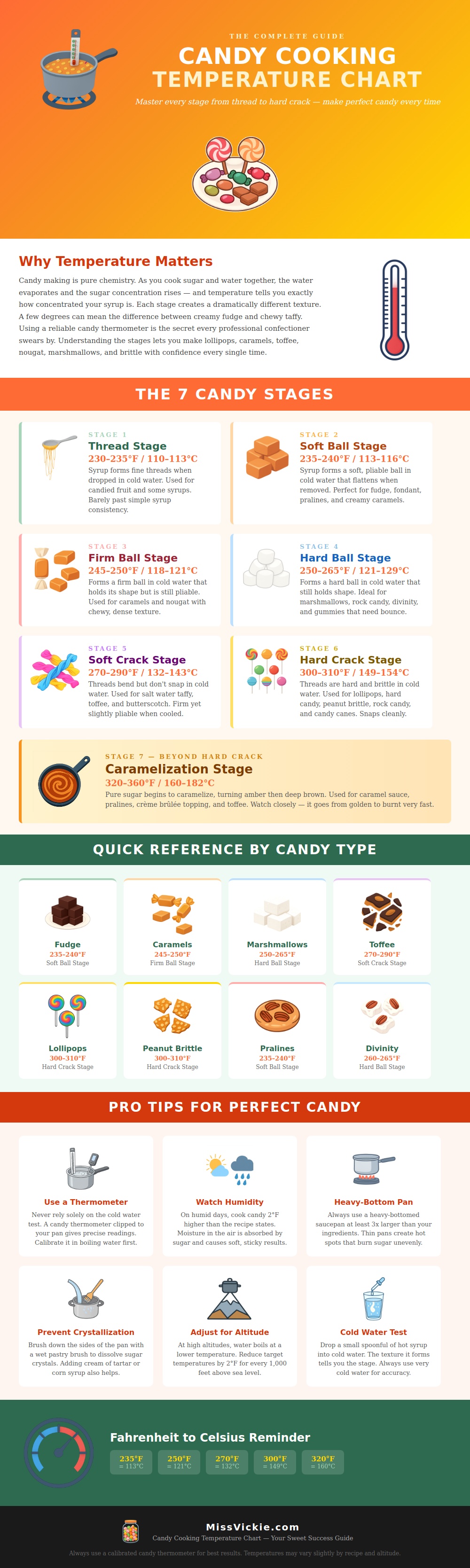
Candy making is art and science. Reliable thermometers for candy making are needed. To check its accuracy, put it in boiling water It should show 212°F (100°C). If the reading is too high or too low, remember the difference during use to check the heat during cooking.
For instance, if it shows 210°F, but you want to reach the soft ball stage at 235°F for syrup, adjust the target.
Test a Candy Thermometer and Sugar Stages
Sugar does not simply boil (it changes). As the temperature grows, the sugar mixes pass through different phases, which give different texture. From the thread stage until the hard crack, that change determines the texture of the treat.
Water boils at 212°F or 100°C, and during boiling it evaporates from the syrup, which concenrtates the sugar. Because of less water, the heat climbs higher. The phases of candy making with their temperatures simply help to estimate the water amount.
At 235°F syrup reaches the soft ball phase. That means that bit fallen in cold water forms a soft ball after chilling. Glazes, toffees, marshmallows, fudge and cream all cook at different heats.
Gummy candies, for instance, heat until around 240°F.
Butterscotch, brittle and hard recipes want the medium crack grade at 275… 300°F. Through the cold water test at 275°F the syrup stays brittle in water, but becomes flexible after removal. For really hard candy, that dries and breaks, 265°F or even 270°F work.
During making this, the mix heats until around 300°F. From hard sugar to burning is a very narrow limit, so a thermometer is a must.
If cooking goes past the hard crack phase, sugar becomes a clear liquid, then brown. When it turns golden brown, that is caramel (between 310 and 331°F happens). You can use it to decorate desserts, make caramel corn or mix with butter for sauce.
Grainy candy commonly comes from sugar crystals, that mix during cooking or cooling. In the pot and in the liquid itself exist different warm areas. That is not like water with one temperature.
Recipes for sea level require changes at higher heights because of changes in the boiling point. Some recipes want a different grade according to the wanted taste and texture. Candy making requires experience, and precise warming of mixes is the realsecret.