
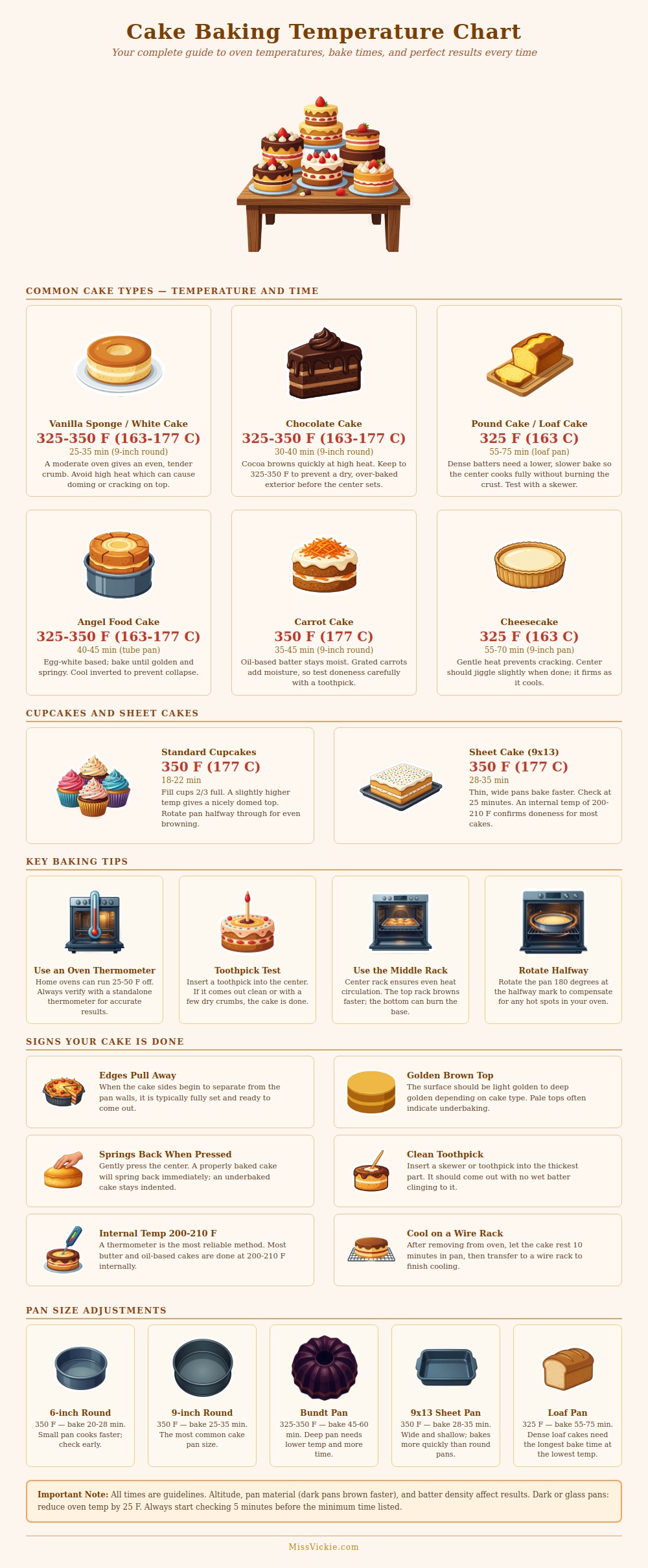
Baking a cake require an understanding of temperature and timing because temperature and timing determine how a cake cooks. If the center of a cake is liquid while the edges of the cake are dark, the temperature and timing of baking are incorrect. Because temperature and timing is variables, adjustments must be made to the temperature and timing of baking according to the type of cake that is being baked.
Different types of cake batter require different temperatures to achieve the same results because the ingredients of each type of cake batter react to heat in different ways. For instance, the temperatures required for baking a vanilla sponge cake is similar to those required for baking a chocolate cake. However, because chocolate reacts to heat more fast than vanilla ingredients, a gentler approach is used with chocolate cake recipes.
How Temperature and Time Affect Cake Baking
Pound cake recipes require a different temperature than other cakes because pound cake is a denseness baking batter. Because pound cake is dense, it takes longer for heat to travel to the center of the cake. To avoid scorching the crust of the pound cake, the baker bakes pound cake at a lower temperature.
Cupcakes and sheet cakes require different baking timings than round cakes because these cakes have a higher surface area than round cakes. The higher the surface area of the cake, the faster that the middle of the cake will cook. Therefore, sheet cakes will cook at a faster rate than round cakes.
If the sheet cake is cooked at a similar rate to round cakes, the edges of the sheet cake may overcook before the center of the sheet cake is fully cooked. To avoid baking sheet cakes with overcooked edges, the baker should rotate the sheet cake while baking to allow for even cooking. Even cooking will prevent overcooked edges of the sheet cake.
A separate oven thermometer should be used to monitor the actual temperature of the oven because the temperature that is displayed on the oven range is not always the same as the actual oven temperature. The dial on the oven range may be off by twenty or thirty degrees. Using an oven thermometer will allow the baker to know the actual temperature of the oven.
The temperature will allow the baker to follow the guidelines for baking temperature of the cake recipe. Another factor that will impact the temperature at which cakes should be baked is the type of baking pan that will be used to cook the cake. Because dark metal pans will heat faster than light aluminum pans, cakes baked in dark metal pans may require lower baking temperatures and shorter baking times.
There are two ways to determine when a cake is done baking: by using visual cues or by using an internal temperature reading. Visual cues indicate when a cake is done baking when the edges of the cake begin to pull away from the pan and when the cake will spring back when the center of the cake is pressed. However, the most accurate method of determining when a cake is done baking is by using an internal temperature reading.
Most butter and oil-based cakes should be baked until the center of the cake reaches the low 200s. However, cheesecake is an exception to this rule. When cheesecake is baked, it should have a slight jiggle while still in the oven. As the cake continues to cook, the jiggle will dissapears and the cake will be done.
If the cheesecake is removed from the oven while it still has a jiggle, the cake may not cook properly and may crack while cooling. Another factor that will impact baking times and temperatures is the size and shape of the baking pan. A cake baked in a six-inch round pan will cook at a faster rate than a cake baked in a nine-inch round pan.
Bundt cake pans have thick centers and decorations on the cakes that require longer baking times and lower baking temperatures so that the center of the cake has time to cook before the exterior of the cake burns. Finally, cakes baked in loaf pans require long and slow baking temperatures because the depth of the cake in a loaf pan requires that the heat reach the center of the cake for it to cook. The position of the rack on the oven range can also impact baking times.
The middle rack will provide even heat to the cakes on that rack. However, the rack positioned at the top of the oven will burn the top of the cakes quickly while the rack at the bottom of the oven can burn the base of the cakes. If the top of the cake is browning quickly while the center of the cake is still liquid, the oven is set to too hot a temperature.
If the cake is pale and dense, the temperature of the oven is too low. Finally, once the cake is baked, it must be rested in the pan for ten minutes before being turned out of the pan. The cake should be cooled on a wire rack so that the steam that builds inside the cake can escape.
If the cake is allowed to remain in the pan after baking, the steam from the cake will make the cake gummy. Additionally, if the baker removes the cake from the pan while hot, the cake may crack or become stuck to the pan. By monitoring the temperature and timing of baking cakes, home bakers can ensure that the resulting cake has the appropriate texture.
You’ll find that following these steps can make a lot of difference in your results. It’s important to recieve the best texture possible when you’re baking. You should of checked the oven temp first.
All the furnitures in the kitchen should be clean too. Dont forget the cakes length is important. One should of checked the batter too.