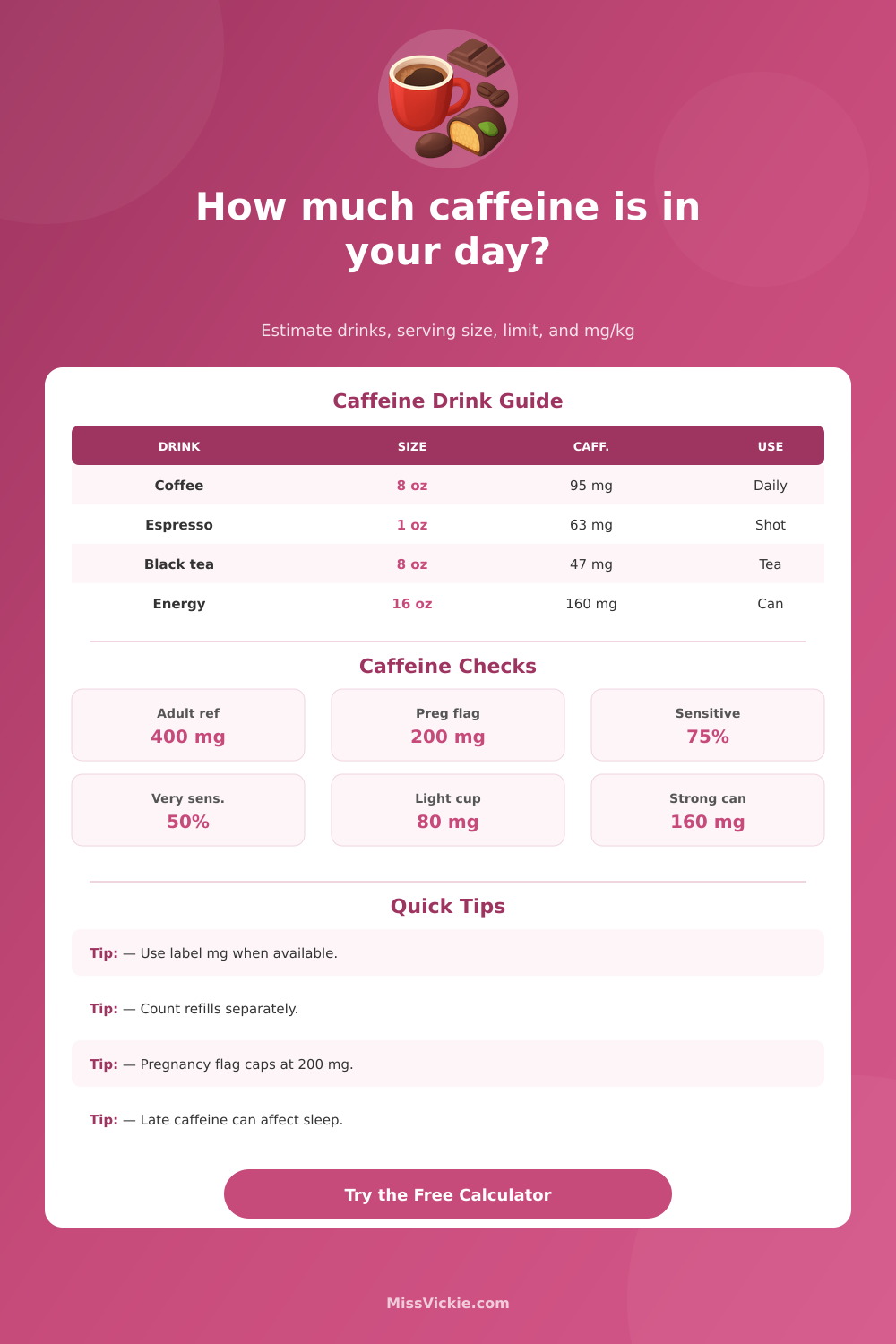
Drink type, serving size, caffeine mg, body weight, pregnancy flag, sensitivity, and daily limit
Caffeine Intake Calculator
Estimate daily caffeine from coffee, tea, energy drinks, soda, chocolate, and custom labels, then compare the total with a selected general planning limit.
Pick a common caffeine pattern, then replace the serving size, drink count, label caffeine, body weight, sensitivity, and daily limit with your own numbers.
Caffeine Intake Breakdown
Espresso shots, brewed coffee, and cold brew vary by bean, recipe, and cup size.
Green tea is often lighter, while black tea and matcha can climb with steep strength.
Can size and label caffeine matter more than the drink category name.
Usually smaller per serving, but refills, large bottles, or dark chocolate can add up.
| Beverage Or Food | Reference Serving | Typical Caffeine | Calculator Note |
|---|---|---|---|
| Brewed coffee | 8 fl oz | About 95 mg | Use as a general cup estimate; strong cafe cups may be higher. |
| Espresso | 1 fl oz shot | About 63 mg | Count each shot in lattes, americanos, and cappuccinos. |
| Cold brew | 12 fl oz | About 150 mg | Concentrates and cafe recipes vary widely by dilution. |
| Black tea | 8 fl oz | About 47 mg | Longer steeping and more tea leaves can raise the amount. |
| Green tea | 8 fl oz | About 28 mg | Often lower than coffee, but serving count still matters. |
| Energy drink | 16 fl oz can | About 160 mg | Use the label because brands range from modest to very high. |
| Daily Reference | Limit Used | Best Use | Important Context |
|---|---|---|---|
| Standard adult comparison | 400 mg/day | General healthy adult reference | This is a broad comparison, not a personal medical target. |
| Moderate planning day | 300 mg/day | For users who want a lower buffer | Useful when drinks are large or caffeine timing is late. |
| Pregnancy or breastfeeding flag | 200 mg/day | Lower comparison setting | The calculator caps the adjusted limit at 200 mg when selected. |
| Custom label target | User entered | Personal tracking comparison | Use guidance from a qualified professional if you have a specific limit. |
| Sensitivity Setting | Multiplier | Example From 400 mg | Calculator Meaning |
|---|---|---|---|
| Lower sensitivity | 125% | 500 mg comparison | Wider buffer for people who intentionally track higher tolerance. |
| Standard sensitivity | 100% | 400 mg comparison | Uses the selected limit without a sensitivity reduction. |
| Sensitive | 75% | 300 mg comparison | Reduces the comparison limit for jitters or sleep concerns. |
| Very sensitive | 50% | 200 mg comparison | Creates a conservative general planning comparison. |
| Timing Marker | Common Range | Planning Use | Calculator Field |
|---|---|---|---|
| Fast response | 15 to 60 minutes | Caffeine can feel noticeable within an hour for many people. | Drink timing context |
| Typical half-life | About 3 to 7 hours | A rough midpoint of 5 hours is used for the sleep estimate. | Hours until sleep |
| Late-day caution | Under 6 hours | Some people prefer to keep caffeine farther from sleep time. | Sensitivity and timing |
| Body-weight ratio | 1 to 6 mg/kg | Shows whether the day is light, moderate, or high relative to weight. | Body weight input |
Caffeine are a substance that enters the body through various drinks and foods, and caffeine has the ability to impact how a person feel during the day as well as how they sleeps at night. Many individuals consumes caffeine each day without being able to track how many milligrams of caffeine they consume. The inability to track the amounts of caffeine that enters the body allows individuals to consume more caffeine than they intend to consume.
A caffeine calculator help individuals to track their caffeine intake by accounting for the various factors that impact caffeine intake, such as serving size, types of drinks consumed, and the caffeine sensitivity of each individual. The amount of caffeine that a drink contains is not consistent across all drinks. The amount of caffeine that is contained within a drink depend upon the type of drink that is consumed and the size of the serving of that drink.
Track Your Daily Caffeine with a Calculator
For instance, one standard cup of brewed coffee contain ninety-five milligrams of caffeine, but a larger cup may contain more milligrams of caffeine than the standard cup. Furthermore, espresso shots contains a different amount of caffeine per ounce than brewed coffee, and cold brew coffee may contain more caffeine per serving than brewed coffee. To accurate calculate the amount of caffeine that an individual consumes during the day, the individual must enter the amount of caffeine in each drink (as listed on the label of the drink) and the serving size of each drink into the caffeine calculator.
These values are represented in milligrams, and the caffeine calculator calculates the total amount of milligram of caffeine that an individual consumes during that day. Because the body weight of an individual may impact the way in which caffeine affect the body, the individual must enter the body weight into the caffeine calculator. The body weight of an individual impacts the way in which caffeine affects the body due to the distribution of the caffeine throughout the body of that individual.
The caffeine calculator calculate the ratio of the amount of caffeine consumed by the body weight of the individual in relation to milligrams per kilogram of body weight. This calculation allows the individual to understand the amount of caffeine per kilogram of body weight that they consume, which help to indicate whether the amount of caffeine that they consume is high or low relative to their body weight. Sensitivity to caffeine can vary from person to person.
One way to account for this in the caffeine calculator is to include a sensitivity setting for each person using the calculator. The calculator allow for a person to select from three sensitivity settings; a standard setting that utilizes the normal limit for caffeine intake, a sensitive setting that reduce the caffeine limit by twenty-five percent, and a very sensitive setting that reduces the caffeine limit by fifty percent. Additionally, those who is pregnant can place a pregnancy flag, which sets the caffeine limit to two hundred milligrams due to the recommendations for pregnant individuals to consume less caffeine.
The amount of time between caffeine consumption and sleep is another consideration for those who use the calculator. Caffeine can last in the human body for several hours after consumption. The effects of caffeine peak within one hour of consumption, but the half-life of caffeine is between three and seven hour.
Thus, individuals who consume caffeine in the late afternoon, for example, may find that the caffeine is still active in their system after they attempt to sleep. The caffeine calculator allow individuals to enter the number of hours that remain until sleep for that particular night, and then calculates the amount of caffeine that will be active in the body near bedtime. Finally, individuals may wish to use the caffeine calculator to keep track of the various sources of the caffeine that is in their system.
Coffee, tea, energy drinks, chocolate, and numerous medication contain caffeine. The caffeine calculator can provide a breakdown of the various sources of that caffeine to enable individuals to understand how each food or drink contribute to the total milligram count of caffeine in the body. Additionally, because the amount of caffeine in a cup of a particular drink can vary, it is more accurate to track the amount of caffeine in milligrams than in number of cup of that drink.
Thus, by checking the total amount of caffeine in the body before adding more caffeine to the system, individuals can make informed decisions about avoiding exceeding their limit for caffeine intake.