MissVickie kitchen calculator
Butter to Olive Oil Conversion Calculator
Replace butter with olive oil using butter fat, butter water, oil grade, recipe type, moisture compensation, and cooking method instead of a one-size-fits-all swap.
Each preset fills the calculator with a realistic butter-to-olive-oil swap, then you can fine-tune the butter amount, oil grade, water replacement, tenderness needs, and bake or cook method.
Calculation breakdown
Method readout
Run the calculator to see flavor, moisture, and texture guidance.
Total butter mass after recipe scaling.
Estimated fat that butter contributes before swapping.
Olive oil is treated as nearly all fat for kitchen math.
Butter water that may need milk, water, or stock added back.
Start with melted-butter recipes
Olive oil is easiest to use when the original butter was melted, brushed, stirred into batter, or used in a pan. Creamed butter cookies and frostings are more structural, so they need more caution.
Add moisture slowly
Use the calculator's liquid number as a target, but add part of it first. Batter thickness, flour brand, cocoa, eggs, and fruit puree can all change how much missing butter water the recipe really needs.
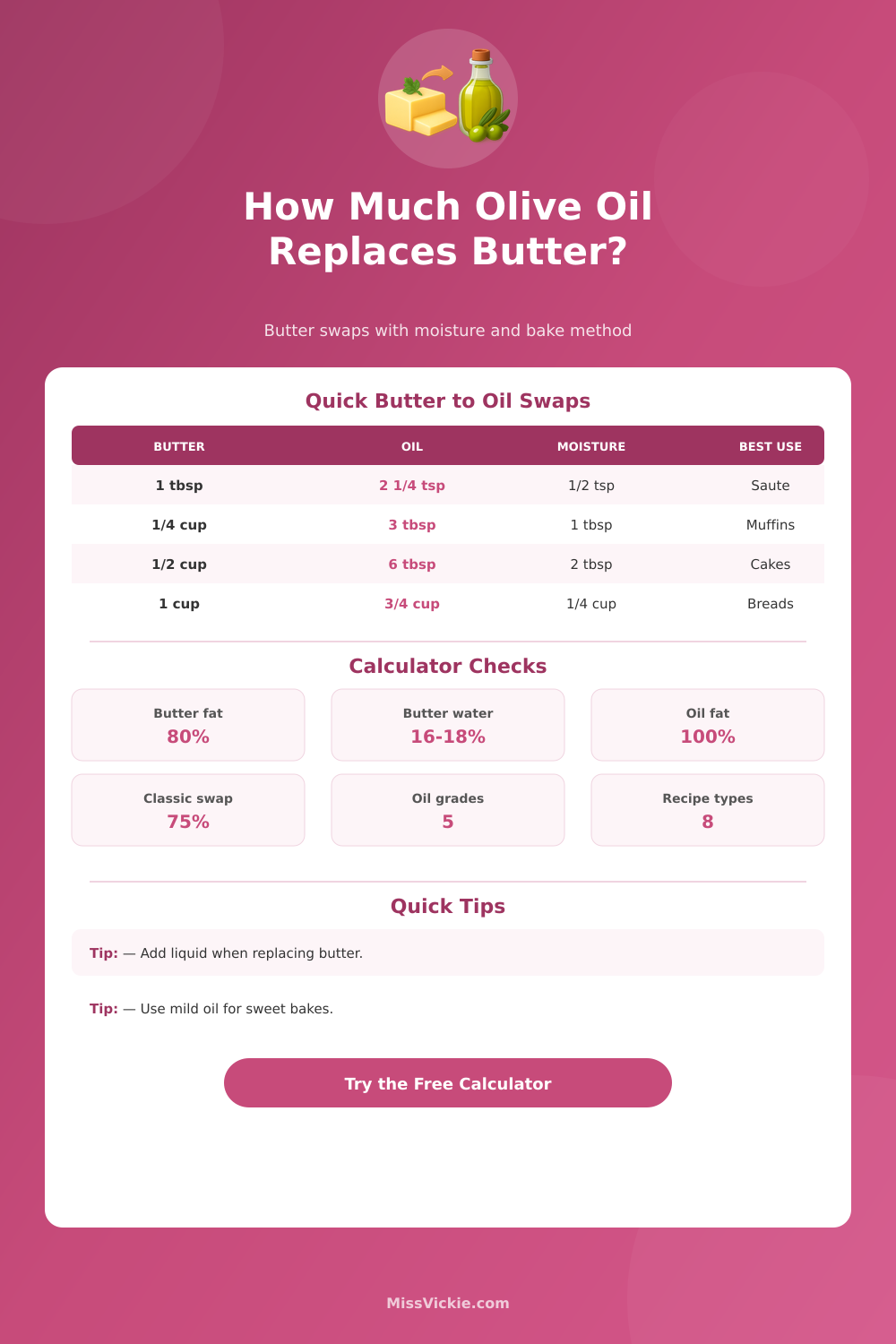
This butter to olive oil conversion calculator treats the swap as a fat, water, flavor, and method problem. A simple 3/4 cup olive oil for 1 cup butter rule is useful, but it does not explain why muffins stay tender, cookies spread, or pan sauces behave differently.
Use the oil amount for the fat replacement, then use the liquid compensation only when the recipe needs the moisture that butter would have supplied. For stovetop and roasting methods, the missing butter water usually evaporates, so the calculator intentionally reduces the liquid add-back.
You can’t just replace butter with olive oils in a recipe because butter and olive oil has different chemical properties. Butter contain fat, water, and milk solid. Olive oil contains almost 100% fat.
Because butter contains water, butter provide moisture to a recipe. Because olive oil do not contain water, olive oil does not provide moisture to a recipe. Therefore, if you replace butter with olive oil, you are replacing a substance that contain moisture with a substance that is pure fat.
How to Replace Butter with Olive Oil
To make this replacement, you must account for both the fat and moisture in the recipe. People often attempt to use a simple ratio to determine how much olive oil to use to replace the butter in a recipe. However, this simple ratio will fail because it does not account for water in the butter.
If you use only olive oil to replace the butter in a recipe, the baked good will lack the moisture the butter provides to the recipe. This lack of moisture can cause the baked good to be too dense or dryly. Additionally, butter can trap air in a recipe, but olive oil cannot trap air.
Therefore, if you use olive oil instead of butter in a recipe that use creaming methods to incorporate air into the recipe, the recipe will spread more with the olive oil and will contain less height then if butter had been used. The type of recipe that you are following will determine the proper way to replace butter with olive oil. If you are baking a cake or muffin batter, olive oil may help create a soft crumb in your baked goods because olive oil coats the protein in the flour more thorough than butter does.
However, if you use olive oil in place of butter, you will likely need to add extra liquid to the cake batter to compensate for the water that will be lost when you remove the butter from the recipe. If you are baking quick breads that contain fruit and nut, you can avoid adding extra liquid to the recipe because the water content of the fruit and nuts will help to even out the loss of water caused by replacing butter with olive oil. However, if you are baking yeasted bread, such as focaccia, you will likely need to add water to the dough to compensate for the water that will be lost when you replace butter with olive oil.
The flavor of the olive oil that you use will change the flavor of the finished recipe. Using a mild extra virgin olive oil will introduce only a subtle flavor into the recipe. However, if you use a robust extra-virgin olive oil, the flavor of baked goods like cakes may be bitter due to the heat of the oven reacting with the peppery flavor note in the robust olive oil.
To avoid this flavor issue, ensure that you use the appropriate flavor olive oil for your recipe. Additionally, most recipes that use butter also use salted butter to add salt to the recipe. Since olive oil does not contain salt, you will need to add extra salt to the recipe if you would like to use salted butter in place of olive oil.
Using a calculator can assist you in understanding how to make these substitutions in your recipe. The calculator can help you determine how much olive oil and how much liquid to add to your recipe. You can use the calculator to determine how much olive oil to use in your recipe, as well as how much liquid to add.
The calculator will help you to manage the fat, the water, the flavor, and the cooking method of your recipe. If you use these specific adjustment to change butter to olive oil, you can make the result of this change to your recipe more predictable. Although the calculator cannot taste the finished recipe to ensure that the flavor is to your liking, the calculator will help you to manage the recipe and its components to ensure that the resulting recipe produces the best possible results with the ingredient that you use to make your recipe.