Butter per Cup of Rice Calculator
Estimate butter for dry rice cups or grams by rice variety, cooking method, richness target, salted or unsalted butter, pilaf style, servings, oil substitution, cooked yield, fat, and sodium.
Choose a common rice dish, then adjust the dry rice, method, richness, butter type, oil swap, and serving count.
Butter Rice Breakdown
| Rice Dish | Butter per Dry Cup | Best Timing | Flavor Result |
|---|---|---|---|
| Plain steamed long-grain rice | 1/2 to 1 tbsp | Fold in after resting | Light sheen, grains stay separate, butter taste stays gentle. |
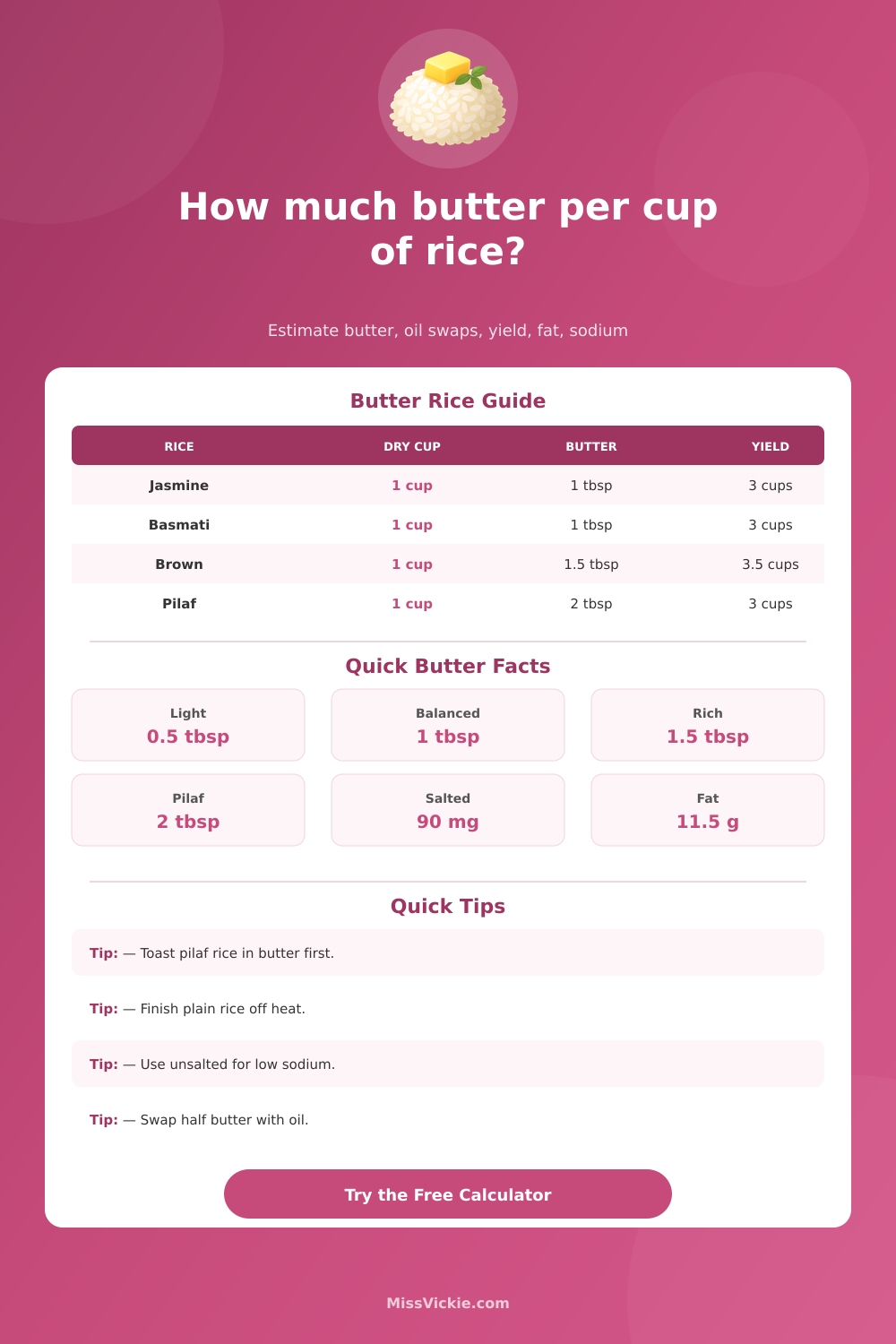
| Jasmine or basmati side rice | 1 tbsp | Finish off heat | Aromatic rice keeps its fragrance while gaining a soft butter finish. |
| Brown rice bowl base | 1 to 1 1/2 tbsp | Finish while hot | Nutty grains can carry a little more fat without tasting heavy. |
| Pilaf with onion or aromatics | 1 1/2 to 2 tbsp | Toast rice in fat first | Richer flavor, glossy grains, and toasted edges before liquid is added. |
| Rice cooker family batch | 3/4 to 1 tbsp | Split start and finish | Some butter scents the pot while the final pat keeps the top glossy. |
| Restaurant-style side rice | 1 1/2 to 2 tbsp | Finish and fluff | Noticeably buttery, softer mouthfeel, and stronger salt perception. |
| Rice Variety | Dry Cup Weight | Cooked Yield per Cup | Butter Note |
|---|---|---|---|
| Long-grain white rice | About 185 g | About 3 cups cooked | Works well with 1 tbsp butter per dry cup for a balanced side. |
| Jasmine rice | About 185 g | About 3 cups cooked | Use a lighter finish if you want the floral aroma to stay dominant. |
| Basmati rice | About 180 g | About 3 cups cooked | Pilaf and toasted styles can use more butter without clumping. |
| Brown rice | About 190 g | About 3 1/2 cups cooked | Nutty bran flavor tolerates a richer butter finish. |
| Short-grain or sushi rice | About 200 g | About 2 3/4 cups cooked | Keep butter light because sticky grains concentrate richness quickly. |
| Arborio or risotto rice | About 195 g | About 3 cups cooked | Rich finishing butter is normal, especially when stirred in off heat. |
| Wild rice blend | About 170 g | About 3 1/4 cups cooked | Earthy blends work well with salted butter or a butter-oil split. |
| Batch | Dry Rice | Balanced Butter | Approx Cooked Yield |
|---|---|---|---|
| Small dinner side | 1 cup dry rice | 1 tbsp butter | About 3 cups cooked rice, enough for 3 to 4 modest sides. |
| Family dinner | 2 cups dry rice | 2 tbsp butter | About 6 cups cooked rice, enough for 5 to 6 side servings. |
| Meal prep bowl base | 3 cups dry rice | 3 tbsp butter | About 9 cups cooked rice, enough for 6 generous bowl bases. |
| Potluck side tray | 5 cups dry rice | 5 to 8 tbsp butter | About 15 cups cooked rice, enough for 15 side portions. |
| Holiday pilaf | 6 cups dry rice | 9 to 12 tbsp butter | About 18 cups cooked rice with a richer pilaf-style finish. |
| Large service pan | 10 cups dry rice | 10 to 15 tbsp butter | About 30 cups cooked rice, enough for a crowd side dish. |
Rice is made better by butter, and a little too much or too little makes all the difference between a satisfying meal and an okay one. When you’re cooking for yourself, you can just eyeball the quantity, but once you start experimenting with different varieties or need to cook for more than yourself, knowing just how much you should of being adding makes a big difference, rice can suddenly feel either greasy or dry. That’s when the butter/rice calculator comes in handy. It take all those variables and gives them to you as a number.
Which brings us to the next point: The tool’s inputs shift how much butter the rice can take. The first input is rice variety. Sushi rice taste heavy when overloaded with butter; brown rice has a nutty edge that allows for more fat. Next, consider the cooking method. Toasting rice in pan before adding water (as in a pilaf) takes up some of the rice’s fat allotment during the toasting step, which means adjusting final amount accordingly. Steaming plain rice gets the butter at the end, allowing the full measure to land on the finished grains.
Why This Tool Is Helpful for Cooking Rice
The nutrition and flavor depend on your richness setting. Light finishes keep each grain separate, while letting whatever seasonings or broths you added shine through. Richer settings coats the rice better, resulting in that soft sheen you see on the sides at restaurants. And whether you use salted or unsalted butter affects the sodium count (which might be an issue if you’re using broth or finishing with salt). For those looking to split the difference between butter’s flavor and a higher smoke point, there’s always the oil swap.
But with one number in a tablespoon? That doesn’t really say as much to you as the outputs do. How much finished cooked rice are you going to end up serving (the cooked yield)? That’s important if you’re packing lunches or figuring out how many serving this is for. How does the amount of fat and sodium compare per serving, so that you can know if the rice is still within range of the rest of your meal? What was the ratio of oil vs. Was there enough butter to make the tradeoff more clear then mysterious?
Timing makes a difference with butter in rice. If you stir it in before cooking, it helps separate the grains and scents the whole pot of food. But if you fold it in after resting, it stay brighter-tasting on top. The calculator adjusts the rate based off your plan for adding the fat. Most cooks is aware of this.
People typically make mistakes by assuming all types of rice are equal (they aren’t) and by measuring only the dry rice (the wrong way). For example, when you triple your volume by cooking long-grain rice, the butter you measured against that cup of dry rice ends up spread across a much larger finished amount. It distributes it across a far greater quantity of cooked grains. This is why the tool also shows the butter per cooked cup: it avoids the temptation to over-butter a big potful based off measurements tied to the incorrect quantity.
What makes the calculator so useful, though, is that after you determine which type of rice you’re looking for, all of the mental math goes away. Pick your style, pick whether you’ll be using a pot or a pan, pick if you prefer something rich or not, and the rest will follow. Even when making multiple cups of rice on a weeknight, the results feels planned rather than random, and I love that. Actualy, it makes everything feel more comfortabley.