🧈 Butter math for baking and cooking
Butter Converter
Convert butter between sticks, cups, tablespoons, grams, ounces, pounds, and milliliters by butter style, measuring state, batch scale, and package planning.
Use standard U.S. stick math for quick baking, then switch to grams when you need precision. Butter type and state both change how a cup or spoon actually weighs.
These quick reference cards show why butter choice matters before you scale a frosting, pie dough, saute finish, or browned butter recipe.
Selected Cup Weight
--
--
One Stick
8 tbsp
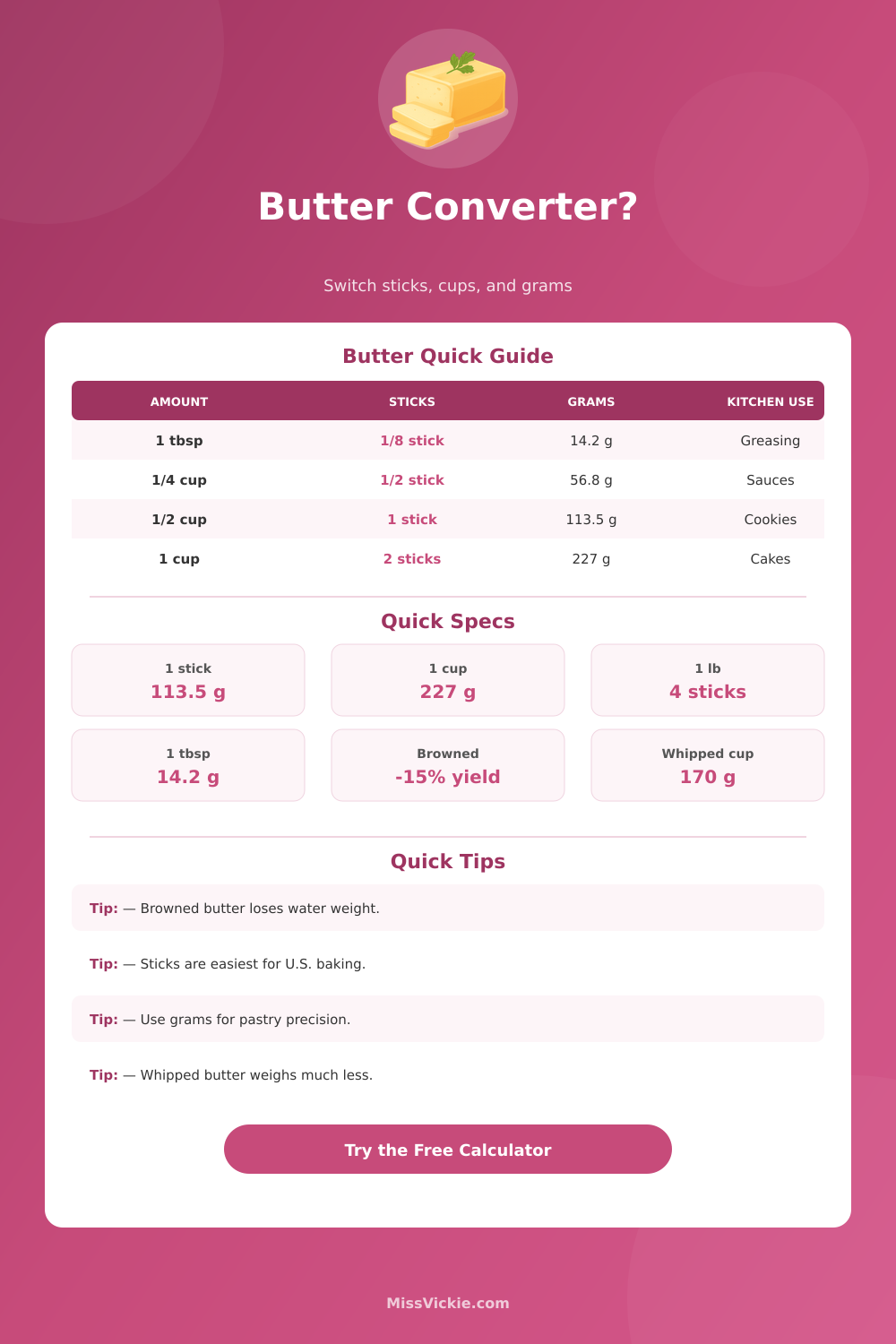
A standard U.S. stick equals 1/2 cup and about 113.5 grams.
Browned Yield
85%
Start with more butter when a recipe asks for finished browned butter.
Whipped Cup
170 g
Whipped butter is far lighter per cup than stick butter.
| Measure | Sticks | Grams | Kitchen Note |
|---|---|---|---|
| 1 teaspoon | 1/24 stick | 4.7 g | Useful for pan finish and toast |
| 1 tablespoon | 1/8 stick | 14.2 g | Common for saute and sauces |
| 1/4 cup | 1/2 stick | 56.8 g | Typical pie dough portion |
| 1/2 cup | 1 stick | 113.5 g | Standard U.S. wrapper mark |
| 3/4 cup | 1.5 sticks | 170 g | Common cake or cookie amount |
| 1 cup | 2 sticks | 227 g | Useful for frostings and bars |
| Butter Type | 1 Cup | Fat % | Best Use |
|---|---|---|---|
| Unsalted butter | 227 g | 80% | Cookies, cakes, pastry |
| Salted butter | 227 g | 80% | Table use and quick bakes |
| European-style | 240 g | 82-84% | Laminated dough, buttercream |
| Cultured butter | 228 g | 80-82% | Toast, sauces, finishing |
| Whipped butter | 170 g | Approx 80% | Spreading, light volume swaps |
| Clarified butter | 225 g | 99% fat | High-heat saute and searing |
| Ghee | 220 g | 99% fat | Roasting and curry bases |
| Plant butter sticks | 220 g | 78-80% | Dairy-free baking |
| Recipe | Typical Amount | Stick Count | Metric Weight |
|---|---|---|---|
| Chocolate chip cookies | 1 cup | 2 sticks | 227 g |
| Single pie crust | 10 tbsp | 1.25 sticks | 142 g |
| Mashed potatoes for 6 | 6 tbsp | 0.75 stick | 85 g |
| Pan sauce | 2 tbsp | 0.25 stick | 28 g |
| Buttercream frosting | 1.5 cups | 3 sticks | 340 g |
| Browned butter blondies | 1 cup start | 2 sticks | 227 g |
| Package | Total Weight | Stick Equivalent | Best For |
|---|---|---|---|
| 8 oz box | 227 g | 2 sticks | Small bakes and quick dinners |
| 1 lb box | 454 g | 4 sticks | Most holiday baking plans |
| 2 lb box | 907 g | 8 sticks | Cookie weekends and freezer prep |
| 1 kg block | 1000 g | 8.8 sticks | Pastry work and restaurant prep |
| 15 oz tub | 425 g | 3.7 sticks | Whipped or spreadable butter |
Butter is an type of fat that is used in a variety of cooking and baking application. However, the weight and the volumes of butter can change depending on the type of butter that is used and the state of the butter. For example, if you use one cup of chilled unsalted butter, it will weighs approximately 227 gram.
However, if you also soften the butter to room temperature, the density of the butter will change, and the weight of the butter per cup will also change. Butter is not pure fat but contain water, milk solids, and air. Because European-style butter has a higher percentage of fat than American butter, it will weigh more than American butter when measured by volume.
How to Measure Butter
The state of the butter that is used in a given recipe must be accounted for because it will impact the accuracy of the recipe. If a recipe call for butter that is cold to the touch, it is important to use butter that is cold to the touch so that the density of the butter is maintain and it will provide the proper texture to recipes like pastry dough. Using butter that is softened will alter the texture of the finished product.
Additionally, if the cook browns the butter, the weight of the butter will decrease due to the evaporation of the water in the butter. Approximately 15 percent of the weight of the butter can be lost when browning butter. Therefore, if a recipe require a certain amount of browned butter, you will need to use more butter when the butter is first prepared.
Depending on the type of butter that you will use in the recipe, there will be difference in how the butter is measured. American butter is commonly sold in sticks, and one stick of butter is equal to half a cup or eight tablespoon. Butter may also be sold in blocks in other regions of the world, requiring a kitchen scale to measure the gram of butter that will be used in the recipe.
In recipes, salted butter and unsalted butter may be call for. The salt in salted butter can alter the tenderness of pastry, so unsalted butter may be required. Plant-based butter may also be used in place of butter but may contain a different amount of fat than butter.
In this case, it is necessary to read the label on the plant-based butter to ensure that the fat content is similar to butter. A variety of presets can be used to make measuring the butter for a recipe easier. Presets allow for the type of butter and the state of the butter to be input into the preset.
The preset will display the weight or the volume of butter that is required for the recipe. These presets can tell how many stick of butter or how many gram of butter are needed. Additionally, rounding option can be selected to make the butir measurement easier.
For example, it may be easier to use rounded measurements to the nearest quarter cup. However, the butter that is measured may stick to the bowl that are used for mixing the butter with other ingredients. Therefore, some loss of butter will happen during the cooking process.
When scaling a recipe, care must be taken when using butter. Not only will the state of the butter impact the recipe, but some of the butter will be lost during the cooking process. If the recipe is to be doubled, you should account for the potential loss of butter during the cooking process.
If large batch of food are to be prepared, it is best to plan the recipe with the size of the butter packages in mind. For example, one-pound box of butter contain four stick of butter. If calories are to be tracked in the recipe, it is essential to know that one tablespoon of butter contains over 100 calorie, all from fat.
Therefore, accurately measuring the amount of butter for a recipe will ensure the best possible outcome for the recipe and prevent the waste of butter.