
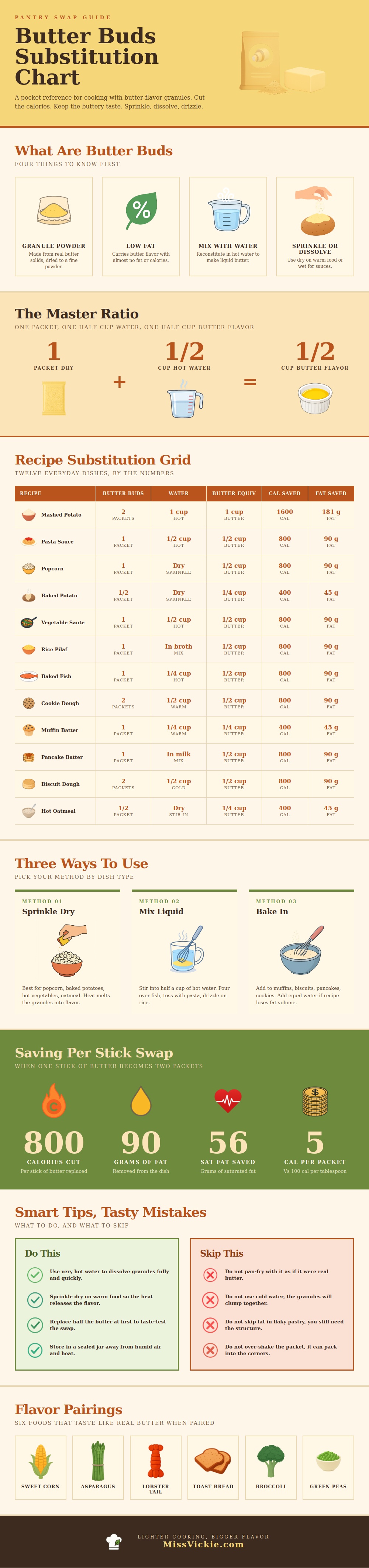
Butter Bud are dehydrated butter solids that are used to provide flavor of butter to foods without adding the fat content of traditional butter. Butter Bud granules is made from real butter that has been processed to remove most of the moisture and fat content of the butter. Because of the removal of the fat in the manufacturing of Butter Buds, products that utilize Butter Buds contain fewer calories then recipes that use traditional butter.
Furthermore, Butter Buds can be used in an amount that replaces the butter that would otherwise be used in the recipe, as they contains the same flavor as butter. There are two primary method in which Butter Buds can be used in cooking and baking. The first method is to reconstitute the granules of Butter Buds into a liquid form by adding the granules to hot water.
What Butter Buds Are and How to Use Them
For instance, one can add one packet of Butter Buds to half a cup of hot water to reconstitute the product into a liquid form. The second method by which you can use Butter Buds is in their dry form, where the granules can be added direct to warm foods. In this case, the heat from the food will melt the granules and release the flavor of butter.
There are several different cooking applications in which Butter Buds can be used. For instance, the liquid form of Butter Buds can be used to make sauces or to coat rice. Additionally, you can use Butter Buds in baking recipes, but you must first mix the product with water to mimic the effect of butter in the baked goods.
However, Butter Buds should not be used as the frying oil for foods because Butter Buds do not have the same smoke point as cooking oil, and they do not contain the same body to brown foods when frying. Furthermore, the granules will clump together when you mix them with cold water, so warm or boiling water should be used instead. By replacing the butter that would be used in a given recipe with Butter Buds, the fat and calorie content of that recipe can be significantly reduced.
For instance, one stick of butter contains 800 calories and 90 grams of fat, but the amount of Butter Buds and water that is used to flavor food contains fewer calories. If half of the butter that would be used in a recipe is replaced with Butter Buds, the fat content of that recipe will be reduced. Many people use Butter Buds in cooking and baking to manage the fat content in their diets because they contain the flavor of butter but little fat content.
However, it is important to understand that Butter Buds are not a direct replacement for the butter that is used in baking. Butter contains fat that reacts with baked goods to create flakiness in pastries or tender baked goods like cakes. Because Butter Buds do not contain fat, they cannot produce these same result.
Therefore, traditional butter should be used in items like pie crusts or croissants. However, Butter Buds can be used in items like rice or vegetables to add flavor. To store Butter Buds, you should store them in a sealed jar in an area that is away from humidity in the kitchen.
High humidity levels may affect the texture of the granules that make up Butter Buds. If the granules become packed together in the jar, you can gently tap the jar on the counter to separate the granules. Butter Buds can be used in a variety of foods; they can enhance the flavor of foods like corn, asparagus, broccoli, peas, or toast.
In cooking with Butter Buds, individuals can enjoy the flavor of butter in their foods while reducing the amount of fat and calories that the body consumes.