MissVickie brisket prep calculator
Brisket Marinating Time Calculator
Estimate brisket marinade time, injection rest, dry rub rest, refrigerator window, and cooking-plan readiness from cut, weight, acid, salt, fridge temperature, and prep method.
Choose a brisket scenario, then adjust the cut, weight, acid, salt, injection, dry rub rest, fridge temperature, and planned cook.
Brisket prep plan
Timing appears here after calculation.
Brisket Timing Breakdown
| Brisket Cut | Base Wet Marinade | Injection Rest | Dry Rub Rest | Quality Cap |
|---|---|---|---|---|
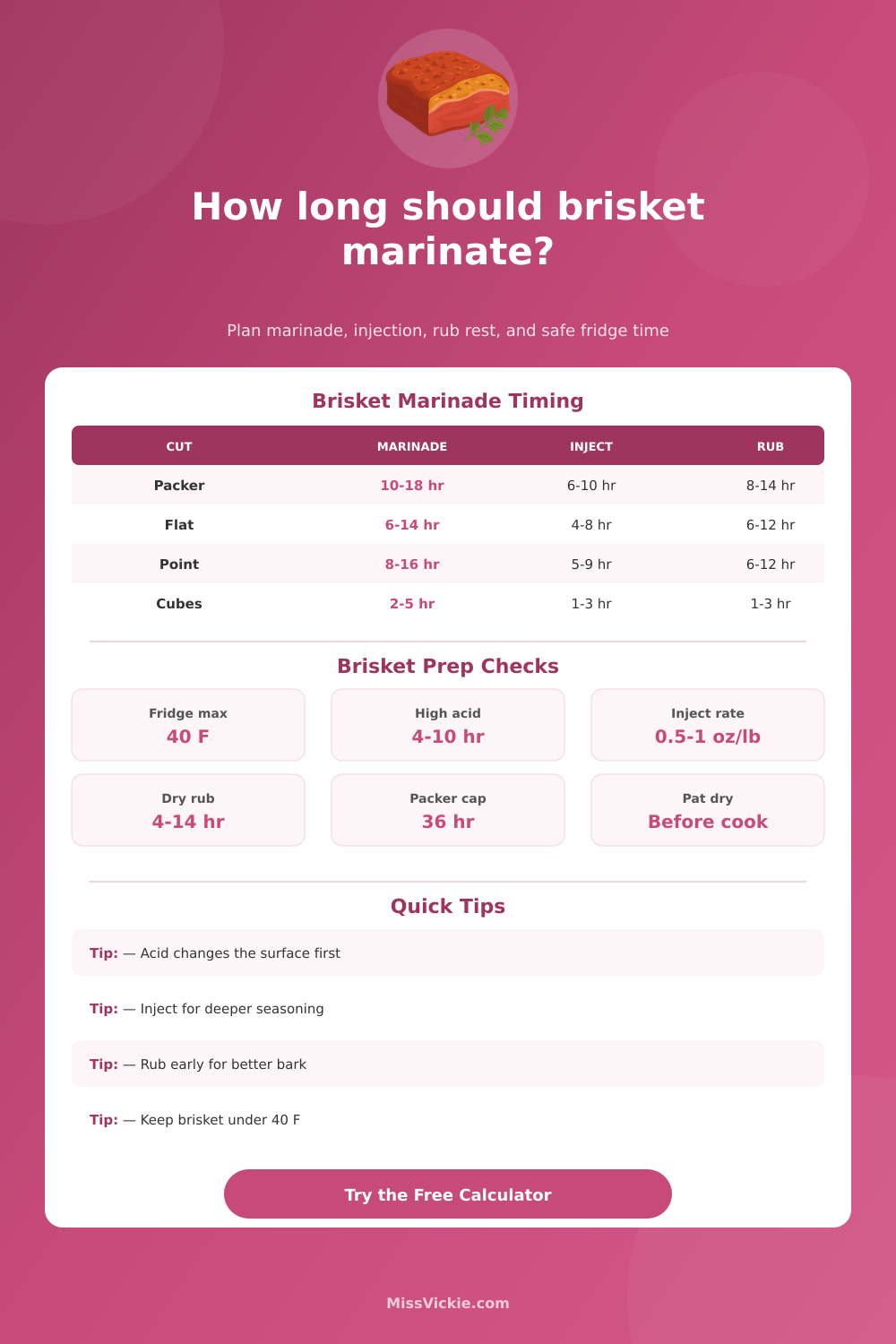
| Whole packer | 10 to 18 hours | 6 to 10 hours | 8 to 14 hours | Up to 36 hours |
| Flat | 6 to 14 hours | 4 to 8 hours | 6 to 12 hours | Up to 30 hours |
| Point | 8 to 16 hours | 5 to 9 hours | 6 to 12 hours | Up to 34 hours |
| Closely trimmed flat | 5 to 12 hours | 3 to 7 hours | 4 to 10 hours | Up to 24 hours |
| Burnt end cubes | 2 to 5 hours | 1 to 3 hours | 1 to 3 hours | Up to 12 hours |
| Marinade Factor | Use It For | Timing Effect | Texture Watch |
|---|---|---|---|
| Low acid coffee, beer, onion, stock | Classic barbecue brisket prep | Normal to slightly longer window | Low surface risk |
| Medium wine, vinegar, citrus balance | Braised or roast brisket | Shortens wet time by about 15 to 20% | Watch thin edges |
| High citrus or vinegar | Taco brisket or tangy slices | Use a short cap, usually under 10 hours | Can turn surface mealy |
| Soy, bouillon, Worcestershire salt | Deep savory profile | Shorten long soaks | Can over-season edges |
| Pineapple or papaya enzyme | Very brief tenderizing touch | Use minutes to a few hours, not overnight | Can get mushy fast |
| Injection Level | Approx Amount | Rest Before Cook | Best Match |
|---|---|---|---|
| None | 0 | No injection rest | Simple dry rub or braise |
| Light | 0.5 oz per lb | 3 to 6 hours | Flat or small brisket |
| Standard | 0.75 oz per lb | 4 to 8 hours | Most smoked briskets |
| Heavy | 1 oz per lb | 6 to 10 hours | Lean flat or long smoke |
| Competition | 1.25 oz per lb | 8 to 12 hours | Big packer with strong beef stock |
| Fridge Reading | Calculator Treatment | Prep Window | Action |
|---|---|---|---|
| 34 to 36 F | Very cold | Can use the longer quality window | Turn bag halfway |
| 37 to 40 F | Normal safe fridge | Use calculated window | Keep covered and low in fridge |
| 40 to 42 F | Caution zone | Shorten to same-day prep | Lower fridge before long rest |
| Over 42 F | Unsafe for long raw rest | Do not marinate for hours | Chill properly first |
Best for coffee, beer, onion, chile, wine, and mild vinegar notes on the outside of a thick brisket.
Best when the flat is lean or the cook is long enough that internal moisture and seasoning matter.
Best for barbecue because salt starts working and the surface gets tacky before smoke.
Use a shorter marinade, inject for the flat, then rub long enough to rebuild a dry surface.
This calculator is a practical kitchen planner for raw brisket prep. It does not replace a thermometer, safe refrigeration, or local food safety guidance.
You carefully trimmed your whole packer brisket and now fridge is silent. But you’re not done! Why? Because marinating are more complicated then just slapping spices on things like pork chops or chicken breast. The thicker the beef, the less flavor penetrates. The surface tastes great right away, while inside is unaffected for hours, or days (and no, soaking in a bath of marinade doesn’t help; liquid won’t reach deeper than the surface unless you…).
This is why it’s more about timing then how complex the recipe is. An unusual spice combination might do actualy nothing to the inside of meat without sufficient time. As soon as you know both level of acid used (plugging that into the calculator above) and the weight of your cuts, it spits out an answer to question: “Am I going to screw up the texture? Is 12 hours sufficient?” The calculator includes variables that most home cooks don’t even think about until they get a dry spot in the middle or a mushy edge, variables such as amount injected and temperature of the fridge. If you understand how all those inputs affects one another, you’ll suddenly rethink entire prep window.
The Science of Marinating Brisket
Many people thinks “more is better” when thinking about the acidity in your mix. This is not true here. Strong acids will actualy break down protein too aggressively on surface first. This results in mealy rather than tender meat by the time you reach center. The device shifts your safety zone downward accordingly if you opt for an acidic profile such as straight vinegar or lime juice, which indicates that you’ll want to keep those soaks brief… Sub-ten hours maybe. To avoid ruining texture (while still getting some flavor into the meat).
Mild onion, coffee, beer, all these things has low enough pHs to season without tearing the muscle fibers apart upon contact, leaving you with far greater leeway; this difference is what makes good bark separate from bad. Acid doesn’t penetrate as far as salt does (although a long enough period will allow salt to go deep as well). That’s why you can leave something marinating with a lot of salt for a long time, like dry brined items or in very salty marinade. And not worry about it getting all mushy. The calculator knows this too and will extend suggested wait time if you choose soy- or otherwise balanced profiles.
This assumes your refrigerator temperature is cold enough. Temperature is key: If your fridge isn’t cold enough, then the bacteria will grow quick at any rate, undoing any good done to increase flavors via their penetration in the meat. Keep your meat safe, wrapped up, and cold until you’re ready to let salt do its thing.
Injection adds another element. It puts extra moisture and seasoning right where it can go the driest on long smokes (the lean flat). However, injected fluid take time to spread evenly through muscle fibers. If you slice it before it is fully spread, you risk pockets of liquid leaking as you cut. This tool actualy determines how long to wait after injection for the distribution process to happen, and without delay it doesn’t go into meat; it just goes right onto the smoker grates! A small logistical detail, but man, does it make a difference in juiciness.
Most folks over-complicate things because they try to inject, rub, and marinate all in one step. They do not think about how each of those steps counteracts what they did previous. For example, a wet surface prevents bark from forming because moisture steams the spices instead of letting them cure and adhere properly. The spices won’t stick and cure well; it will just steam off your meat. And that’s why the calculator makes you think through cause and effect, not just plop things on there and hope for the best.
So in short, making brisket takes some finesse and waiting, since you’re bucking both biology and physics to produce something tasty. It’s about how to use time well rather than spend most time possible; it’s about adjusting for what you want to achieve with your cut and your cook, whether that be a traditional Texas smoke or a rapid braise. You could of used more salt. Control the salt, watch out for acid, respect the density, and go easy on the cold. When that initial slice shows a deep flavor throughout, rather than just a seasoned exterior hiding bland beef within, your later self thanks you.