
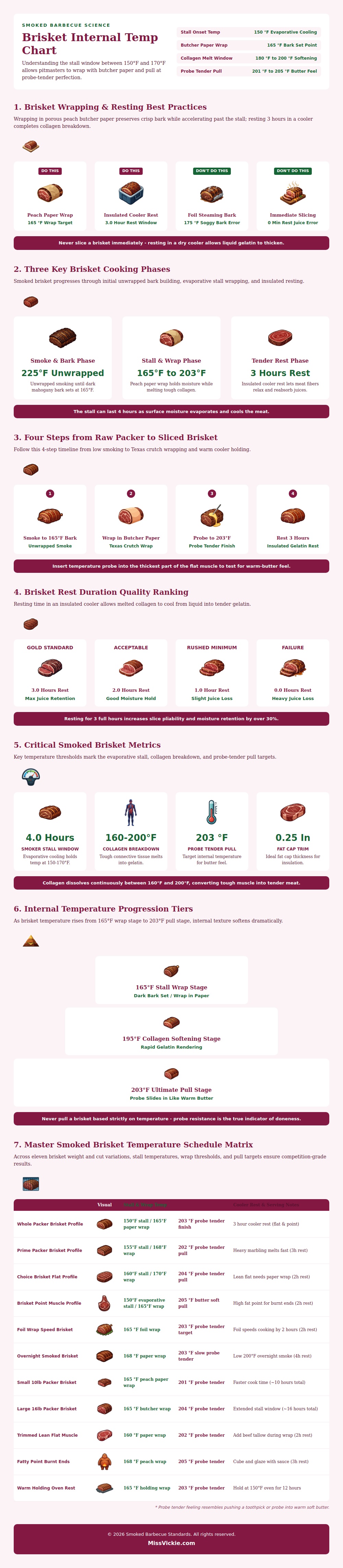
Evaporative cooling causes the thermometer to stop climbing. You’ve been tending the fire for hours now. The bark is dark and looks good, but what’s going on? Why won’t the internal temp rise? The meat isn’t trying to mock you; it has simply cooled off in that way. Cranking up the heat at this point ruin the texture. So how does this evaporative cooling affect the final bite, and when should you step in? That’s where the chart comes into play.
When your brisket reaches about 165 degrees Fahrenheit, most pitmasters will wrap it in butcher paper. It is not because some recipe blog said so. At this time, the meat are still too tough to eat. However, the bark has begun setting, which ensures it stays crispy. By wrapping it here, you’re protecting the exterior from further direct heat exposure, while also permitting steam to dissipate (without getting that dreaded soggy bottom that aluminum foil creates). The porous nature of paper allows the meat to “breathe” and moves it more quickly past the plateau temperature.
Why Your Meat Stops Getting Hotter
After that, you’re through the stall. Now you’re in what I call the collagen melt window. This is where gelatinization happens, which is when collagen break down into gelatin to make smoked meats juicy. You can’t hurry this process along by increasing the temperature. If you try, all you’ll get is a bunch of stringy, dry meat. Let the smoke and the low and slow heat do their thing. As the chart shows, this happens in a range from 180 to 200 degrees Fahrenheit; but it’s only half the story.
To know when you’ve reached there, you have to go beyond your nose and look. And feel, with the probe. A lot of folks will take brisket out of the smoker when the thermometer reaches whatever their target temp is (ie: 201) and then slice right away. That leads to often dry slices as the juices haven’t had time to redistribute yet. Probe tenderness is your friend for determining doneness. Slide that thermometer into the flat muscle, and if it’s like slipping into warm butter it’s ready. Internal temps can reads anywhere from 203-205 degrees, but it doesn’t matter as much as how tender it feels. Hard means keep it in the smoker. Soft? It’s good.
More important than the cook itself, however: The rest. After wrapping the cooked brisket, let it sit for at least 3 hours in an insulated cooler. That feels like a lot of waiting time, but it’s necessary to give the meat enough time to cool down and for the meat fibers to relax and soak up those juices that got forced to the exterior during cooking. If you skip this stage, the collagen and rendered fat will ooze all over your cutting board. What you want is that gooey gelatin-thickening goodness to be soaking into the meat, not on your counter.
We also see from the visual guide how each cut will respond differently. For instance, there’s a lot more fat on the point muscle, which allow for a slightly hotter pull temperature (usually about 205 degrees) before it dries out. Meanwhile, the flatter muscle is thinner and less fatty and therefore requires an earlier pull in order to maintain moisture. Knowing that informs your slicing and trimming. This isn’t simply a matter of cooking a single large hunk of beef; you’re dealing with two very different textures in one cut.
Brisket smoking is a process of respecting the science; it’s about patience. This is not about butting heads with the meat to force it along quicker. It’s about working with it and letting go to allow its magic to work. You must allow the juices to settle, the collagen to break down, and the muscle biology to do what it does best. The layers of this rested brisket will come apart like old lovers as you carve into them, dripping with melted fat and holding themselves together. Every bite is warm butter.