🧂 Brine Ratio Calculator
Set wet brine salinity, sugar, aromatics, and soak time by protein type and thickness
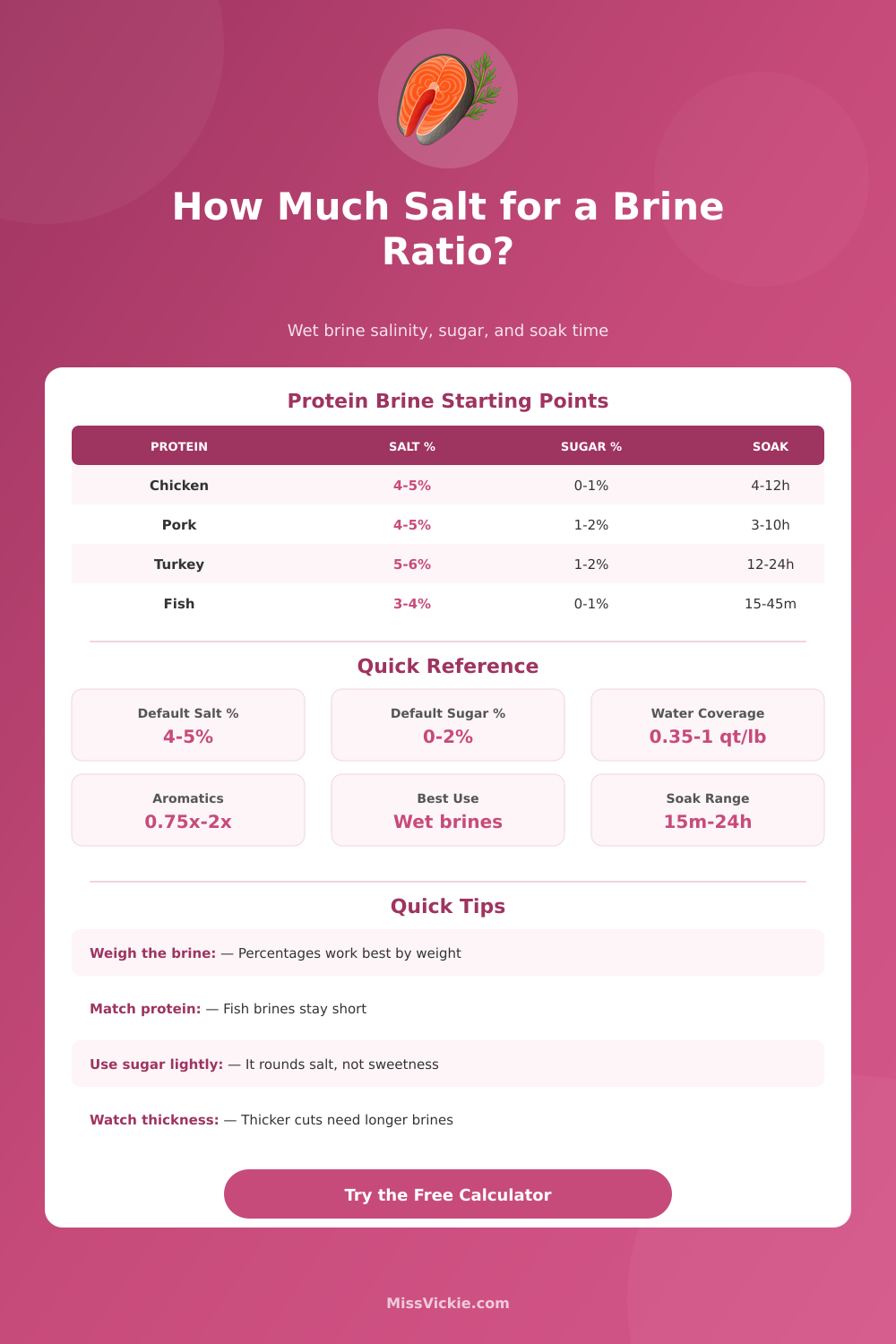
| Protein | Salinity | Sugar | Water / lb | Typical Soak |
|---|---|---|---|---|
| Chicken Breast | 4.0% | 0.5% | 0.90 qt | 4-8h |
| Chicken Thigh | 4.5% | 0.5% | 0.85 qt | 6-10h |
| Pork Chop | 4.5% | 1.5% | 0.85 qt | 3-6h |
| Pork Loin | 5.0% | 1.5% | 0.90 qt | 6-12h |
| Turkey Breast | 5.5% | 2.0% | 1.00 qt | 12-24h |
| Fish Fillet | 3.5% | 0.5% | 0.50 qt | 15-45m |
| Shrimp | 4.0% | 1.0% | 0.35 qt | 15-30m |
| Beef Steak | 4.5% | 0.5% | 0.60 qt | 1-4h |
| Thickness | Chicken / Pork | Turkey / Beef | Fish / Shrimp |
|---|---|---|---|
| 0.25 in | 2-3h | 4-6h | 10-20m |
| 0.50 in | 3-4h | 6-8h | 15-30m |
| 0.75 in | 4-6h | 8-12h | 20-35m |
| 1.00 in | 5-8h | 10-16h | 25-45m |
| 1.50 in | 7-12h | 14-24h | 30-45m |
| Protein | Base Pack | Blend Notes | Factor Use |
|---|---|---|---|
| Chicken | Garlic, bay | Classic savory | 1x-1.5x |
| Pork | Garlic, thyme | Herb-forward | 1x-1.5x |
| Turkey | Sage, citrus | Roast style | 1.5x-2x |
| Fish | Dill, lemon | Light and bright | 0.75x-1x |
| Shrimp | Coriander, dill | Fast brine | 0.75x-1x |
| Beef | Juniper, thyme | Deep, peppery | 1x-1.5x |
Brining is the process of soaking meat in a salt water solution. Brining is used with meat because meat can lose moisture during the cooking process; dry and tasteless meat are the result of moisture loss during cooking. Brining change the cellular structure of the muscle in the meat.
This change allow the meat to retain more water when it is cooked. The result of brining the meat is juicy meat. The percentage of salt in the brine solution determine the success of the brining process.
How to Brine Meat
Salinity is the ratio of salt to the total weight of the water in the brine solution. Brining recipes asks for a specific amount of salt to be mixed with water to make the brine solution. Using too little salt will not allow the cellular structure of the meat to change enough to absorb the salt well.
Using too much salt will produce overly saltily meat that isnt palatable to the eater. Using the proper percentage of salt will result in well-seasoned meat that is not too salty. For example, four percent salt solution brines are common recipes for chicken breasts such that the meat absorb the salt and remains not too salty to the eater.
Depending on the type of meat being brined, the percentage of salt required change. For example, turkey can take more salt than chicken but fish will break down too much with the salt and require less brining time. Sugar can be added to the brine solution but not for the flavor of the meat.
The sugar balance the saltiness of the brine solution and promotes the browning of the outside of the meat when it is cooked. However, you should take care not to use too much sugar since the outside of the meat can burn before the inside of the meat is cooked. The thickness of the meat being brined impact the length of time that the meat is to be brined.
The reason for this is due to the process of osmosis. Saltwater enter the muscle of the meat. The salt from the brine solution moves from the outside to the center of the meats muscle.
Because the process is slow, thin meats such as pork chop require a shorter brining time than thick meats like turkey breasts. If thick meats are not brined for a sufficient length of time, the center of the meat will not be seasoned and will be bland in comparison to the seasoned outside of the meat. Other ingredient can be added to the brine solution to impart flavor to the meat.
These ingredient, called aromatics, dont chemically alter the solution but add flavor to the meat. However, the amount of these ingredients should be scaled to the amount of water in the brine solution; otherwise, the flavor will be too weak to flavor the meat well when large amount of water are involved in the brining process. The brine should be cold when you add the meat to the brine solution.
Salt and sugar can be dissolved in boiling water to make the brine solution. However, you should add cold water to the hot brine solution to dilute the hot solution. The hot water will cook the outside of the meat and promote bacterial growth if the meat is placed in the warm brine solution.
After the meat is brined, the meat should be rinsed with cold water and patted dry with paper towel. The meat should be rinsed to remove excess salt from the surface of the meat. If the meat is not rinsed it will contain excess salt on the surface.
The meat should be patted dry after being rinsed because if the meat is wet when cooked the exterior will steam rather than brown. Following these step will ensure that the meat is juicy and well-seasoned. It could of been better if the meat was patted dry more thoroughy.
Youll find that the meat remains tasty even if you dont follow every step perfectly. The cooks should of known that moisture levels matter alot. Making a brine is a moddern way to cook meat.
It is actualy a very simple process that makes meat taste good. The meat will be delicious and you will recieve compliments.