🍞 Bread Proofing Time Calculator
Find the perfect first and second rise time based on yeast type, dough, and temperature
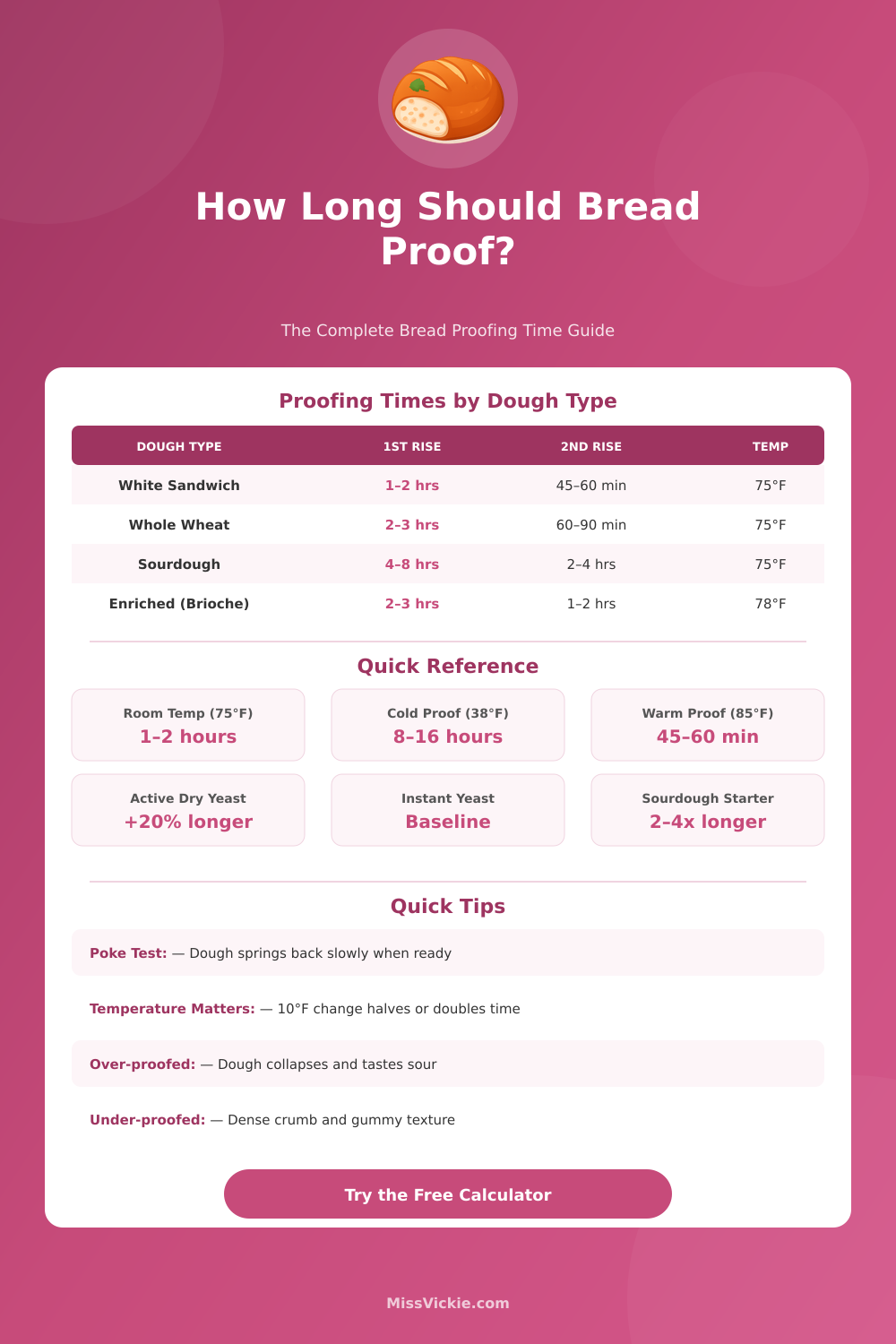
| Temperature | White Bread 1st | Sourdough Bulk | Notes |
|---|---|---|---|
| 38°F / 3°C (Fridge) | 8–12 hrs | 12–18 hrs | Overnight cold retard |
| 55°F / 13°C (Cool) | 4–6 hrs | 8–12 hrs | Slow ferment, more flavor |
| 65°F / 18°C (Cool Room) | 2–3 hrs | 6–10 hrs | Good flavor development |
| 70°F / 21°C (Room Temp) | 1.5–2.5 hrs | 5–8 hrs | Standard home baking |
| 75°F / 24°C (Warm Room) | 1–2 hrs | 4–6 hrs | Ideal for most recipes |
| 80°F / 27°C (Warm) | 45–75 min | 3–5 hrs | Oven-light proofing |
| 85°F / 29°C (Proofer) | 45–60 min | 2.5–4 hrs | Proofing box / warm oven |
| Yeast Type | Activity Level | Time Adjustment | Notes |
|---|---|---|---|
| Instant Yeast | Fast | Baseline | No proofing needed, mix directly |
| Active Dry Yeast | Moderate | +15–25% longer | Proof in warm water 5–10 min first |
| Fresh / Cake Yeast | Fast–Moderate | Similar to instant | Highly perishable, rich flavor |
| Sourdough Starter | Slow–Moderate | 2–4x longer | Depends on starter strength & hydration |
| Dough Type | 1st Rise @ 75°F | 2nd Rise @ 75°F | Key Tip |
|---|---|---|---|
| White / All-Purpose | 1–2 hours | 45–60 min | Reliable, fast, forgiving |
| Whole Wheat | 1.5–3 hours | 60–90 min | Rises slower due to bran cutting gluten |
| Rye | 1.5–2.5 hours | 45–75 min | Sticky dough; do not over-knead |
| Multigrain | 2–3 hours | 60–90 min | Dense; watch for 75% rise, not double |
| Brioche / Enriched | 2–3 hours | 1–2 hours | Fat slows yeast; use warmer temp |
| Pizza | 1–2 hours | N/A | One rise only; cold proof for flavor |
| Bagel | 1–1.5 hours | 20–30 min or cold | Cold retard overnight for chewy crust |
| Sourdough | 4–8 hours | 2–4 hours | Timing varies with starter activity |
Bread is made of flour water and usually yeast so it is baked food. It ranks among the most ancient foods of people and stays everywhere in the world especially in Europe and Middle East. Through centuries it formed nucleus of nutrition in various populations.
Daily millions of folks eat it.
How to Bake Simple Bread at Home
Wheat and rye breads help to process grains to improve their digestion. Like this you receive easy food for transport that postpreparation require only minimum of effort. Thousands of variations exist each shows interesting aspects of traditions and life.
Home bake bread give big pleasure. You commonly succeeds more tasty than bought ones if you escapes typical messes. Crispy chewy sourdough surpass everything although starter requires patience.
The ready bread stays good only some days otherwise it molds or harden.
For simple white bread no needs special things. Mixer helps but bowl with wooden spoon suffice superbly. Later you knead the dough by means of hands.
With four materials basic baking tools and around ten minutes of effort you can produce nutritious fresh baked bread home.
Crusty artisan bread homemade are good first attempt. It uses only four elements without special pans or machines without kneading frustration and without complications while most work happen on its own. Proofing means to leave the dough rise before baking usually in heat during at least hour.
Hot loaf from French bread accompany ideally meals. It goes with pasta soup or potato with gravy. You can dip it in oil or do garlic bread.
French loaf do not require too much trouble.
Except basic breads the basic mix from flour water yeast and salt works for sandwich loaves in bread pans pizza or even pita. For pita you rolls the dough that much thin how it is possible and bake it. Bread can become sweet add chocolate chips or dried cherries give wonderful dessert.
Without sugar and with grated Gruyère over the bread after soak in egg-milk you receives savory dish. Pineapple adds to banana bread nice tang and more moistness. Really the ideas do not end.