🍞 Bread Percentage Calculator
Convert recipes to baker's percentages, calculate hydration, and scale any bread formula
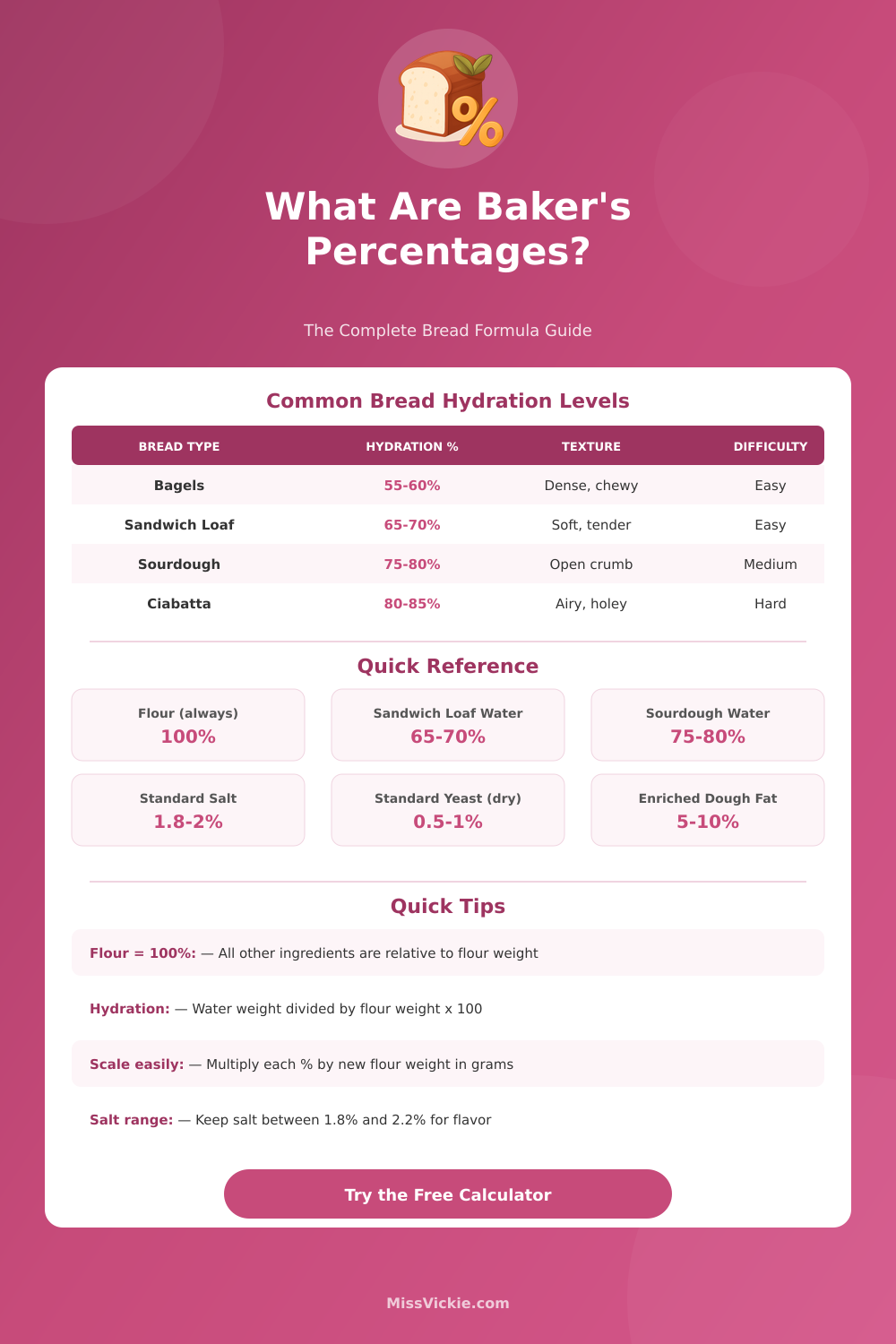
| Bread Type | Hydration | Salt % | Yeast % | Fat % |
|---|---|---|---|---|
| White Sandwich | 65-70% | 2% | 1% | 2-4% |
| French Baguette | 70-75% | 2% | 0.3% | 0% |
| Sourdough (basic) | 75-80% | 2% | 20% starter | 0% |
| Ciabatta | 80-85% | 2% | 0.5% | 2% |
| Focaccia | 70-75% | 2% | 1% | 5-8% |
| Bagel | 55-60% | 2% | 1% | 0% |
| Brioche | 55-65% | 2% | 2% | 40-50% |
| Pizza Dough | 55-65% | 2% | 0.5% | 2-3% |
| Rye Bread | 75-85% | 2% | 1% | 0% |
| Whole Wheat | 60-70% | 2% | 1% | 2% |
| Ingredient | Typical % Range | Notes |
|---|---|---|
| Salt | 1.8 - 2.2% | Below 1.8% is bland; above 2.5% inhibits yeast |
| Instant Dry Yeast | 0.5 - 1.5% | Less for slow ferment; more for quick rise |
| Active Dry Yeast | 0.7 - 2% | Use ~25% more than instant yeast |
| Fresh Yeast | 2 - 3% | Triple the amount of instant yeast |
| Sourdough Starter | 10 - 30% | Higher % = faster, more sour flavor |
| Sugar | 1 - 8% | Enriches and speeds fermentation |
| Butter / Oil | 2 - 50% | Enriches crumb; too much slows yeast |
| Milk (liquid) | 50 - 70% | Replaces water; adds tenderness |
| Eggs (per egg ~50g) | 5 - 20% | Adds richness and structure |
| Vital Wheat Gluten | 1 - 3% | Boosts strength of low-gluten flours |
| Flour Weight | Approx. Dough Weight | Loaf Size | Pan Size |
|---|---|---|---|
| 300g | ~500g | Small loaf | 7.5 x 3.5 inch |
| 400g | ~660g | Medium loaf | 8.5 x 4.5 inch |
| 500g | ~820g | Standard loaf | 9 x 5 inch |
| 600g | ~980g | Large loaf | 10 x 5 inch |
| 750g | ~1230g | XL loaf or 2 small | Two 8x4 inch pans |
| 1000g | ~1640g | 2 standard loaves | Two 9x5 inch pans |
Bread is made of flour, water and yeast, so it is baked food. Through the whole world it is basic food especially in Europe and Middle East. From old times it belongs to the daily meal of many people.
It is one of the oldest human foods. You make wheat or rye bread to make grains easier to digest, and it gives easy food that after baking needs little work
How to Make Simple Bread
Home bake bread gives big pleasure, and the resultao often beats that from store. For simple white bread you need only basic tools. A mixer helps, but a bowl and wooden spoon work.
You simply knead the dough by hand. With only four ingredients, some bits of gear and ten minutes of work, you can get healthy, delicious rolls from the oven in any kitchen.
Crusty artisan bread is good for starts, because it needs only four ingredients, without special pans or mixer. It does not need kneading or hard shapes, and almost everything does itself. From that flour, water, yeast and salt comes good sandwich loaves in pans, pizza or even pita.
For pita you roll the dough as thin as possible.
The proofing is among the hardest steps, so that it succeeds. Proofing means to leave the dough rise before baking, usually in warm place for at least hour. Odd parts during the second knead or form usually cause bad rolls.
Hot roll of French bread goes perfectly with pasta, soup, potatoes or gravy, or you dip it with olive oil or make garlic bread.
Artisan bread has nice, crisp crust with various colors, from brown until gold. None beats the crispy chewy sourdough, although you must prepare the starter for a bit of time. The finished bread you should eat in some days, otherwise it becomes moldy or hard as stone.
Bread adapts to sweet and savory variations. Nuts, vegetables, meats and cheeses work for the savory side. For sweetness you add fruits, puree or jams.
Pineapple gives banana bread pleasant taste and more moisture. Toasted wheat bran and germ change the texture. For cutting dough better use sharp knife than razor.
Important is to make bread that works.