Bread Flour to All-Purpose Flour Conversion Calculator
Turn all-purpose flour into a bread-flour-style substitute with vital wheat gluten, a protein target, dough type guidance, and a practical hydration adjustment.
All-Purpose Flour
Middle protein, easy to find, and flexible. It can bake good bread alone, but formulas written for bread flour may spread more or feel less elastic.
Bread Flour
Higher protein flour designed for stronger gluten development, taller loaves, chewy crusts, and doughs that need more stretch.
Vital Wheat Gluten
Concentrated wheat protein. A small measured amount can lift AP flour toward a bread flour protein target without replacing the whole bag.
Whole Wheat Flour
Bran and germ add flavor but cut through gluten strands. Whole wheat blends may need more water and a slightly stronger protein target.
Pastry or Cake Flour
Low protein flour for tender crumb. It is not a good bread flour substitute unless blended with stronger flour and carefully balanced.
High-Gluten Flour
Very strong flour for bagels, pretzels, and chewy pizza styles. Use high targets carefully because too much strength can fight shaping.
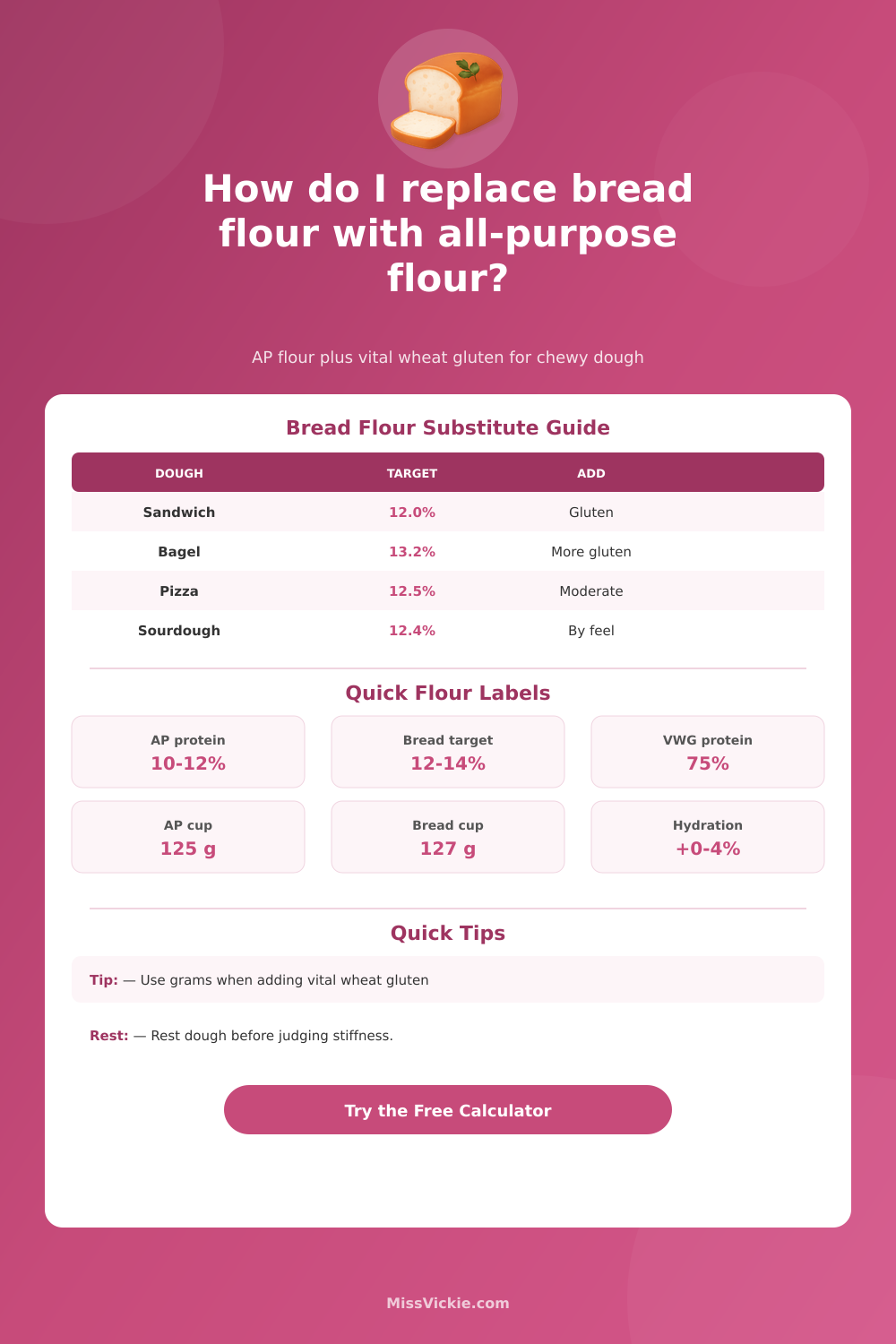
All-purpose flour and bread flour is different because they contain different amounts of protein. All-purpose flour contain between 10 and 12 percent protein, while bread flour contains between 12 and 14 percent protein. Because protein create gluten, which provides the structure of bread, if you use all-purpose flour instead of bread flour, the bread may spread too much on the baking surface or the crust may be too soft.
Vital wheat gluten can be used to increase the protein content of all-purpose flour to that of bread flour. Because vital wheat gluten are very high in protein content, only a small amount are necessary to reach the target protein percentage of the bread recipe. Adding too much vital wheat gluten to the flour, however, may cause the resulting bread to be too chewily.
How to Turn All-Purpose Flour into Bread Flour
The calculator can help to determine the amount of vital wheat gluten that should of be add to all-purpose flour to reach the protein percentage necessary for the recipe. Another adjustment that must be made is in the hydration of the flour. Because vital wheat gluten absorbs water, you must add more water to the mixture of all-purpose flour and vital wheat gluten than would normally be added to the recipe with all-purpose flour only.
The calculator will provide a suggestion for the amount of water to add. This will only be a starting point for the amount of water to add, however, as other factors like the brand of flour and the humidity in the kitchen may alter the amount of water that the flour absorb. For example, the dry ingredient can be mixed with most of the water suggested by the calculator, at which point the dough should be rested for ten to fifteen minute to allow it to absorb the remaining water.
Weighing ingredient in grams instead of using measuring cups is another way to ensure that the ingredients will properly react to one another. Using measuring cups may introduce inaccuracy into the recipe. For instance, flour may settle in the measuring cup.
Whisking the vital wheat gluten into the all-purpose flour before adding any liquids ensures that the baker is evenly distribute the vital wheat gluten in the flour. If you dont whisk the vital wheat gluten into the all-purpose flour, there may be spot in the dough where the gluten content is much higher than the remainder of the batch. Depending on the type of bread that will be made with the flour and vital wheat gluten mixture, the target protein percentage of the flour mixture can be adjusted.
For instance, sandwich bread require a different amount of protein than bagels and pretzels, which require more protein to help them retain there shape when boiled in water. Furthermore, sourdough and artisan loaf require different amounts of protein than soft roll. The protein percentage of the flour mixture should be adjusted to the target protein percentage of the type of bread that is to be made.
When converting a recipe to one that use vital wheat gluten, it is important to follow a set system to ensure good results. The amount of all-purpose flour should be weighed, the all-purpose flour should be blend with vital wheat gluten, the dry ingredients should be mixed with most of the water, and the mixture should be rest. It is important not to add extra all-purpose flour to the mixture if the flour is sticky, as this may negatively impact the dough.
Instead, using the batch setting on the calculator allow for the preparation of a smaller batch of dough. This method allows for the baker to experiment with the setting without wasting ingredient. Finally, the calculator ensure that the dough will contain the proper amount of vital wheat gluten and water.
However, the dough is the final judge of the recipe. The vital wheat gluten and all-purpose flour may behave differently based off the harvest date of the flour and the brand of the flour. The amount of vital wheat gluten and the amount of water will have to be adjusted if the dough feel too tight or too soft.
If the calculator is followed to ensure that the protein percentage of the new recipe is the same as that of the original recipe, the bread will behave in a similar fashion to the original recipe intended by the baker.