🍞 Bread Flour Calculator
Convert cups to grams, scale recipes, and find perfect substitutions for bread flour
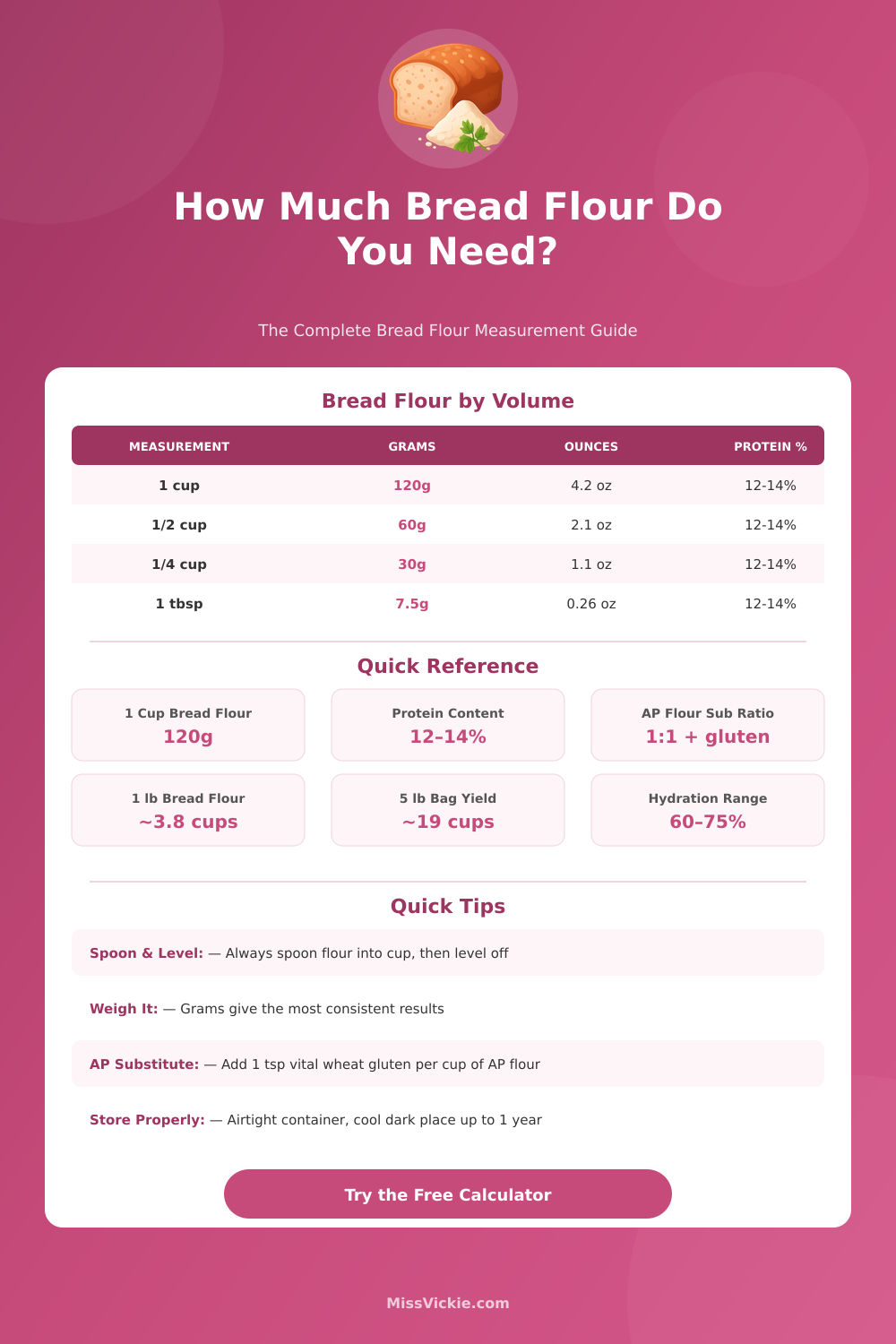
| Measurement | Grams | Ounces | Tablespoons |
|---|---|---|---|
| 1 teaspoon | 2.5g | 0.09 oz | 0.33 tbsp |
| 1 tablespoon | 7.5g | 0.26 oz | 1 tbsp |
| 1/8 cup | 15g | 0.53 oz | 2 tbsp |
| 1/4 cup | 30g | 1.06 oz | 4 tbsp |
| 1/3 cup | 40g | 1.41 oz | 5.3 tbsp |
| 1/2 cup | 60g | 2.12 oz | 8 tbsp |
| 2/3 cup | 80g | 2.82 oz | 10.7 tbsp |
| 3/4 cup | 90g | 3.17 oz | 12 tbsp |
| 1 cup | 120g | 4.23 oz | 16 tbsp |
| 2 cups | 240g | 8.47 oz | 32 tbsp |
| 3 cups | 360g | 12.70 oz | 48 tbsp |
| 4 cups | 480g | 16.93 oz | 64 tbsp |
| 5 cups | 600g | 21.16 oz | 80 tbsp |
| 1 pound (lb) | 454g | 16 oz | ~60 tbsp |
| 5 lb bag | 2268g | 80 oz | ~303 tbsp |
| Flour Type | Protein % | Best For | 1 Cup Weight |
|---|---|---|---|
| Bread Flour | 12–14% | Yeast breads, pizza, bagels | 120g |
| All-Purpose Flour | 10–12% | General baking, cookies, pancakes | 125g |
| Whole Wheat Flour | 13–14% | Hearty loaves, muffins | 130g |
| Cake Flour | 7–9% | Cakes, delicate pastries | 100g |
| Pastry Flour | 8–10% | Pies, biscuits, cookies | 110g |
| 00 Flour (Italian) | 11–12% | Pasta, Neapolitan pizza | 115g |
| Semolina Flour | 12–13% | Pasta, rustic bread crusts | 163g |
| Bread Type | Hydration % | Water per 500g Flour | Dough Feel |
|---|---|---|---|
| Bagels | 55–60% | 275–300g | Stiff, dense |
| Sandwich Loaf | 60–65% | 300–325g | Smooth, supple |
| Dinner Rolls | 62–65% | 310–325g | Soft, slightly tacky |
| Baguette | 65–70% | 325–350g | Moderately sticky |
| Artisan / Sourdough | 70–80% | 350–400g | Wet, slack |
| Focaccia | 75–80% | 375–400g | Very wet, pourable |
| Ciabatta | 80–85% | 400–425g | Extremely wet |
| Substitute | Ratio | Adjustment Needed | Result |
|---|---|---|---|
| All-Purpose + Vital Wheat Gluten | 1 cup AP + 1 tsp VWG | None | Best substitute |
| All-Purpose Flour only | 1:1 | Reduce water slightly | Less chewy, softer crumb |
| Whole Wheat Flour | 1:1 | Add 2 tbsp extra water per cup | Denser, earthier flavor |
| 00 Flour | 1:1 | Reduce water by 5% | Silkier dough, good for pizza |
| Spelt Flour | 1:1 | Reduce kneading | Nutty flavor, delicate gluten |
Bread flour is made of hard wheat with high protein. While you knead the dough, the protein turns into gluten. That gluten creates elastic fiber networks that hold the gas from yeast.
Like this bread receives its structure and texture Bread flour you usually mix it to 12 (14 percent of protein), without germs and bran.
How Bread Flour Helps Make Bread
It helps the bread rise well and have ideal texture always. You can use it for all baked goods, since artisan breads or machine loaves until rolls and pizza bases. If you mix it with whole wheat flour, even dense whole grain baked goods rise more highly.
Bread flour has more protein than all-purpose flour. More protein gives more gluten, which makes bread rise more highly and be chewier. Bakers like it for fast and simple preparation, because it gives height and chewiness without need to reach the windowpane stage.
High protein of bread flour ensures good structure and chew, while all-purpose stays avergae. Excellent breads are possible from all-purpose flour, but best results come from bread flour.
Hard winter wheat is rich in protein and is always used for bread flour. Pastry flours instead are low in protein and from soft wheat. The softness of flour depends on its protein amount.
Bread flour is versatile, good for recipes beyond bread, as cookies or brownies. Bread from 100 percent bread flour does great with a bit of firmness and bite. For cookies however do not recommend to use only bread flour.
Any bread flour works well for baking bread.
All-purpose flour has around 11.7 percent of protein, which makes it good for various breads and pastries. Some brands differ. Bob’s Red Mill bread flour has around 13.8 percent of protein, so it belongs to the richest available.
Canadian flours are about 12, 14 percent, while American all-purpose have only 9… 12 percent.
Whole wheat flour carries the whole grain. If a recipe wants mostly wholemeal or weak gluten flour, a little addition of bread flour can help the bread, where all-purpose would not suffice. You commonly mix whole wheat flour with white for better texture, and it best works under 70 percent of the wholeflour.
Bread requires only some basic ingredients: flour, water, salt and yeast.