
When’s the best time to place beef roast into the oven? You’ve got that boneless ribeye roast sitting on the counter and you don’t quite know where to start.
Roasting beef isn’t hard. No tricks is needed; just trust your tools and respect physics.
How to Cook a Perfect Beef Roast
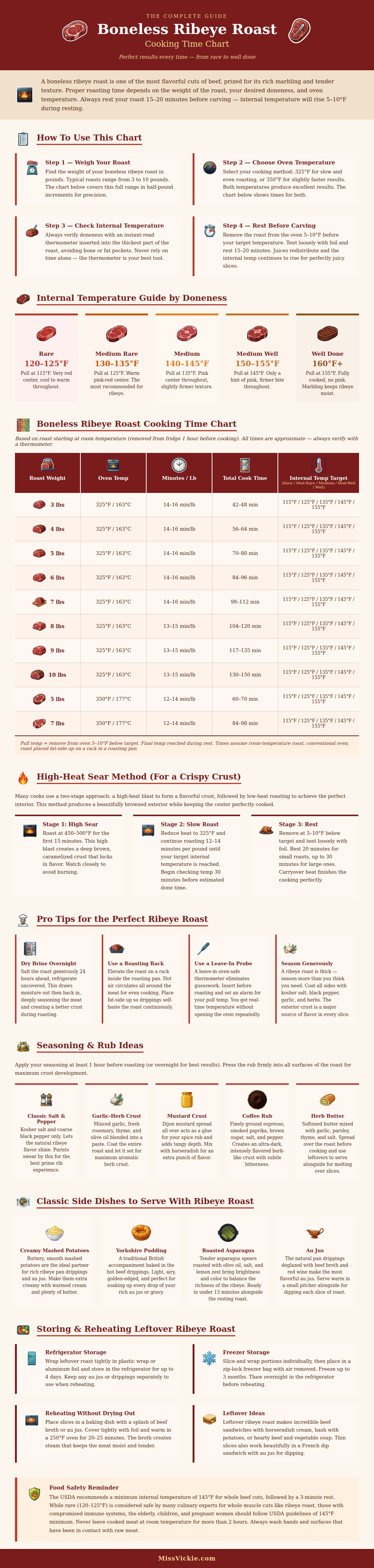
Cooking time depend on weight. Heavier roasts will take longer. Why? Heat must travel farther through the roast to get to its center. As chart shows, this eliminates the guessing game: Just look up the weight and voila! That’s it, no need to memorize minutes-per-pound for all situations.
Before anything else, let the roast warm up to room temp. This takes 45-60 minutes or so. Many people skip this stage which has a big effect on how evenly it cooks as well as texture. When you put the roast in hot oven, you’re shocking the beef, the exterior overcooks while the interior heat up.
Use this time to plan what doneness you are looking for. You can find a visual guide to your options above. Remember that we generally recommend medium-rare because a ribeye has good fat content, which melt well at those temperatures.
It’s crucial to pull the roast when it’s five to ten degrees shy of done: That way, carryover cooking happens as the roast rests outside oven, allowing meat to rise to temperature naturaly with leftover heat. By the time you cut into it, if you leave it in the pan till target temp, it’ll be dry in middle. This is a common error that people should of avoided.
The temperature’s what matters most, not just the timing. After roughly an hour, put away the clock and keep an eye on thermometer. Every oven are different; it may be calibrated hot or cold. The minute-per-pound guide in the chart is a starting point, but ultimate authority is an instant-read probe. Poke thickest portion of meat (no need to pierce bone or fat pockets).
The high-heat sear method begins hot to develop a crust, then reduces temperature to finish cooking gently. This ensures that inside remains tender yet creates a desirabel outer texture. It’s this combination of a soft center and crisp shell that makes the dish special.
To get the most flavor out of these cuts of meat, season them beforehand (if you can). Breaking down protein make flavors stand out. Salt increases flavor by drawing water out which then re-absorbs into meat. For this, keep it simple: Crack some black pepper over top, rub in some kosher salt and allow the beef to take center stage. If you want some aromatics, perhaps some fresh thyme or rosemary, go ahead but avoid overpowering natural flavor with large amounts of spice.
After roasting, cover loosely in foil and allow meat to rest for at least 15 minutes. This permits juices to recirculate within fibrous tissue. Carving prematurely results in tasty juice dripping on the cutting board, where else does it go? Cut across the grain. Serve with a side dish like creamy mashed potatoes or Yorkshire Pudding using pan drippings. It’s comfort food done right.
Trust the thermometer, respect the rest period and let the meat do the talking.