
If you’re old enough, I’m sure you remember how popular white Zinfandel once was among Americans. White Zin was easy drinking, with a sweet, almost strawberry taste that appealed to people who couldn’t get into reds because they were too tannic, or whites because they were too tart. For years, the category mean one thing: pale pink.
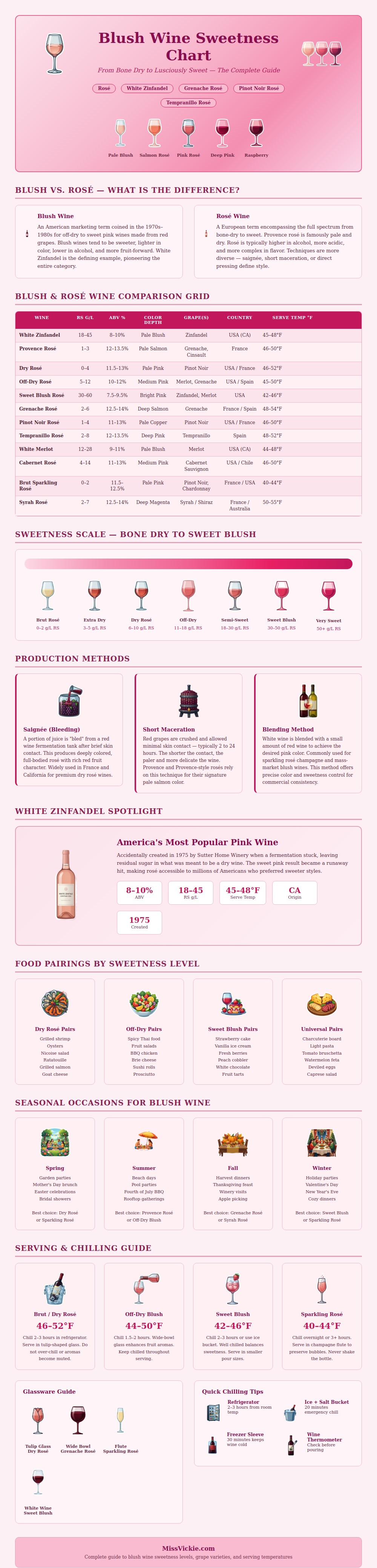
But today’s pink-wine market are far more complicated than the sugary pinks of the past. To understand what you’re buying, look beyond color of label and learn about winemaking process. What does all this mean? As you can see on chart, more residual sugar correspond to less alcohol and lighter colors.
How to Choose Pink Wine
Why is that? The earlier a winemaker stop fermentation to maintain residual sugar, the sooner they halts it before the wine reaches its maximum alcohol concentration. Provence dry rosé take a different route: let it ferment out, leaving behind a crisp sipper that’s got some kick to it (higher in alcohol).
Here’s where food and wine pairing comes into play. Here’s where food and wine pairing come into play. You wouldn’t serve a sugary blush with delicate oysters. And don’t try serving a dry, high acid rosé with something like cake… that’s going to be a bit of an assault on your palate. You want your wine to equal or be sweeter then what you’re eating so as not to taste flat or sour.
Where things get blurry, where people mix up rosé with blush, is more often due to marketing than growing practice. While it’s true that blush originated in America in the ’70s (thanks to a stuck fermentation at Sutter Home Winery that unexpectedly resulted in a sweeter-than-expected dry Zin), rosé goes back further, and its roots are European, and precise. The resulting wine will differ in both color and texture depending on how it is made.
It might be made through a technique called saignée, which is the bleeding of juice off red-wine fermenting vats. Or, it might be made through a “direct press,” where skins briefly contact the juice for a few hours of soaking. A saignée rosé will have a bit more depth and body. In contrast, something direct pressed will be paler and more salmon-pink. You’ll know what to expect when you pop the cork.
The wines also vary with temperature. It’s common for many to pull out any pink wine, put it in fridge and serve it as cold as possible. But a dry rosé, chilled too much, will mask its subtle aromas (strawberry leaf? maybe citrus?) and lack of texture. On the other hand, a sweet blush must remain colder to offset the punch of sugar. Served warm, it may not come off as refreshing, but cloying instead.
The infographic shows some recommended ranges for each style, but the main point here is: balance. Warmer temperatures accentuate aroma and acid; colder temperatures dampen them. That happy medium make for a more enjoyable drink.
So how do you go about selecting a glass? Start with your meal. A dry and crisp wine pairs well with a light salad or grilled shrimp. If you have some friends coming over for a barbecue and half want sweeter profile wines, a sweet or off-dry blush would work nicely. And that’s what’s so beautiful about this category; it has wide range, from deep magenta syrah rosés that stand up to heartier fare to brut sparkling selections that will make any celebration sing.
Some people like the approachable charm of a California blush while others gravitate toward the elegant dryness of a French import. Whatever tickles your fancy, just know: you don’t have to get too hung up on the nitty gritty. Find one that makes you happy, pop it in the fridge until it’s cold enough to quench your thirst, pair it with whatever food makes you smile, and leave it at that. That’s the reason people keep coming back to pink wine; it’s just plain fun.