Blanching Tomatoes Time Calculator
Estimate the short boiling-water dip for slipping tomato skins, then plan batch count, pot water, altitude margin, ice bath, peel loss, and peeled yield for canning or sauce prep.
🍅 Tomato Peel Presets
Load a canning, sauce, salsa, or small-kitchen peeling setup, then adjust tomato size, variety, ripeness, scoring, water volume, altitude, and ice bath.
⚖ Tomato And Batch Setup
Tomato Peel Blanching Plan
Boil, shock, slip skins, then trim and use in your recipe.
Timing Details
Batch And Yield Details
⏱ Peel Timing Reference
📋 Tomato Size And Skin Guide
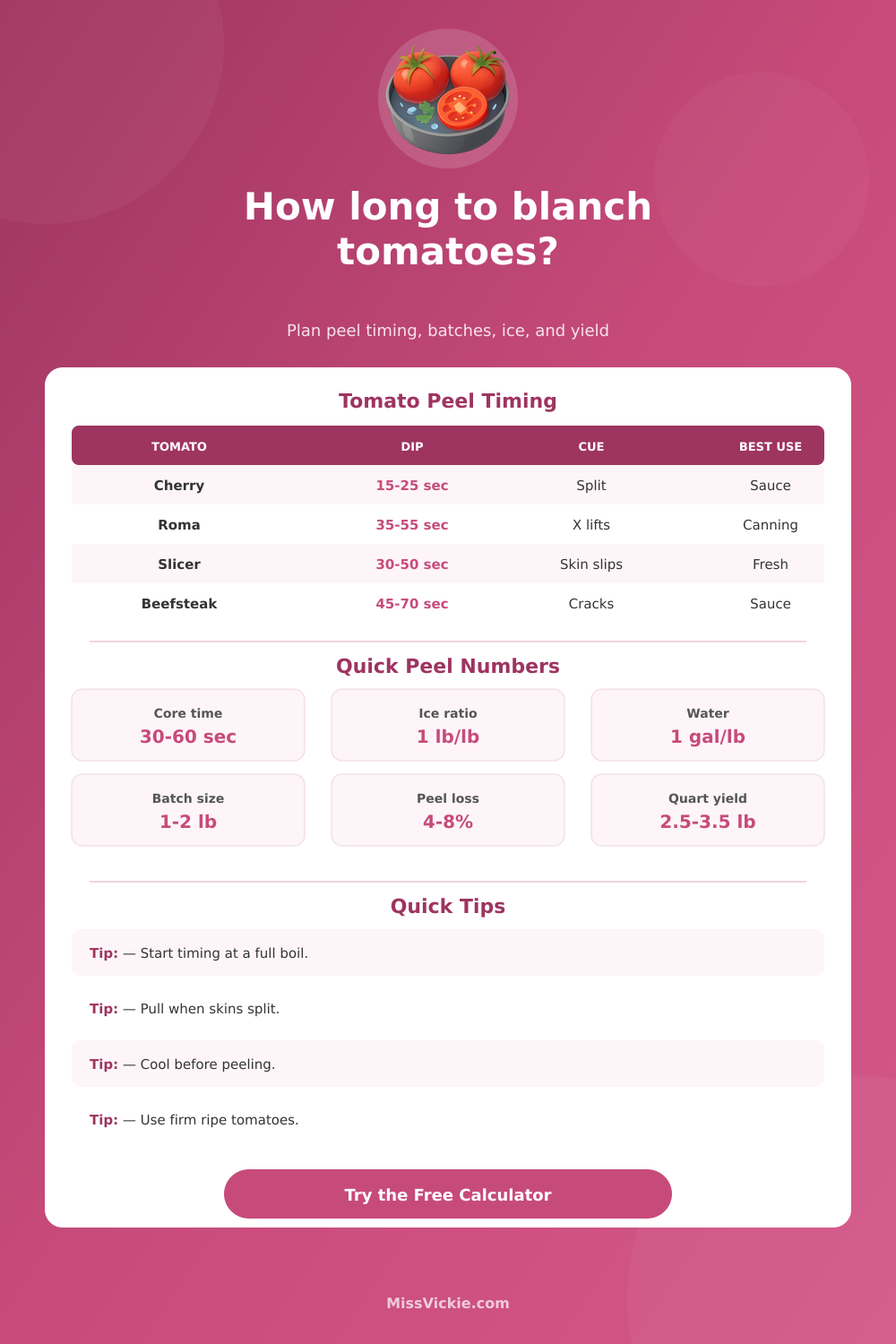
| Tomato Type | Typical Dip Window | Peel Cue | Batch Note | Best Prep Use |
|---|---|---|---|---|
| Cherry or grape | 15 to 30 seconds | Tiny split near score or stem end | Use a basket; peels can be tedious. | Quick sauce, freezing, or food mill prep |
| Roma or paste | 35 to 55 seconds | X corners lift or side skin wrinkles | Dense flesh tolerates repeat batches well. | Canning, salsa, crushed tomatoes, sauce |
| Round slicer | 30 to 50 seconds | Skin slips with thumb pressure | Do not crowd soft ripe fruit. | Fresh sauce, stewed tomatoes, chopped prep |
| Beefsteak | 45 to 70 seconds | Broad cracks or loose shoulder skin | Use fewer per batch so water rebounds fast. | Cooked sauce, puree, soup base |
| Heirloom | 25 to 45 seconds | Thin skin wrinkles quickly | Handle gently; peel over a bowl to save juices. | Fresh sauce or immediate cooking |
| Mixed garden | 30 to 60 seconds | Pull each tomato as it splits | Sort by size before blanching. | General peeling before recipe prep |
The timer is a planning estimate. Pull tomatoes when skins split or lift, even if the full suggested time has not elapsed.
🫙 Yield After Peeling
| Use After Peeling | Raw Pounds Per Quart | Likely Loss | Texture Goal | Important Boundary |
|---|---|---|---|---|
| Whole or halved tomatoes | About 2.5 to 3.5 lb | 5 to 8 percent | Firm fruit, skins just slip | Use tested canning acid and processing directions. |
| Crushed tomatoes | About 2.25 to 3 lb | 6 to 9 percent | Peel cleanly, then crush hot | Blanching is prep only, not the canning process. |
| Tomato juice | About 3 to 3.5 lb | 4 to 7 percent | Save juices while peeling | Strain, heat, acidify, and process by recipe. |
| Thick sauce | About 5 to 6.5 lb | 7 to 12 percent | Peel or food mill, then reduce | Untested ingredient ratios are for fridge or freezer. |
| Fresh recipe | As recipe requires | 3 to 7 percent | Minimal heat on outside | Chill quickly if not cooking immediately. |
| Food mill sauce | About 4 to 6 lb | 2 to 5 percent | Peels removed by mill | Blanching may be optional if milling removes skins. |
🧊 Water, Ice, And Batch Planning
| Tomato Prep Scenario | Batch Count Guide | Water And Ice Check | Altitude Timing | Peel Slip Target |
|---|---|---|---|---|
| 7 quart Roma canning, about 21 lb raw | 10 to 12 batches at 1.75 to 2 lb each | Keep about 6 gal boiling water and 21 lb ice ready. | 0 to 3000 ft: usually no extra time. | Pull when X corners lift; keep fruit firm for jars. |
| Small fresh sauce, about 4 lb slicers | 4 batches at about 1 lb each | Use 3 gal water and 4 lb ice for quick cooling. | 3000 to 5000 ft: add about 4 sec if skins lag. | Stop at the first wrinkle so flesh stays fresh. |
| Market crate sauce, about 50 lb mixed tomatoes | 17 to 25 batches, sorted by tomato size | Use 10 gal water; refresh ice as the bath warms. | 5000 ft and higher: expect 8 to 10 sec margin. | Pull each tomato as it splits, not when the batch timer ends. |
| Cherry tomato sauce, about 6 lb | 8 batches at about 0.75 lb in a basket | Use 3 gal water and enough ice to stop splitting fast. | Watch cue closely because tiny fruit changes quickly. | Pull at tiny skin cracks; peeling is optional if milling. |
| Large beefsteak sauce or puree | 10 batches at about 2.5 lb, fewer if very large | Use 8 gal water and 1.5 lb ice per raw pound. | Add a short margin at altitude, then test the shoulder skin. | Look for broad cracks before trimming and simmering. |
Use enough boiling water for each batch to return to a boil quickly.
Small, repeatable batches give cleaner peel timing than one crowded pot.
Use more ice for market crates, warm kitchens, or back-to-back batches.
At high elevations, expect a softer boil and watch the skin cue closely.
💡 Tomato Blanching Tips
References for tomato peeling and canning prep include Oregon State University Extension, Colorado State University Extension, Clemson Extension HGIC, and University of Missouri Extension.
Peeling takes time. It is tricky and drives us crazy. When there are thirty pounds of tomatoes steaming on the stove, ready for canning or turning into sauce, standing over boiling water brings on panic. How long do we wait? When is it just right: slippery skin but not mushy flesh? It feels like a tightrope walk. And the margin between mushy tomato and perfectly peeled fruit turn out to be amazingly narrow.
That’s why a little math, not gut instinct. Will make all the difference. If you’re hoping to loosen the skin while leaving the inner meat intact, getting the timing right is everything. The calculator above run those numbers for you, taking into account factors such as variety, size, ripeness, and even your kitchen altitude, so that you’ll know how long to go.
How to Peel Tomatoes Easily
Variety matters: In the pot, most home cooks cook all their tomatoes alike, but some are differenter. Paste or Roma tomatoes has denser flesh and thicker skins; they can withstand a bit longer dip without disintegrating. Not so with cherry tomato, which are another story altogether. High in water content, with thin skin, these babies gets soft fast if you leave them in the pot for to long.
The device knows this difference and changes the initial time to match, knowing a delicate heirloom requires less heat to burst its skin than a beefsteak do. That way it keeps you from making one of the most common mistakes of all: turning your sauce into puree before you’ve even begun peeling. If you’re going for soup, fine, but otherwise you want structure. Not soup.
You should of also score the skin. (Many folks do this wrong, or just cut too deep.) For tomatoes, a shallow X on the blossom end provides a starting place for the heat to get under the skin and pry it away from the flesh. Otherwise, it may not lift cleanly; then you’re stuck peeling by hand (longer) and wasting even more juice in the effort.
I account for that: The calculator will adjust its estimate of time accordingly if you didn’t score your fruit, because thermal shock has an easier path to follow. It is a little thing, but it is important when you’re doing big batches. Waste any good tomato flesh by cutting too deeply; be precise and light with your knife.
And then there’s altitude, a silent force most people forget about. As you climb higher, water will boil at a lower temperature, meaning it won’t have quite as much heat when it hits those tomatoes as it does down on sea level. To compensate for this, the tool gives you room for error at high altitudes. When the water appears to be boiling vigorously, it might not actualy be that hot. This ensures you aren’t under-blanching.
For mountain dwellers: forget about that and you’ll end up with skin that just doesn’t want to budge no matter how hard you try to get it off. It’s a small adjustment, but makes all the difference for getting consistent results from place to place.
The second the tomatoes go into the boiling water, the stopwatch begins ticking. It’s not about timing so much as watching for visual clues: Do the skins start to wrinkle? Have they split along the score mark? Is one edge starting to pull away from the flesh? If any of those things happen, it’s time to remove the tomatoes. Soaking them longer doesn’t cook them more. It just softens the topmost layer.
Now it’s time to plunge them into an ice bath. This stops the cooking immediately so they can be peeled without much trouble. If left warm, the remaining heat will keep cooking them, making the tomato hard to work with and peel. The amount of ice required varies depending on how many tomatoes there is, hence the calculator for cooling down several batches of tomatoes.
Then there’s the matter of practicality. When you peel a fruit or vegetable, you remove the skin. In the case of tomatoes, you remove not just the skin but also the core and sometimes some flesh that has been bruised or trimmed. The tool calculates how much you’re left with after peeling, so you know approximately what your yields are, how much sauce you’ll end up making, or how many jar it might fit into. That way, you won’t be disappointed if the crate of tomatoes you picked doesn’t turn into as many jars as you expected.
It’s a reality check, keeping your expectations grounded. But really, that’s what blanching is all about: control. You control two textures that are normally joined, then separate them using heat and cold. Once you know the variables involved, it isn’t as nerve-wracking. The peels slip off and the flesh holds on. You have your peeled tomatoes, fresh and clean, whether for cooking or for preserving. A tiny part of a big recipe, yes, but once you’ve got this down, everything else falls into place a little bit more easy.