Blanching Spinach Time Calculator
Estimate spinach blanching time by leaf maturity, bag or bunch weight, boil versus steam method, pot water ratio, altitude, wilt level, ice bath, squeeze yield, freezer pucks, and immediate cooking plans.
🥬Spinach Presets
Choose a spinach-specific starting point, then fine-tune maturity, weight, water, altitude, cooling, and drain target. Freezer presets hold to full blanching time; immediate cooking presets can stay crisper.
⚖Spinach, Water, And Yield Inputs
Spinach Blanch Plan
Calculated time and yield will appear here.
Timing Breakdown
Water, Ice, And Yield
📊Spinach Quick Planning Cards
Full water blanch for most mature spinach before freezing.
Typical steam blanch target when a basket is not crowded.
Leafy greens cool the pot quickly, so extra water helps rebound.
Loose-drained spinach weighs more; hard-squeezed spinach weighs less.
📘Leaf Maturity And Method Reference
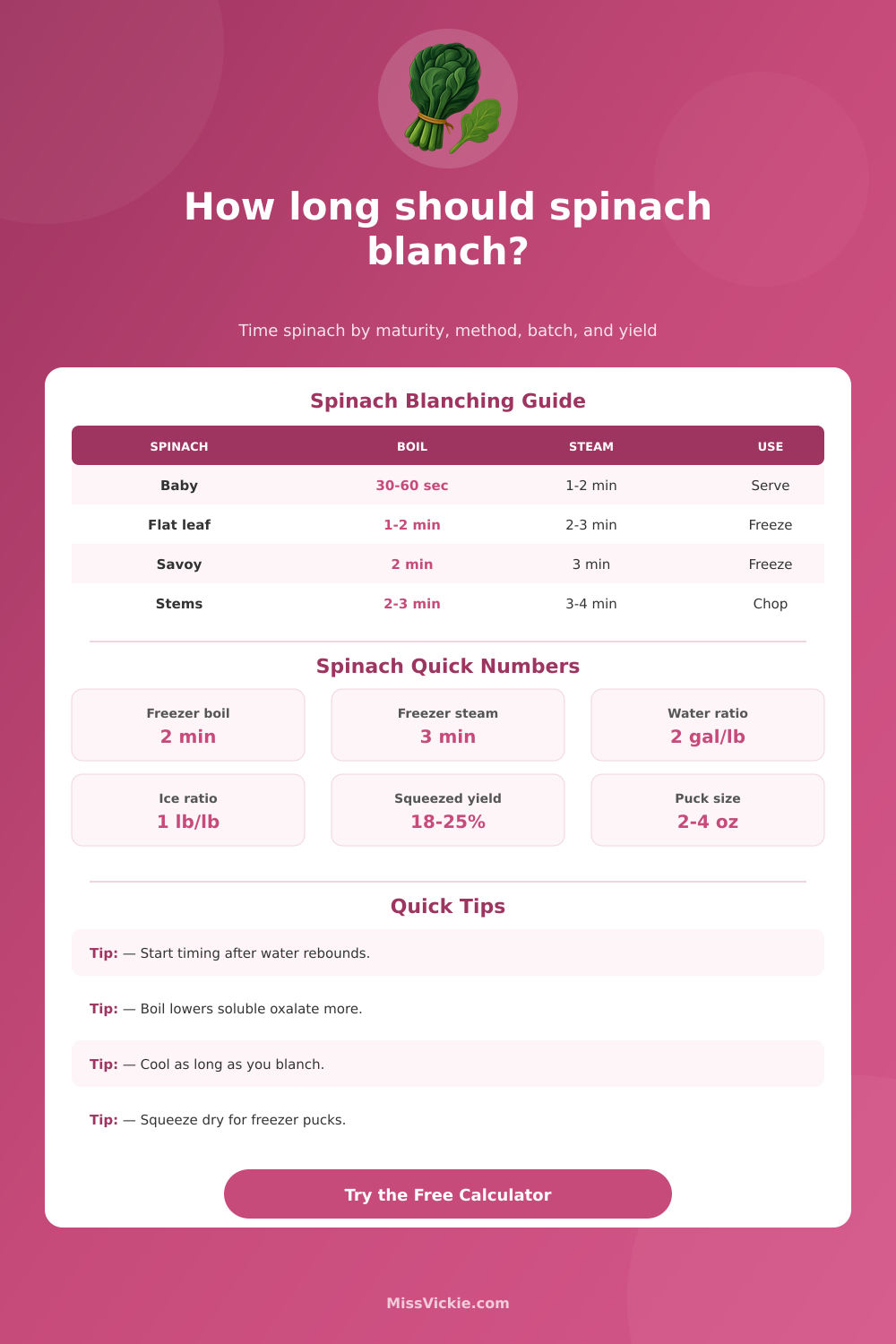
| Spinach Type | Boil Time | Steam Time | Best Use | Yield Note |
|---|---|---|---|---|
| Baby spinach | 30 to 60 sec for same-day cooking; 90 sec if freezing | 1 to 2 min | Saute, pasta, soup, quick sides | Soft leaves collapse fast and hold less structure. |
| Flat-leaf mature spinach | 1 to 2 min, with 2 min for freezer storage | 2 to 3 min | Freezer bags, chopped spinach, fillings | Good balance of color, tenderness, and squeeze yield. |
| Savoy or curly spinach | 2 min | 3 min | Freezer pucks, casseroles, long-cooked dishes | Crinkles trap water, so drain and squeeze longer. |
| Large field leaves | 2 to 2.5 min | 3 to 4 min | Chopped greens and cooked fillings | Thick ribs may stay firmer unless chopped. |
| Stemmy spinach | 2 to 3 min | 3 to 4 min | Purees, saag, soups, dumpling fillings | Stems raise yield but need more cooking time. |
For freezing, use the longer enzyme-control side of the range. For immediate cooking, brief wilting is a texture choice rather than a preservation step.
🧊Drain Yield And Freezer Portion Guide
| Raw Spinach | Loose Drained | Pressed | Hard Squeezed | Freezer Portion |
|---|---|---|---|---|
| 5 oz bag | 1.6 to 2.0 oz | 1.2 to 1.5 oz | 0.9 to 1.2 oz | One small puck or sauce cube |
| 10 oz bag | 3.2 to 4.0 oz | 2.4 to 3.0 oz | 1.8 to 2.5 oz | One 2 to 3 oz puck |
| 1 lb loose leaves | 5 to 6.5 oz | 3.8 to 5 oz | 3 to 4 oz | One large or two small pucks |
| 2 lb bunches | 10 to 13 oz | 7.5 to 10 oz | 6 to 8 oz | Two to four recipe portions |
| 5 lb market batch | 1.6 to 2 lb | 1.2 to 1.6 lb | 0.9 to 1.25 lb | Six to ten pucks |
🌡Ice Bath, Puck, And Altitude Reference
| Planning Point | Reference Number | Calculator Use | Spinach-Specific Note |
|---|---|---|---|
| Boiling water load | 1 gal per lb minimum; 2 gal per lb preferred | Flags slow rebound below 1.5 gal per lb | Loose leaves chill the pot quickly, so smaller loads keep baby and mature leaves bright. |
| Steam blanch load | About 1.5 times water-blanch time | Uses 2 to 4.5 min by leaf maturity | Steam in a loose layer; packed spinach can stay underheated in the center. |
| Ice bath | 1 lb ice per lb spinach | Cool at least as long as blanching | Refresh ice after several loads so freezer spinach stops cooking fast. |
| Squeeze and drain loss | 60 to 82 percent weight loss | Loose, pressed, hard, or puck yield | Baby spinach often lands higher; savoy and mature leaves hold more trapped water. |
| Freezer puck portions | 2 to 4 oz cooked spinach | Rounds portions up from squeezed yield | Use 2 oz for smoothies and sauces; use 3 to 4 oz for lasagna or saag. |
| Altitude adjustment | +15 to +75 sec for freezer batches | Adds time above 3,000 ft | Cooler boiling water needs longer contact time, especially above 5,000 ft. |
Use the full 2-minute water blanch baseline for freezer greens, then adjust for maturity, steam method, crowding, altitude, and final squeeze target.
💧Water Ratio, Altitude, And Oxalate Notes
Discarding blanch water removes more soluble oxalates than steaming, though minerals and color compounds also leach.
Steam uses less water and can preserve more water-soluble flavor, but it is slower and must stay uncrowded.
Above about 5,000 ft, cooler boiling water means freezer batches need extra time.
Spinach is mostly water. Squeezing changes the final weight more than a few seconds of blanching.
🧾Practical Spinach Blanching Tips
Blanching will also prevent spinach from becoming a slimy mess in the fridge; it stops enzyme that would cause it to lose its color and flavor before you freeze the leaves. If you’re not sure when to stop blanching greens (as most of us are), you’ll end up with a month-old supply of wet-grass-flavored contents in your freezer.
The calculator do all the math for you: Simply enter your method and type of leaf, and it spits out the time… No trial-and-error or vague memories required. It takes into account factors that many home cooks don’t even think about like altitude, or how densely packed the pot is. That’s why the tool will adjust its baseline suggestions depending on what you have harvested.
How to Blanch Spinach Correctly
Thick-stemmed, hardy flat-leaf spinach need a lot more cooking time to deactivate those nasty spoilage-causing enzymes unlike delicate, tender baby spinach. Depending on how long you cook each type, half your spinach will be mush while the other batch isn’t even halfway cooked. And then there is the question: Is it going into boiling water or are you using steam? While steamed veggies retain more of their bright green color due to the slower heat transfer they’ll take longer to get done. In contrast, putting them in boiling water leeches out more of the soluble oxalates. This is good news if you’re concerned about the oxalate content, but it also means a quicker loss of flavor and color.
But how much water? More than you’d imagine. When I drop a pound of cold wet leaves into that pot, the water temp plunges. Quickly. Unless it heats up again fast, rolling-boil fast, it’s going to be simmering the spinach not blanching it. Those extra few minutes in lukewarm water will leave it looking dull and tasting slimy. The chart say to use about two gallons of water per pound of spinach. There is enough thermal mass to bring the water back up fast.
Boiling point is lower when you cook at high altitudes; everything stretches out longer. To compensate for that, the calculator tacks on time to the total if you’re cooking above three thousand feet elevation. No undercooked greens because you forgot your mountain cabin physics is based off sea level.
Residual heat will remain in the leaves, so they will keep cooking from the inside out even after you remove the pot from the burner. It’s important to plunge them immediately into an ice bath to stop the cooking process. As a general rule, cool them for the same length of time that you blanched: Two minutes in hot water means two minutes in cold. After cooling, it’s important to squeeze the excess water out. Freezing with moisture still in the spinach form large ice crystals that will break the cell walls and make the spinach lose its texture when thawed.
If you use a colander or towel to squeeze the greens, you’ll notice how much it lowers their weight (a ten-ounce bag can shrink to perhaps two or three ounce of solid green matter). A concentrated yield is nice. You can freeze it as a whole in large bags for lasagna filling, or make smaller pucks to toss into smoothies. Storing it this way works out nicely too. If you stick to temperature and timing, you’ve got yourself a stable pantry stash from an otherwise perishable ingredient.
You should of used a colander to avoid extra moisture. It is actualy quite easy if you follow the moddern instructions.