Blanching Potato Time Calculator
Estimate potato blanching or parboil time from cut style, cube or fry thickness, potato type, batch weight, water volume, altitude, starch rinse, browning prevention, ice bath, and freezer or fry prep goal.
🥔 Potato Prep Presets
Load a potato-specific freezer, fry, roast, salad, or meal-prep setup, then tune thickness, batch weight, water, altitude, rinse, and cooling.
⚖ Potato And Batch Setup
Potato blanching plan
Calculated from potato cut style, thickness, type, water volume, altitude, rinse, and cooling setup.
Timing Breakdown
Cooling And Prep
📌 Potato Blanching Quick Specs
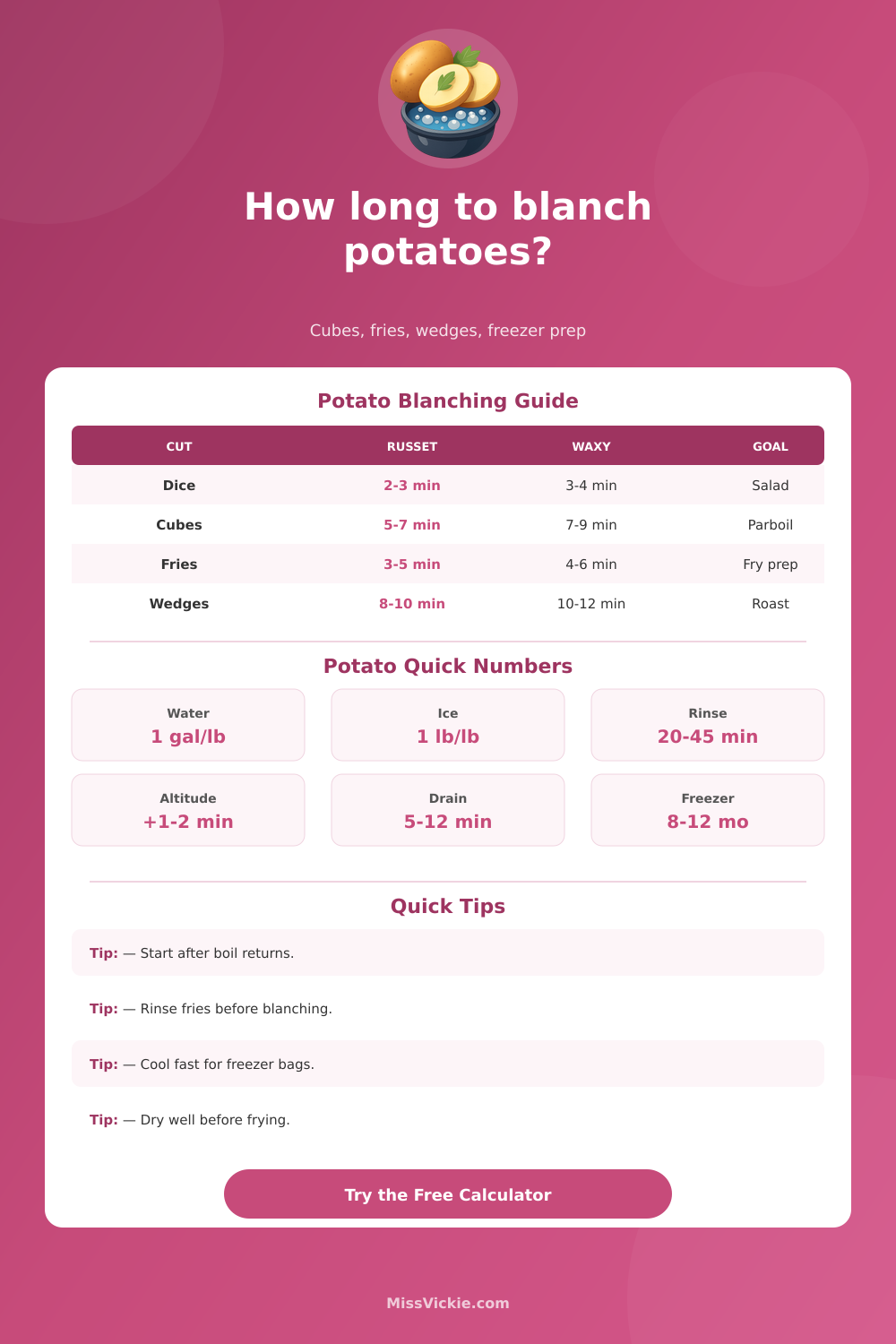
⏱ Reference Table 1: Cut Style And Time
| Cut Style | Typical Thickness | Boil Blanch | Best Use |
|---|---|---|---|
| Small dice | 1/4 to 3/8 in | 2 to 4 minutes | Freezer bags, hash, quick skillet meals |
| Medium cubes | 1/2 to 3/4 in | 5 to 8 minutes | Potato salad, roast prep, soup prep |
| Classic fries | 3/8 to 1/2 in | 3 to 6 minutes | Double fry, air dry, freezer fries |
| Steak fries | 5/8 to 3/4 in | 6 to 9 minutes | Thick fry prep with fluffy center |
| Wedges | 3/4 to 1 1/4 in | 8 to 12 minutes | Roasting, pan frying, pub-style wedges |
| Shreds | Thin strands | 1 to 2 minutes | Hash browns after rinse and squeeze dry |
🥔 Reference Table 2: Potato Type Adjustments
| Potato Type | Texture Behavior | Time Adjustment | Handling Note |
|---|---|---|---|
| Russet or Idaho | Starchy, fluffy, breaks easily | Baseline to slightly shorter | Rinse well for fries; avoid over-stirring after blanching |
| Yukon Gold | Medium starch, creamy | Add about 5 percent | Good for salad cubes, roasting, and meal prep |
| Red or fingerling | Waxy, firm, holds shape | Add about 15 percent | Best for salad and freezer cubes that should stay intact |
| White all-purpose | Moderate starch and moisture | Add about 8 percent | Works for most cuts when thickness is consistent |
| Sweet potato | Softer structure, higher sugar | Subtract about 10 percent | Cool quickly and dry before freezer or fry prep |
🧊 Reference Table 3: Cooling, Ice, And Water
| Batch Weight | Boiling Water Target | Ice Bath Target | Drain Or Dry Time |
|---|---|---|---|
| 1 lb potatoes | 1 gallon water | 1 lb ice plus 3 qt cold water | 5 to 8 minutes |
| 3 lb potatoes | 3 gallons water | 3 lb ice plus 2 gallons cold water | 8 to 12 minutes |
| 6 lb potatoes | 6 gallons water or split batches | 6 lb ice plus 4 gallons cold water | 10 to 18 minutes |
| 10 lb potatoes | Commercial pot or 4 to 5 home batches | Two ice baths or a chilled hotel pan | 15 to 25 minutes |
🍟 Reference Table 4: Goal And Finish Checks
| Goal | Center Texture | Surface Target | Next Step |
|---|---|---|---|
| Freezer storage | Heated through but not falling apart | Cool quickly, drain fully | Tray freeze or bag flat in measured portions |
| Fry prep | Flexible with a faint raw core | Very dry, slightly tacky | Air dry, chill, then fry or freeze |
| Parboil for roasting | Edges roughen when shaken | Steam dry for crisp edges | Oil, season, roast, or pan fry |
| Potato salad | Just tender to a knife tip | Drain, not icy unless holding | Dress while warm or cool before mayo |
| Browning prevention | Still firm and mostly raw | Rinsed, pale, lightly dried | Cook soon; this is not freezer blanching |
📊 Prep Comparison Cards
Blanch long enough to slow enzymes, cool fast, drain well, then tray freeze or bag flat.
Rinse starch first, blanch until flexible, dry fully, then chill before the final fry.
Use simmering water for cubes and wedges when you want creamy centers and crisp roasted edges.
Red, fingerling, and waxy potatoes resist breaking but usually need a little more hot time.
💡 Potato Blanching Tips
Food-safety note: blanching slows quality loss and prepares texture, but it is not a canning process. Cool, refrigerate, freeze, or cook potatoes promptly after blanching.
Unlike cooking, blanching does not cook the potato but simply controls texture; it also sets the stage for whatever later cooking might happen. Whether you’re preparing cubes for potato salad or fries destined for a crisp finish, objective is always controlling texture.
That’s why we’ve created the calculator: no more guessing about coefficients for starch content or altitude; just input your batch weight and cut style and let math be done for you. The most important variable adjusted with the tool is thickness, since heating things depends on their surface area to volume ratio. For instance, a shoestring fry blanches quickly (seconds) whereas a thick steak fry require almost twice as long. The tool allow you to enter precise measurements that account for this.
How to Blanch Potatoes Perfectly
Uniformity trumps rapid blanching; if you cut unevenly sized fries, the smaller ones will turn to mush before larger ones are tender enough. Cutting your fries into a consistent size, such as a half inch square, is something you’ll get used to, and it always works out predictably. Mixing sizes around just leave a mess when you go to strain them in colander. The reference table on this page explains what to expect for different cuts.
But it’s all different with potato types: Russet (high starch/high fluff) potatoes fall apart fast, softening easy while losing sugar to the cooking water. By contrast, waxy reds and fingers keeps their shape well; they need to soak or blanch longer then starchy tubers to become just as tender. Don’t know that? You’ll have underblanched freezer fries on one hand and overcooked salad potatoes on the other. The calculator accounts for them automatically, but knowing why will help you troubleshoot when trouble strikes.
Starchy spuds will drink up water, so they should of be well drained before plunging into the oil. Waxy ones won’t, but can become gummy if left long in warm water.
Because of elevation, how long the potatoes spend in the blancher depends on altitude: Water boils at a lower temp at high altitudes, which means less heat energy gets to break up the potato’s cell walls (specifically its pectin). At 3,000 feet or more above sea level, your blanch time will have to be adjusted to match; at that elevation it can take slightly longer to process your spuds without them getting mushy. This is something most home cooks don’t remember, and then they’re confused when their potatoes don’t soften after a few minutes in boiling water. The tool adjust for altitude by relying on what you entered for your address, so your potatoes won’t end up under-done from all that thin air.
To keep things cool: Heating is one thing; cooling is another, and both are important. (If you don’t plunge them in cold water right away once they’ve been removed from the heat source, the enzymes will continue to go to work, degrading flavor and causing loss of color.) An ice bath will stop the cooking when the potato is at its tender point. Not a second later. If you leave it sitting in a colander, however, residual heat will continue to cook the interior until your perfectly formed frites has turned to sludge by the time you try to fry or freeze them. The calculator determine the amount of water and ice needed based off your batch size. This helps you avoid common mistake of not having enough ice to get the temperature down quickly enough.
When you freeze food, moisture is your enemy because it creates ice crystals that will damage texture and contribute to freezer burn. Blanching and cooling potatoes, then drying them well before packing, takes time, but it’s worth it for months of storage. To make fries crispier, removing some of the starch from their surface by soaking prior to blanching also help. The guide walks you through these extra tasks without leaving you stuck with soggy fries in the air fryer (or wet, clumpy bags in the freezer).
In the end, blanching is all about precision and patience. Resisting the impulse to rush means a few minutes of careful handling today saves you hours of disappointment later. If done correctly, it’s clear what makes a potato good, and what makes one great. Color remains vibrant, the texture retains its hold, and the finished product delivers what was promised in the original dish.
Cool quickly, account for the varying starchiness of the spuds, and make your cut consistantly. This is the trick that transforms a humble vegetable into a solid building block for every meal.