Biltong Spice Calculator
Scale a biltong spice mix by meat weight, surface area, spice coverage, coriander toast level, black pepper heat, chili option, salt already applied, sugar percentage, vinegar style, and leftover spice reserve.
🌶Biltong spice presets
Pick a batch style, then adjust the coverage rate, vinegar treatment, salt already on the meat, and extra spice reserve for your drying setup.
⚖Spice calculator units
🥩Meat weight, surface area, and vinegar
🧂Coverage, salt, sugar, coriander, and heat
Biltong spice plan
Spice mix breakdown
Ingredient weights
The calculator will flag very light dusting, heavy crusting, or excess salt carryover.
📌Biltong spice reference cards
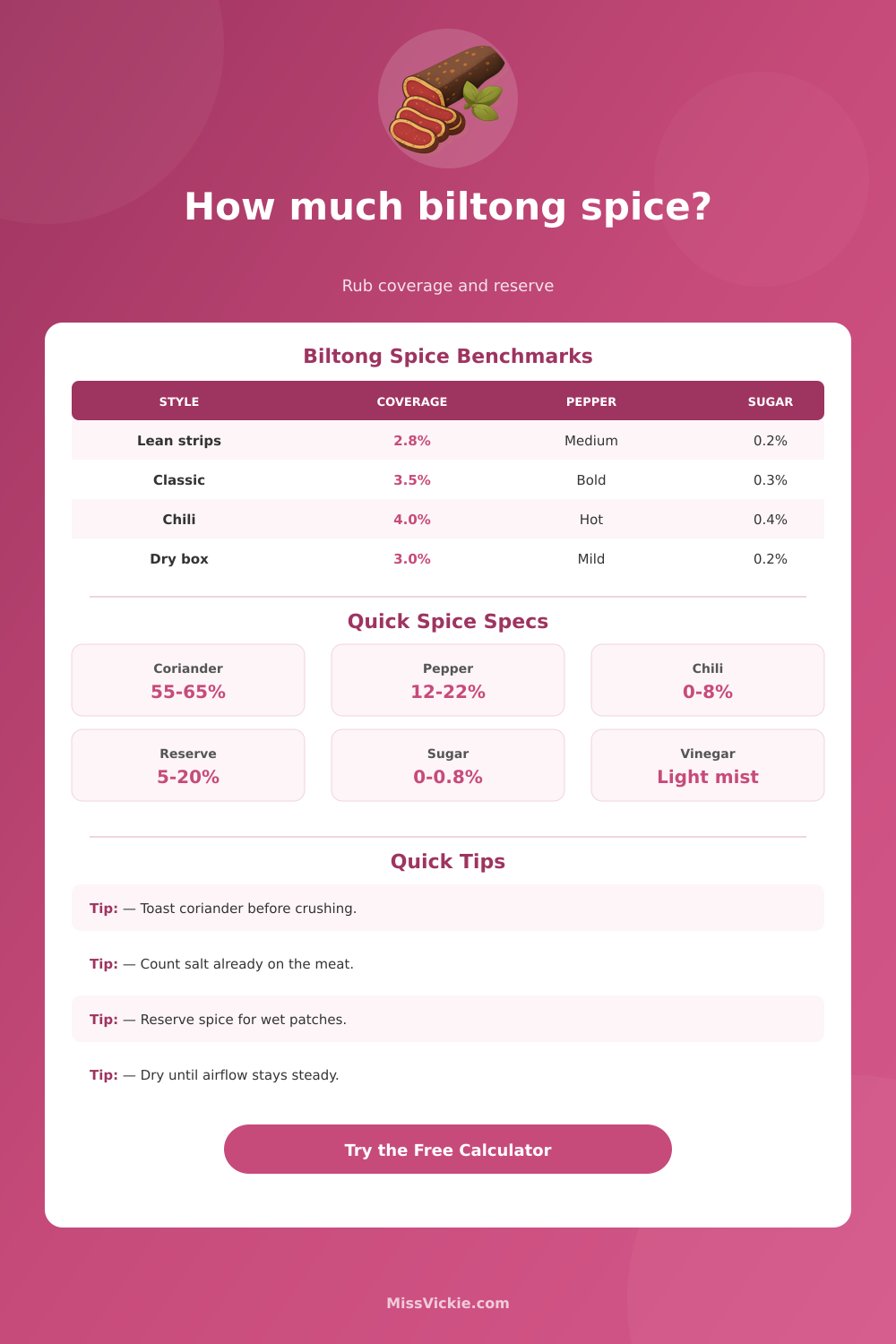
Most classic biltong rubs lead with toasted coriander seed.
Black pepper should support the coriander, not bury it.
Useful range for strips with average surface area.
Keep a small bowl for wet edges and tray loss.
📊Coverage and flavor guide
| Batch style | Coverage target | Coriander toast | Pepper and chili cue |
|---|---|---|---|
| Lean topside strips | 2.8% to 3.3% of meat weight | Medium toast, coarse crush | Medium pepper, no chili or tiny pinch |
| Traditional thick slabs | 3.2% to 3.8% of meat weight | Medium to dark toast | Bold pepper, optional mild chili |
| Thin sticks or snack strips | 3.6% to 4.5% of meat weight | Light toast, finer crush | Mild pepper because surface area is high |
| Humid drying room | 3.0% to 3.6% of meat weight | Medium toast, dry before crushing | Reserve extra spice for damp patches |
🧄Ingredient ratio table
| Ingredient | Typical role | Low range | Bold range |
|---|---|---|---|
| Crushed coriander seed | Main citrusy, nutty biltong aroma | 55% of non-salt spice | 68% of non-salt spice |
| Cracked black pepper | Heat, edge, and savory bite | 12% of non-salt spice | 25% of non-salt spice |
| Chili flakes or peri-peri | Optional heat layer | 0% of non-salt spice | 8% of non-salt spice |
| Garlic, clove, allspice, or herbs | Background seasoning | 6% of non-salt spice | 15% of non-salt spice |
💡Biltong spice planning tips
Measure salt separately. If the meat was salted before vinegar, do not hide that salt inside the spice blend. This calculator subtracts salt already applied so the dry mix does not accidentally become a second cure.
Use surface area as a sanity check. Thin sticks may need less spice by meat weight than they appear to need by eye, while thick slabs often need firm pressing so the same grams cover evenly.
This tool estimates seasoning weights for kitchen planning. It does not replace safe meat handling, drying controls, sanitation, or local guidance for dried meat preparation.
The first thing to know about making biltong at home: How spicy should you make it? How much spice actualy belongs on the meat? The answer is “it depends.” That’s because it depends on the cut (what kind of meat?), the surface area (the length, width, and thickness), the vinegar treatment (more or less?). Does the meat already have some salt on it? Add another variable to the equation. And that’s why an educated guess can be dangerous. If you go light, your biltong will be flat-tasting; if you go heavy, it will dry unevenly under its own crusty blanket.
With that info, put meat’s size and weight into calculator above. Choose its profile from among the available cuts to account for cling. Then, tell it whether or not you treated it with some vinegar, and if so, how long it soaked in it. Why? Because longer exposure makes it clingier as does a higher surface moisture level. If it gets only a brief spray of liquid, it will be drier and won’t hold onto the spices better. Finally, it will remove whatever salt you’ve already added to the meat. So you don’t accidentalay overshoot your target by combining this mix with existing seasoning.
How to Use the Biltong Calculator
The second decision point is coverage percentage. Because a thin stick has more surface area (per gram) than a lean cut of meat, it require less seasoning by weight. Our calculator accounts for this by taking all three measurements (length), width, and thickness, and estimating the total area. Then it adjust the amount of spice to account for that difference. This will keep you from making common mistake of using the same percent on each batch regardless of its shape.
Beyond scent, there’s another variable: Coriander toasts up. Darker toast will decrease the amount of coriander just a bit while at the same time lifting the overall spice part of the profile. It help avoid a one-note taste. Likewise, the heat of peppers behaves similarly; a bolder crack pepper setting lift the amount of that element but also pushes the coriander down. If unattended to, it could overpower the blend. With this tool, you can select your desired flavor direction, but the proportions stays in check.
Reserve and sugar are little details, but important ones. Reserve provides a safety valve in case a patch gets a bit moist on day one. Sugar is also a safety valve, just enough to take some sharpness off without adding sweetness. Both are easy to overlook until you run a batch and realize you has run short.
The true value of any biltong spice plan is repeatability. If your ingredients produce weights from the calculator that match what you find in the drying box, tweak one variable at a time until they doesn’t. That way, you’ll know what’s different. Every batch will be a controlled experiment instead of just guessing again. Eventually, it stops being “rules” and starts being memory, which is where home biltong start tasting like it was made on purpose.