Biltong Recipe Calculator
Scale a biltong batch from trimmed beef weight, strip thickness, vinegar soak, salt percent, coriander and pepper base, drying temperature, humidity, target moisture loss, drying days, finished yield, and portion count.
🥩Biltong batch presets
Choose a common batch style, then fine tune beef weight, cut thickness, vinegar soak, salt, spices, drying conditions, target moisture loss, and serving size.
⚖Recipe units
🔪Beef weight and cut setup
🧂Vinegar soak and spice base
🌬Drying room and target yield
Biltong recipe estimate
Batch breakdown
The calculator will flag humidity, temperature, salt, and strip-thickness combinations that need closer checking.
🧾Scaled recipe card
Raw weight used for all percentages.
Drain before coating with spices.
Measured as percent of beef weight.
Toast lightly, then crush coarse.
Coarse pepper for the base crust.
Sugar, chili, garlic, clove, or chile.
Target from raw weight to finished yield.
Estimated hanging width with gaps.
📋Biltong cut and yield reference
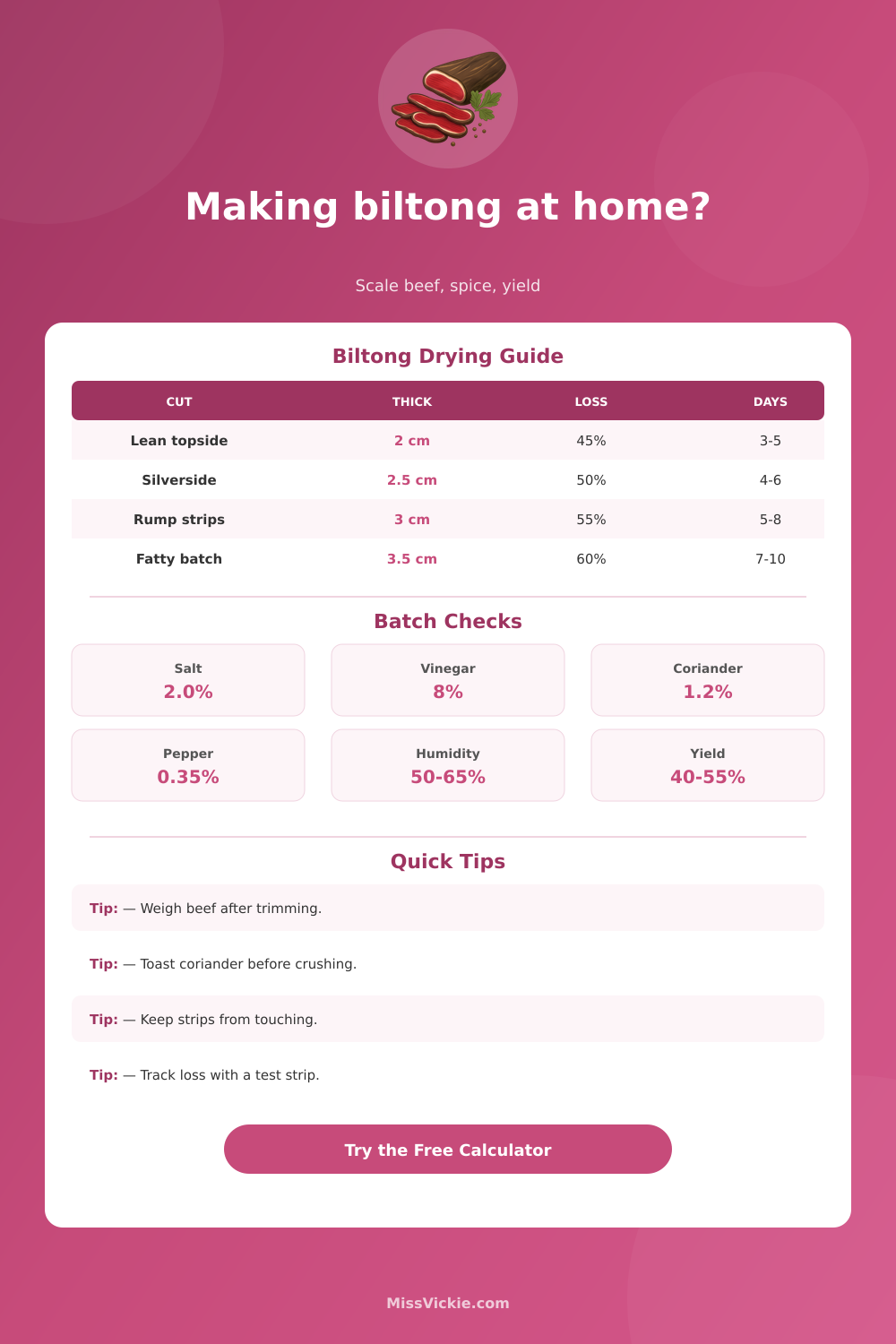
| Beef cut | Best thickness | Typical loss | Yield note |
|---|---|---|---|
| Topside or round | 2 to 3 cm | 48% to 55% | Lean, even slices with predictable drying. |
| Silverside | 2.5 to 3.5 cm | 50% to 58% | Firm texture, benefits from careful trimming. |
| Rump steak | 2 to 3 cm | 45% to 55% | Rich flavor and slightly higher eating yield. |
| Fat-capped beef | 2.5 to 3.5 cm | 42% to 52% | Fat loses less water, so finished weight stays higher. |
| Venison or game | 1.8 to 2.8 cm | 52% to 62% | Very lean meat dries fast and tastes stronger. |
| Mixed offcuts | 1.5 to 2.5 cm | 50% to 60% | Sort similar strip sizes for more even finish. |
🌡Drying temperature and humidity guide
| Drying condition | Temperature | Humidity | Calculator effect |
|---|---|---|---|
| Cool steady box | 60 to 68°F | 45% to 60% | Slower but even drying for thick pieces. |
| Classic room dry | 68 to 75°F | 50% to 65% | Balanced drying for 2 to 3 cm strips. |
| Warm dry cabinet | 75 to 82°F | 35% to 50% | Faster surface drying; watch case hardening. |
| Humid room | 68 to 78°F | 65% to 75% | Adds days and raises the drying caution score. |
| Dehumidified box | 64 to 74°F | 35% to 50% | Shortens days if airflow stays gentle. |
| Still air pantry | 62 to 72°F | 50% to 70% | Needs more time and careful spacing. |
💡Recipe calculation notes
Weigh after trimming. Silver skin, ragged ends, and heavy fat caps change salt percent and final yield, so use trimmed beef weight as the calculator input.
Use loss, not just days. A test strip weighed before hanging lets you stop at 45%, 52%, or 60% moisture loss with much better repeatability.
Control the soak. Vinegar adds surface tang and helps the spice crust adhere, but long soaks can make thin strips taste sharp.
Match strip sizes. Similar thickness and width make the drying-day estimate useful; mixed pieces should be checked and pulled in stages.
Biltong is something that can be made at home and turns plain ingredients into something different; something better then what you get in stores. It’s worth the care taken in doing it right because you’ll get good results every time. This calculator helps turn all those details into actual quantities instead of estimates (how long does thick-cut take to dry?). How much salt do I need for 2kg of meat?).
And then there’s the real stuff: the meat. Before a single grain of salt ever comes in contact with anything, some serious effort goes into getting the initial number right. Trimming away excess fat and silver skin are far more important than you’d think, as it not only changes the finished product weight but also affects curing time. After cleaning the meat, that trimmed weight becomes your jumping off point to calculate everything else.
How to Use the Biltong Calculator
From the salt percent down to the exact amount of spices to use, everything scale up from this one number and maintains proper ratios whether you’re making a half-batch or doubling recipe. The amount of time something takes to dry depends mostly on its thickness and width (which most home cooks don’t realize). A strip that measures three centimeters through the middle will lose moisture slower than a thinner piece. Wider is also better because it forms some sort of local environment across its width.
Based off what you enter for dimensions, humidity, and room temperature, the calculator adjust the expected range for your drying time. That way you know how long to let your test strip go before checking it (not just by calendar days alone). Salt has another role besides preserving: It should be around two percent of the weight to draw out moisture while still allowing the interior stay tender. Use too little salt and the meat may not dry properly before going bad. Too much salt will cause the skin to get tough prematurely, trapping moisture within.
The calculator also shows the weight of the added salt and spices. This let you compare the total weight of the rub to the original weight of the meat. Flavor comes from coriander and pepper, which also help create a very thin crust that protects the inside while not drying it too fast on the outside. Toasting the coriander first makes its oils get sticky when they touch moist meat. Total weight of the dry rub is displayed in the calculator so you know ahead of time if the coating will be light or heavy.
The surprise variable is humidity. Even though you feel fine sitting in a room, it could still be too moist (even for the drying process), particularly with little air movement. The calculator flags combinations that will increase the caution score so you can make adjustments, like tossing in a tiny fan. Decide whether to move the box before starting the batch. Most of the rest of the guesswork goes out the window when you check one test strip halfway through.
When it comes to the finished yield, that’s your actual take-home. Two kilos of trimmed beef at a 52% moisture loss translates into around nine-hundred-and-sixty-grams of finished biltong. That in turn shows how many 50-gram portion you can fit into a batch, and whether that batch will last you a week or just several more days. Knowing the yield helps you make a planning decision about portion size instead of a post-batch afterthought.
A chart is provided on the page to compare different cuts and their behavior in similar scenarios. Generally, fattier cuts keeps more weight while hanging, but leaner cuts like top side (top) lose moisture steadily over time. Game meat dries faster and should of been hung at a lower target loss. This can assist in selecting your cut based on your preferred final texture rather than finding out after it’s been hanging.
It also estimates how much rack space the strips will need (with breathing room between the strips), so it doesn’t over-crowd the pieces, causing moist spots here and there… and an uneven result. If you have enough room for that many strips (and if all the math adds up), the whole batch usualy comes out similarly.
Each time you make Biltong, it rewards the same habits: trim, then weigh; calculate the desired loss as a percent of weight (not a calendar date); and always test a single strip before committing to the entire batch. The calculator just gets rid of all that math, leaving you focused on the meat.