
Finally, how is your fridge set? There’s a reason that serving beer at an improper temp affects it’s aroma, alcohol perception, and sweetness. But we tend to lump all beer together as though they should of been kept in the same chilly environment. One of the strongest variables under our control is actualy temperature: does it make the malt shine through or get lost? Does it allow you to really smell it?
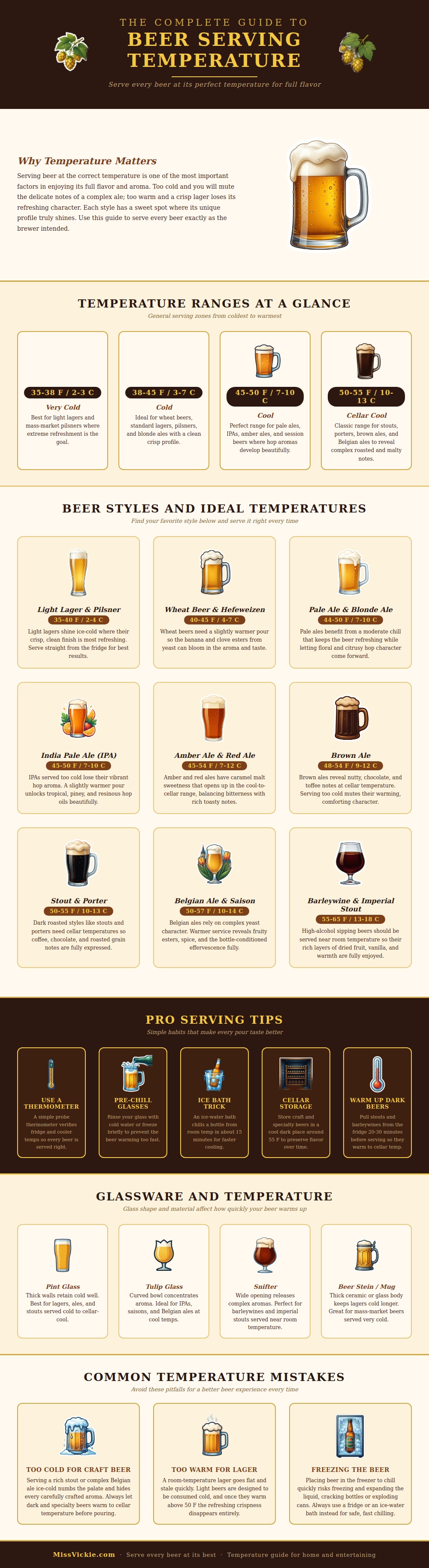
The infographic will break that out into different zone, but basically this is a lesson in respecting what happens when you put beer in your mouth. In fact, mass-market pilsners and light lagers are on the other end of the spectrum, somewhere between 35 and 38 degrees Fahrenheit. That’s crazy cold, and it serves a purpose; those beers is made to be drunk quickly, so extreme chilling cuts down on more subtle flavor characteristics. What you’re after is something with a nice, clean snap, no need to think about different types of hops or where the ingredients was grown here.
Why Serving Temperature Matters for Beer
But take a pint of a complex Belgian ale or a rich stout and serve it at that frigid temp? Well then, you’ve just muted its character. Roasted coffee flavors in a porter become lost beneath the numbness as do fruity esters in a saison. It sounds like there’s something there but it’s not music to your mouth.
When it gets down into the 45- to 50-degree range, the hops really begin to shine. Pale ales and IPAs is on the right side of this spectrum. As we enter their sweet spot, they’ll let loose with their tropical or piney notes so they hits your nostrils instead of sitting in the beer. Go ahead and pull an IPA out of fridge and stick your nose in there; if it’s too cold, its subtle essential oils won’t be able to come out of solution and release into air. You’ll just taste the bitterness which isn’t what you want out of an IPA.
Most folks confuse freshness with temperature… Because a warmer beer tastes “fresher” then one straight from the fridge. But for beers with aroma, warm is a feature, not a bug. It activate the volatile compounds responsible for creating scent.
Even higher-alcohol styles, and dark beers (require extra room: Barleywines), stouts, and other porter-style brews is made for cooler temperatures in the cellar (50-65 degrees). Here their deep-toasty-malty flavors of toffee and chocolate can shine through, while any burn from the alcohol mellows into a cozy embrace instead of a flaw. Pouring these beers straight out of the fridge does no justice to the craft that went into making them. It reduces them to one-dimensional sips of sweetness and fizz.
As the chart makes very clear, not only does ingredient quality matter; so does style. Surprisingly enough, glassware matters quite a bit too when it comes to finding that sweet spot. Heavier beers is better off in a snifter or tulip glass. The warmth of your hand can coax out those aroma notes and the shape of the glass will intensify them. For something lighter like a lager best enjoyed with a crisp bite, a thicker walled stein or mug holds onto the chill. So yeah, it isn’t always all about what goes into your mouth but also how it sits there. Whether it’s a thin-walled glass, or something chunky, it’ll either keep things cool or gradually warm things up to open up new flavors.
There’s a huge difference between good and great service and it comes down to simple things. Leave a stout on the counter for 20 minutes after pulling instead of drinking it immediately. Chill a warm bottle quickly in an ice-water bath (rather than risking exploding glass by freezing it in freezer). None of this costs a fortune in fancy gear; it simply takes changing how you think about your bottles. Don’t treat each one like they all require identical storage.
In the end, pouring your beer at the proper temperature just shows respect to the brewer’s vision. Whether it’s that winter-warmer stout or that light summer lager, dialing it in to its sweet spot makes it not just a beverage but a drink worthy of attention. So the next time you crack one open, take a moment to reflect and see where it falls on the thermometer scale. A couple of degrees will either leave you wondering what you were thinking or remind you just why you picked up that bottle in the first place.