
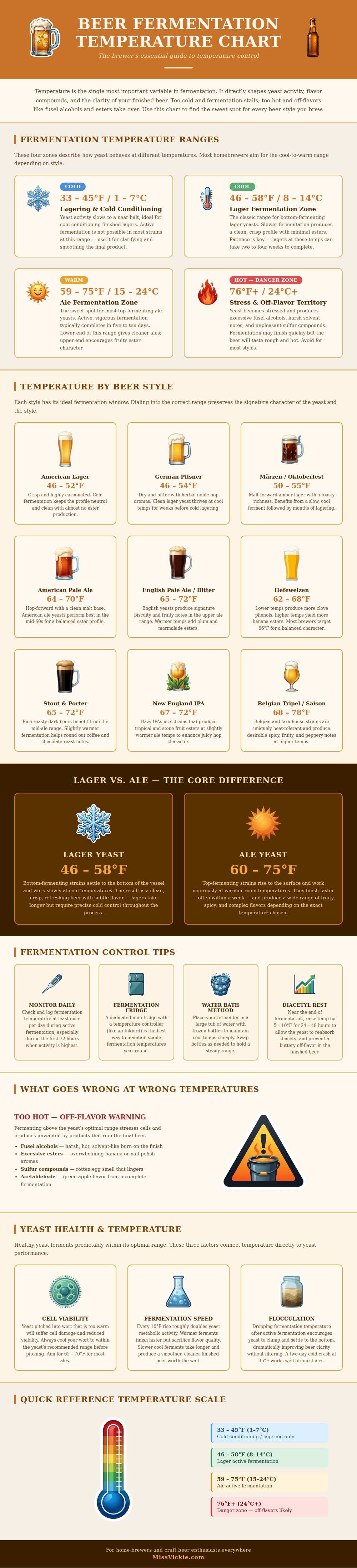
Other than sanitation, there is only one other factor more critical to brewing beer: Temperature control. Pitch your yeast, seal the lid, and step back to admire your work. Perfect looking wort go into the bucket. But three days later, you have something that tastes like rotten bananas or has a solvent smell. Why? Because you didn’t pay attention to your thermostat.
The most common mistake new brewers make is thinking fermentation occur at room temperature. Unless you are trying to be precise about things, it isn’t. Yeast is alive. They respond to their surroundings. When they get warm, they work harder. When they get cold, they work slower. Where it gets sticky is when the temperature goes outside of the optimum range. If the temperature is too high, it will actualy stress your yeast cells. Stressed yeast make funky tasting beer. Surely, someone will attribute this misstep to a yeast strain or water profile issue. But typically the issue was a hot garage in July.
Why Temperature Control Matters in Brewing
Temperature matter; ales need warmth to ferment correctly. For lager, you need both cold temperature and patience. Lager yeast ferments on the bottom of your fermenter and prefers temperature ranges between forty-six and fifty-eight degrees Fahrenheit. Because fermentation happens slowly, it might take several weeks. But what you get is a beer that has a neutral flavor and extreme clarity. Without any interference from fruity esters, malt and hops realy come through.
For ales, the opposite is true. Top-fermenting strains like ales loves warm temps. Generally speaking, they’ll go anywhere from sixty to seventy-five degrees during fermentation. To maintain those bright hop flavors, American Pale Ales should stay somewhere in the mid-sixties. English Bitter beers tend to ferment higher (think: marmalade and plum notes). A couple degrees makes all the difference even among ales.
Another difficulty with high gravity beer is their tendency to create heat during fermentation. Vigorous fermentation occur in strong IPAs and even more so for Belgian Tripels. Without active cooling, the internal temperature can skyrocket above eighty degrees if pitched at seventy. This means harsh fusel alcohols will burn your tongue. It’s not about comfort; it’s about chemistry. Metabolic activity by yeasts increase exponentially with each rise in temperature of ten degrees. Slower, cooler ferments result in smoother beer. Quality trumps speed.
Temperature control doesn’t require an expensive setup either. While a dedicated fermentation fridge is nice, and provides precise control, most of us are hobby brewers who don’t have one yet. That’s okay. There are simpler solutions that will work. Water baths are easy to set up. Just use a large tub and place your fermenter inside it, filled with water. Add frozen bottles to regulate temperature as needed. This will maintain a stable environment and prevent extreme swings.
Monitor the temperature every day, particularly within the first 72 hours where all this action occurs. Log the data so you can learn about the behavior of your own setup. When fermentation tapers off, you’ve got an opportunity to rescue your batch with a diacetyl rest. By increasing the temp by just a few degrees for 24 hours, the yeast will take up buttery substances again. Then lower the temp quickly and watch as the yeast clumps back up and settles out.
A cold crash not only clarifies better than filtration (no filter required), it also makes a huge visual impact… A hazy brew can be turned into a crystal clear one through changing the temperature. There’s nothing more variable then beer brewing. You can control all of those variables, such as water chemistry, the grain bill, and the hop schedule. But once that yeast kicks into gear and begins consuming sugar, you have no real control over what it does. Temperature management will keep you within the lanes; it’s rough seas when you drift off-course.
With lagers, keep them cold; very cold, so they’re as crisp as possible. With ales, keep ‘em just warm enough to complete fermentation cleanly but not so warm that they become stressed. You should of watched out for these things. Use the chart for guidance, but pay attention with a care born of respect. The yeast will reward you by doing its job.