🍖 Beef Ribs Per Person Calculator
Serving Guide
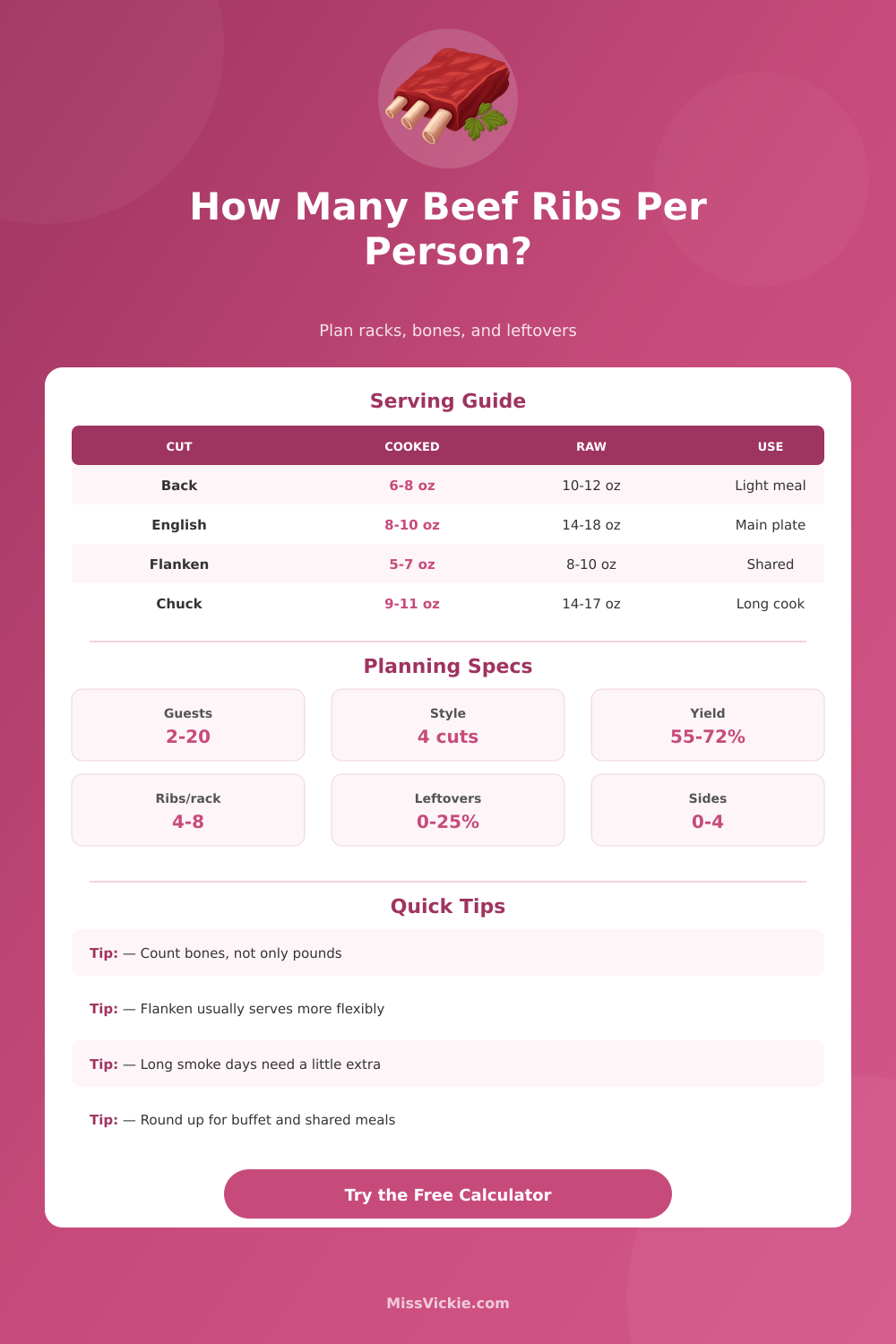
| Style | Cooked | Raw | Use |
|---|---|---|---|
| Back ribs | 6-8 oz | 10-12 oz | Light meal |
| English cut | 8-10 oz | 14-18 oz | Main plate |
| Flanken cut | 5-7 oz | 8-10 oz | Shared |
| Chuck ribs | 9-11 oz | 14-17 oz | Long cook |
Cut Profiles
| Cut | Yield | Bone feel | Note |
|---|---|---|---|
| Back | 66% | Lean | Smaller bones |
| English | 62% | Heavy | Meaty plate |
| Flanken | 71% | Thin | Quick share |
| Chuck | 59% | Rich | Slow tender |
Meal Factors
| Menu | Sides | Factor | Fit |
|---|---|---|---|
| Plated | 2 | 1.00x | Normal |
| Shared | 2 | 0.90x | Family |
| Buffet | 3 | 1.10x | Extra line |
| Appetizer | 1 | 0.72x | Small bites |
Leftover Buffers
| Goal | Add | Label | Use |
|---|---|---|---|
| None | 1.00x | Tight | Just enough |
| Small | 1.05x | Safe | Little extra |
| Planned | 1.12x | Lunch | Next day |
| Generous | 1.22x | Heavy | Plenty left |
To calculate the correct amounts of beef ribs that you must purchase for your guests, you will need to understand three factor: the specific cut of beef that you will use for your beef ribs, the appetite of the guests, and the way that the beef will shrink as it cooks. Beef ribs contain bones that take up a significence portion of the weight of the ribs; therefore, you will need to account for the weight of the bones in addition to the weight of the meat that you will serve. The specific cut of beef will determine the amount of meat that each person will eats from the beef ribs.
For instance, back ribs come from the loin area of the beef. The bones in back ribs are smaller in diameter than other cuts of beef ribs, but the meat content of the back ribs are leaner; therefore, the meat will shrink to only about two-thirds of it’s original weight when cooked. English cut ribs come from the short plate area of the beef.
How Much Beef Ribs to Buy for Your Guests
The ribs has thick bones, but contain a high amount of meat; therefore, English cut ribs is used as a main course for one or two individual. Flanken ribs are cut thin across the bones of the ribs. Because of the thinness of the cut of meat, many people shares flanken ribs.
Finally, chuck ribs come from the shoulder of the beef. The chuck ribs contain a rich flavor, but require long cooking time to tenderize the meat. Additionally, a significant portion of the chuck ribs is lost with trimming, and again during cooking.
The appetite and serving style of the beef ribs will impact the number of ribs that you must purchase. For instance, a person with a small appetite may only consume one rack of ribs, while a person with a large appetite may consume two or more racks of English cut ribs. Served on individual plates, beef ribs can be more easy portioned for each individual.
However, if you will serve the beef ribs as a buffet, some guests may consume more than others, and some guests may eat the same amount as others. In this case, some guests may be provided with smaller portion, but those who eat at buffets will eat more meat than those who are provided with plated meals. Additionally, the number of side dish that will be served with the beef ribs may also impact the appetite for the beef ribs.
For instance, if many side dishes are provided with the beef ribs, the guests may consume fewer beef ribs. To determine the amount of meat that will result from the beef ribs, you must calculate the yield of the beef ribs. The yield is the amount of meat that can be obtained from the beef ribs after removing the bone and fat from the meat.
Beef ribs typicaly have a yield of between 59 and 71%. For instance, chuck ribs will have a lower yield than flanken ribs due to the increased moisture and mass loss of the chuck ribs. Since the ribs contain bones that have a significant amount of weight, purchase the number of ribs that you need rather than purchasing the amount of pounds of meat that you need.
Another technique for calculating the amount of beef ribs that you need to buy is to use mathematical estimate for the amount of each type of cut of ribs. For instance, if you are having a buffet for ten guests, you will need to purchase approximately 14-18 ounces of beef ribs per person. If you are having a plated meal for six guests, however, you will only need to purchase 10 ounces of ribs per person.
Since flanken ribs have a yield of 71%, flanken ribs will go further then other cuts of ribs. However, you should of always round up the amount of beef ribs that you purchase from the butcher to ensure that there is enough meat for all of your guest. To avoid mistake when purchasing beef ribs for your guests, follow these steps.
First, determine the number of individual ribs that you need to provide for each guest. Second, add 10% to the total amount of beef ribs that you calculate for your guests if you plan to serve the ribs as a buffet. Third, calculate the yield of the beef ribs to account for the mass of beef ribs that will be lost when removing the bones and fats.
Finally, purchase an extra rack of beef ribs to provide for any remaining beef ribs that the guests may desire as leftovers. By following these steps, you will ensure that you have enough beef ribs to provide for your guests, and that there will be enough leftover for future meal.