🥩 Iron in Beef Liver Calculator
Calculate iron content by preparation method, serving size, and number of servings
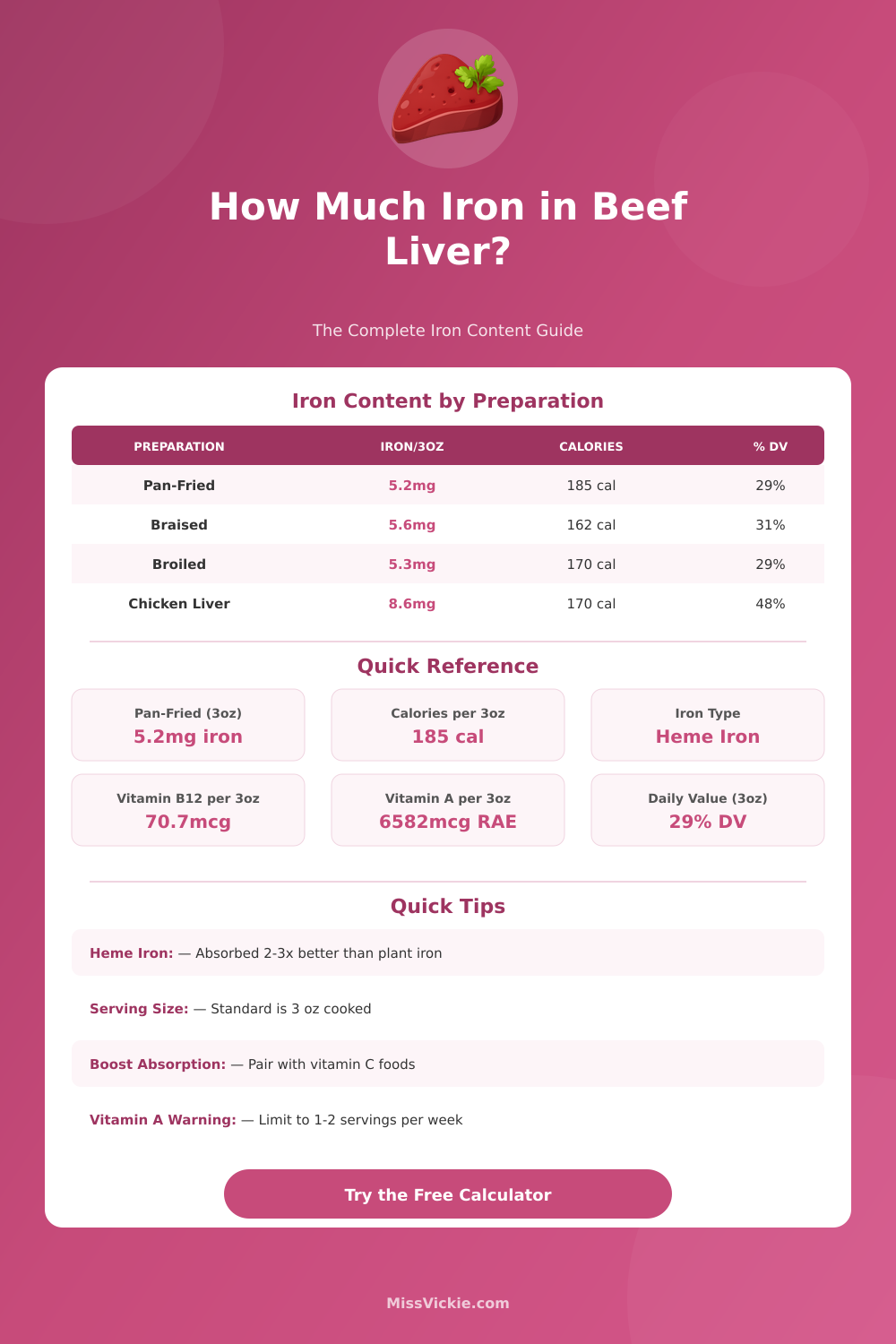
| Preparation | 2 oz (57g) | 3 oz (85g) | 4 oz (113g) | 5 oz (142g) |
|---|---|---|---|---|
| Pan-Fried | 3.5mg | 5.2mg | 6.9mg | 8.7mg |
| Braised | 3.7mg | 5.6mg | 7.5mg | 9.3mg |
| Broiled | 3.5mg | 5.3mg | 7.1mg | 8.8mg |
| Sauteed | 3.3mg | 5.0mg | 6.7mg | 8.3mg |
| Chicken Liver | 5.7mg | 8.6mg | 11.5mg | 14.3mg |
| Calf Liver | 3.0mg | 4.5mg | 6.0mg | 7.5mg |
| Food | Iron | Calories | Notes |
|---|---|---|---|
| Beef Liver (pan-fried) | 5.2mg | 185 | Heme iron, extremely high B12 |
| Chicken Liver (pan-fried) | 8.6mg | 170 | Highest liver iron content |
| Beef Kidney | 4.6mg | 134 | Lower vitamin A than liver |
| Beef Heart | 3.8mg | 140 | Rich in CoQ10 |
| Oysters (3 oz) | 7.8mg | 69 | High zinc content |
| Dark Turkey Meat | 2.0mg | 159 | Moderate heme iron |
| Spinach (cooked, 3 oz) | 1.9mg | 20 | Non-heme, lower absorption |
| Beef Sirloin | 1.6mg | 180 | Less iron than organ meats |
beef liver ranks among the most healthy meats available. It is rich in natural nutrients, including vitamins A, D, E, K, B12 and folate. It also stores great minerals like copper, iron, zinc, manganese, selenium and phosphorus.
Those vitamins care about good sight healthy skin and strong immune system. B-vitamins, especially B12, help with energy making and help to keep the nervous system in good state. The liver also helps cellular activity for natural energy and supports brain work.
Beef Liver: Health Benefits and How to Eat It
A 100-gram serving of regular beef liver stores around 135 calories together with almost 20 grams of protein. More than a quarter of this liver is made up of proteins. It also gives choline, that plays a key role in the health of the brain and the work of the liver.
Carbohydrates happen ltitle in beef liver, because one four-ounce serving delivers only 4.4 grams of them.
Grass-fed beef liver is a better choice. Some farms feed the animals by means of pasture during the whole year, with checks from USDA and handling after killing. One finds organic, grass-fed and grass-finished types, that escape GMO and receive marks from independent checkers.
The packages usually arrive sealed in sizes of won until two pounds.
One commonly advises to consume one until three servings of fresh beef liver weekly, where every serving has around three ounces. The suggested amount ranges between 100 and 250 grams per week, according to age and gender. Regarding the vitamins, do not pass four ounces weekly as the safe measure.
Eating too much liver can lead to toomuch entry of vitamin A or copper.
Older beef liver commonly has strong flavor, that can push away. The texture of older liver becomes sometimes too stringy or dusty. Liver of young cattle has gentler taste, because fewer poisons built up.
If one soaks the liver in milk or buttermilk for one or two hours before cooking, that removes the metallic taste. Also skin covers the surface of the liver, and removing it improves the general taste.
Overcooking liver makes it disgusting. It is best to cook it only until red inside, to escape heavy texture. Traditional way is to fry liver with onions in butter.
One can grind the liver and mix it equally with ground beef, later cover by means of sauce so that it goes not noticed. Another idea is to add it to meatloaf or patties. For more nutrients, one swaps it with beef heart or kidney.
Eating raw or undercooked liver raises the chance for deadly food diseases. The liver itself does not hold dangers, but it filters and splits them. Even so, too much is not wise.
Some research showed, that a bit of organ meat maybe raises the risk for non-alcoholic fat liver disease, although more studies are needed.