
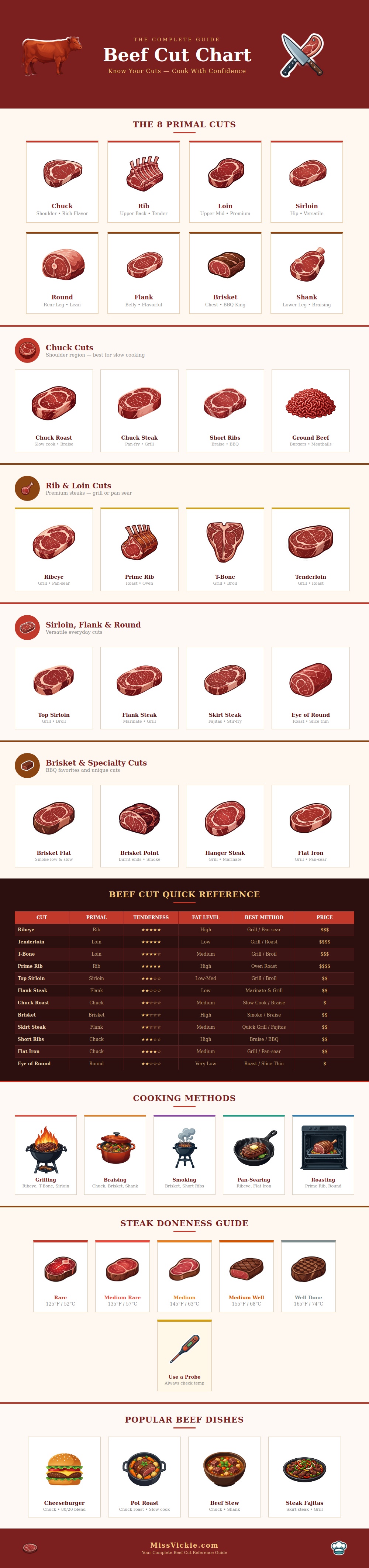
Understanding which cuts comes from which part of the animal makes shopping for beef a lot easier. Each cut has its origin in one of eight primal parts of the animal (see chart). Knowing this help your cooking (focusing on muscle structure), rather than trying to remember specific recipes. Don’t get intimidated by terms such as sirloin, brisket, and chuck. Just know where that particular cut of meat originate on cow.
Now we move up to the shoulder area of the cow: the chuck. This is heavy-lifting muscle group for the animal, which explains its density and amount of connective tissue. As such, you don’t want to attempt to cook these cuts quickly. Attempting to grill your chuck roast like a tender steak will not yield tender results. Rather slow-cooking methods with low heat are suggested. Smoke it for hours or braise it with veggies in a pot, allowing the collagen to break down into gelatin. The meat will fall apart, tender enough to eat by itself. Patience create better flavor in these cuts.
How to Cook Different Beef Cuts
Now let’s talk about the loin and the rib. This is where you gets those top cuts of meat such as tenderloin and ribeye. Why? Because these muscles didn’t do much work for the animal; therefore they will be really tender. The name of the game shifts from breaking down tissue to retaining the tenderness of meat. Since it’s soft to begin with, a couple minutes on the grill or in a hot pan usually does the trick. Be careful not to overcook. The goal is a warm center and a great crust.
In-between cuts like sirloin and flank provide a happy medium. They is flavorful enough without breaking the bank. They handle high temperatures more better than shoulder cuts, but still need less attention than loin steaks. A little bit of marinating will also help break down some of those fibres a touch. Cutting across grain ensures they remains tender instead of being a mouth full of toughness. These are perfect for weeknight meals. No reason you can’t pull these out whenever you want.
Know your cuts, and know that temp is critical. The visual guide in the infographic highlights specific internal temperatures for each level of doneness, from rare at 125 degrees to well done at 165. That means if you want rare beef you should of take it off the grill at 125. Color isn’t an accurate gauge (unless you’ve got a good eye) since marinades and salting will affect color during cooking. An instant-read thermometer takes out the guessing game.
Pull the steak off when it reach your desired internal temp, then let it rest until you’re ready to eat. Why? Because resting allow the juices to spread out evenly. If not, all the deliciousness pools on the cutting board…not inside the meat.
A cut is nothing more than a piece of the whole picture. Knowing your way around cow helps. And when we say know your cuts, we don’t mean you have to spend a lot of money for a great meal. If a piece of meat is prepared properly, even a bargain-bin chuck steak braised for six hours can be tastier then an overcooked ribeye. So get confident in what you’re buying.
The chart makes sense. After seeing the animal organized into groups based off texture and function, going down the grocery aisle isn’t so scary. It’s just a menu of options waiting for the right dose of heat and time.