How Much Beef Broth For Taco Soup Calculator
Estimate beef broth for taco soup from servings, ground beef, beans, tomatoes, vegetables, corn, simmer loss, sodium level, and the thickness you want.
Choose a starting plan, then tune the meat, beans, vegetables, and broth buffer for your pot.
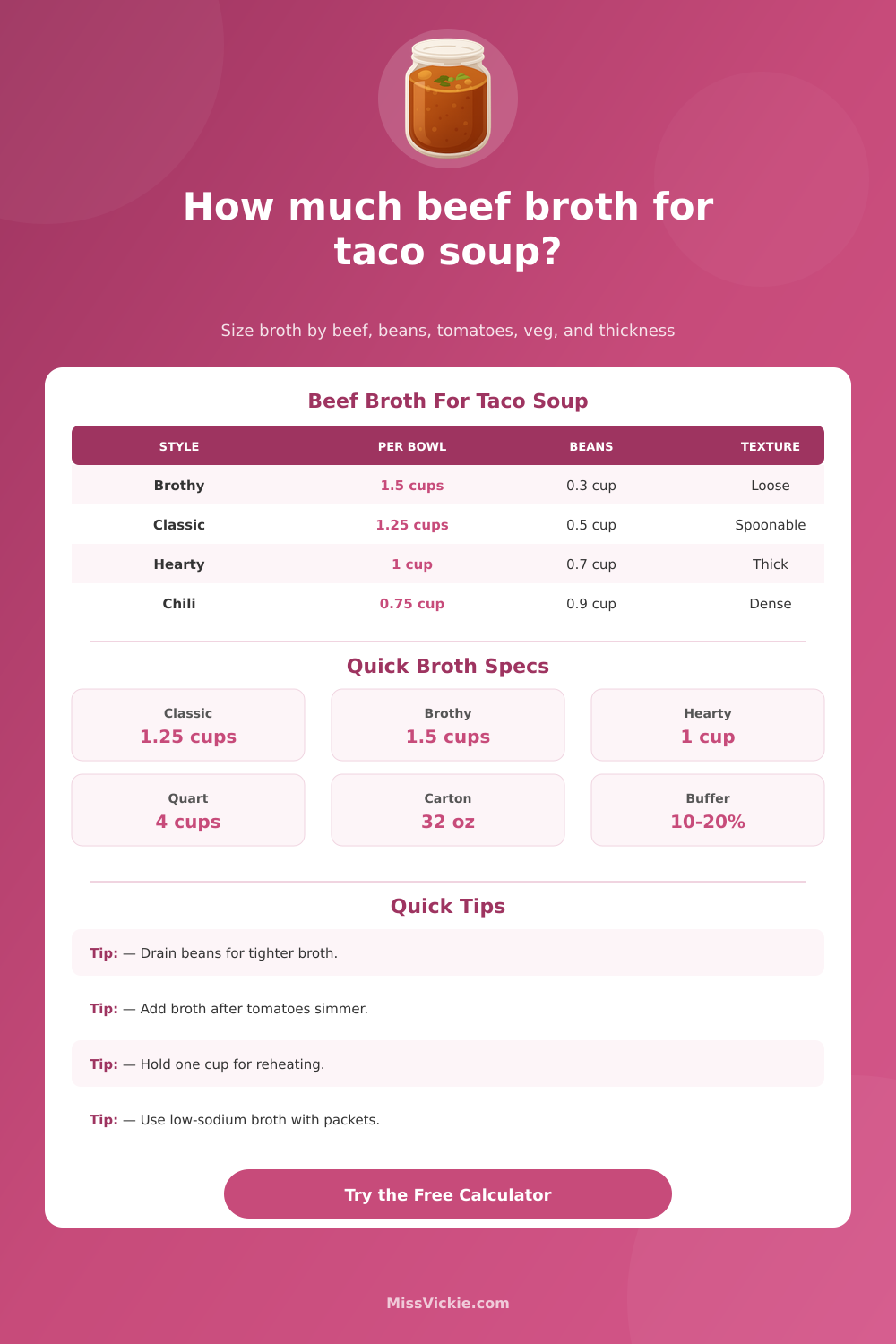
Full Taco Soup Broth Breakdown
| Taco Soup Style | Finished Soup Per Serving | Broth Share | Best Use |
|---|---|---|---|
| Brothy taco soup | 1.5 to 2.5 cups / 355 to 590 ml | About 64% broth after tomato liquid | Lighter bowls, tortilla chips, quick lunches |
| Classic taco soup | 2 cups / 475 ml | About 55% broth after tomato liquid | Balanced beef, beans, corn, tomatoes, and toppings |
| Hearty spoonable | 2 to 2.5 cups / 475 to 590 ml | About 47% broth after tomato liquid | Meal prep bowls that still need some looseness |
| Chili-style thick | 2 to 3 cups / 475 to 710 ml | About 38% broth after tomato liquid | Dense bowls, nacho topping, baked potato topping |
| Bean Or Vegetable Load | Typical Per Serving | Thickness Effect | Broth Adjustment |
|---|---|---|---|
| Light beans | 0.25 to 0.35 cup drained beans | Loose and brothy | Reduce broth slightly if tomatoes are very juicy |
| Classic beans | 0.45 to 0.6 cup drained beans | Spoonable but still soupy | Use about 1.2 to 1.4 cups beef broth per bowl |
| Loaded beans or hominy | 0.65 to 0.85 cup per bowl | Thickens during holding | Add 10% to 20% extra broth for leftovers |
| Mashed or refried beans | 0.25 to 0.5 cup blended in | Very thick, almost stew-like | Add broth gradually and stir before deciding |
| Group Size | Finished Soup Goal | Classic Starting Broth | Quart Cartons |
|---|---|---|---|
| 4 servings | 8 cups / 1.9 L | 6 to 7 cups / 1.4 to 1.7 L | 2 cartons covers most pots |
| 6 servings | 12 cups / 2.8 L | 9 to 11 cups / 2.1 to 2.6 L | 3 cartons gives a buffer |
| 12 servings | 24 cups / 5.7 L | 19 to 22 cups / 4.5 to 5.2 L | 5 to 6 cartons |
| 25 servings | 50 cups / 11.8 L | 40 to 46 cups / 9.5 to 10.9 L | 10 to 12 cartons |
| Broth Or Tomato Choice | Typical Liquid Contribution | Flavor Strength | Salt Strategy |
|---|---|---|---|
| Low-sodium beef broth | About 520 mg sodium per cup | Balanced with taco seasoning | Best default when using seasoning packets |
| Regular beef broth | About 800 to 900 mg sodium per cup | Full and salty | Use less packet seasoning until the end |
| Diced tomatoes with juice | About 0.35 to 0.5 cup liquid per bowl | Bright and thin | Simmer first, then decide final broth |
| Crushed tomatoes or sauce | Less free liquid, more body | Rich and thick | Add broth in stages to avoid stew texture |
Enough for about three classic taco soup bowls once tomatoes add liquid.
Feeds roughly three classic bowls at a half cup per serving.
Serves about six bowls when each bowl gets 2.5 oz cooked beef.
Helps beans, corn, and toppings avoid soaking up all the broth.
Taco soup is a mixture of soup and stew. Because taco soup is a mixture of soup and stew, determining the correct amount of beef broth to use in the recipe can be dificult. You want to provide enough beef broth to allow the seasoning and toppings to float within the soup.
Yet, you do not want to use so much beef broth that the beans and corn in the stew turn the soup into flavored water. The amount of beef broth impacts the thickness of the taco soup. You can use more beef broth to make the taco soup thin enough to sip on the contents.
How much beef broth to use in taco soup
Or, you can use less beef broth so that the taco soup is thicker and takes up a spoon. The amount of beef broth impacts every other ingredient in the recipe as well. Each ingredient in the pot change the amount of liquid in the pot.
The ingredients that add liquid include the tomatoes that release there juice while being cooked in the pot. The beans and corn absorb the beef broth while sitting in the pot. Additionally, the ground beef that is not drained contains fat that impacts the thickness of the taco soup while cooking.
Using an uncovered pot that simmers on the stove simmers the ingredients while losing some of the liquid due to evaporation. If you do not account for these variable, you may find yourself adding extra broth or extra chips to the pot when you serve the soup to your customers. Using a calculator for the amount of beef broth to use in your taco soup recipe removes the need to guess the amount of beef broth needed.
By entering the number of servings needed, the amount of beef and beans to be used per serving, and the type of tomato products to be used, the calculator can account for the amount of liquid the tomatoes will add to the soup. Additionally, it can account for the amount of starch that the beans will add to the pot. The calculator will allow you to choose the desired thickness of the taco soup recipe.
You can set it to be thin enough for the tortilla chips to be used, or you can select an option for the soup to be as thick as chili. Many people think of the meat and the seasoning of the taco soup as the most important flavor. Additionally, many people think of the beef broth as the amount of broth that is left in the carton of broth.
This recipe is acceptable for small batches of taco soup. However, it is not an effective method to use when you are cooking large batches of the recipe or when you are cooking the recipe in advance. The beans will continue to absorb the liquid while in the refrigerator.
Additionally, the corn will continue to release the starch that makes the taco soup thick over time. If you account for these variables in the beginning, you will not have an issue with the recipe turning into a thick paste once you heat the pot. The calculator will account for this if you input the length of time that you would like the taco soup to sit or if you would like to serve the pot in relation to the recipe of leftover soup.
Using the calculator allows you to account for the type of ground beef you would like to use in the recipe. If you prefer leaner ground beef that releases less fat than other types of ground beef, you can use less beef broth in the recipe. If you use rich ground beef that contains fat and you do not drain it prior to cooking, you will need to account for the thickness of the soup that the fat will create.
The calculator will account for this when you select the type of beef that you use in your taco soup. Additionally, the type of tomatoes that you use will change the amount of liquid that is added to the pot. If you use diced tomatoes it will add liquid to the pot.
If you use crushed tomatoes or tomato sauce it will add less liquid to the pot. The calculator will account for this so that you dont make your taco soup too thin or too reduced in flavor when you taste the seasoning. The amount of vegetable that is used in the recipe will also impact the amount of liquid in the pot.
While peppers and onions do not add liquid to the pot, the corn does add starch to the pot that thickens the taco soup. The calculator will account for this if you input the type of vegetables you would like to use and the volume of those vegetables. The cooking method can also impact the amount of liquid that remains in the taco soup.
If you heat the pot over the stove with the lid off, some of the liquid will evaporate. Using a slow cooker will retain the liquid in the pot. Additionally, holding the pot warm with the stove for an hour or two will result in some of the liquid in the pot evaporating.
The calculator will account for this by allowing you to select the cooking method that you would like to use to cook your taco soup. Another impact that the ingredients will have on the amount of beef broth that you use in your recipe is the sodium content. If you use low-sodium broth, you have more flexibility in the amount of taco seasoning that you add to the recipe.
If you use regular beef broth, the sodium content will impact the amount of seasoning that you add. The calculator will account for the sodium content in your recipe so you can choose the amount of seasoning to use. The calculator will provide the total amount of beef broth to use in the recipe and the amount of beef broth that you will need to use per serving.
The calculator will convert the measurements of beef broth into cartons or quarts of broth for convenience in purchasing the ingredient. Additionally, reference tables will show the amount of beef broth needed if you use different amounts of beans or use different serving sizes. The calculator for the amount of beef broth to use in the recipe can be of great use to those who would like to vary the inputs for the recipe.
For instance, if you increase the amount of beans to be used in the recipe, the calculator will increase the amount of beef broth. If you change the type of tomatoes from diced to crushed, the amount of beef broth needed will decrease. Additionally, if you change the cooking method from stovetop to slow cooker, the amount of beef broth needed will change to compensate for the amount of liquid that will evaporate due to cooking over the stove.
You may wonder if the amount of beef broth should all be added at the beginning of the recipe. One method to prepare the taco soup is to add most of the beef broth to the pot. Simmer the contents of the pot for 15 minutes and taste the soup.
If it is too thin, add the remaining beef broth to the pot. This prevents you from adding too much beef broth at the beginning. Additionally, the calculator allows for a buffer for the amount of beef broth to be added so that reserving a cup of beef broth is an optional step.
Taco soup requires planning because each ingredient will change the texture of the soup even after placing the soup on the stovetop. The beans and the corn will continue to absorb the liquid after placing the pot on the stove. Additionally, the tomatoes will continue to break down with time.
The fat from the beef may settle or rise in the pot depending on how long the pot was allowed to sit. If you plan the amount of beef broth with these variables in mind, you will have a thick or thin taco soup depending on the preference for the recipe to be served. The calculator makes this process easier for you and removes the guesswork to preparing the ingredients.
All you have to do is decide on the toppings that you would like to use in your pot of taco soup.