How Much Beef Broth For Vegetable Soup Calculator
Estimate beef broth for vegetable soup by servings, bowl size, vegetable load, potatoes or grains, leafy greens, tomato level, simmer loss, leftovers, and broth strength.
Pick a soup style, then adjust the vegetables, starch, greens, tomato, simmer time, and leftover buffer for your pot.
Broth Breakdown
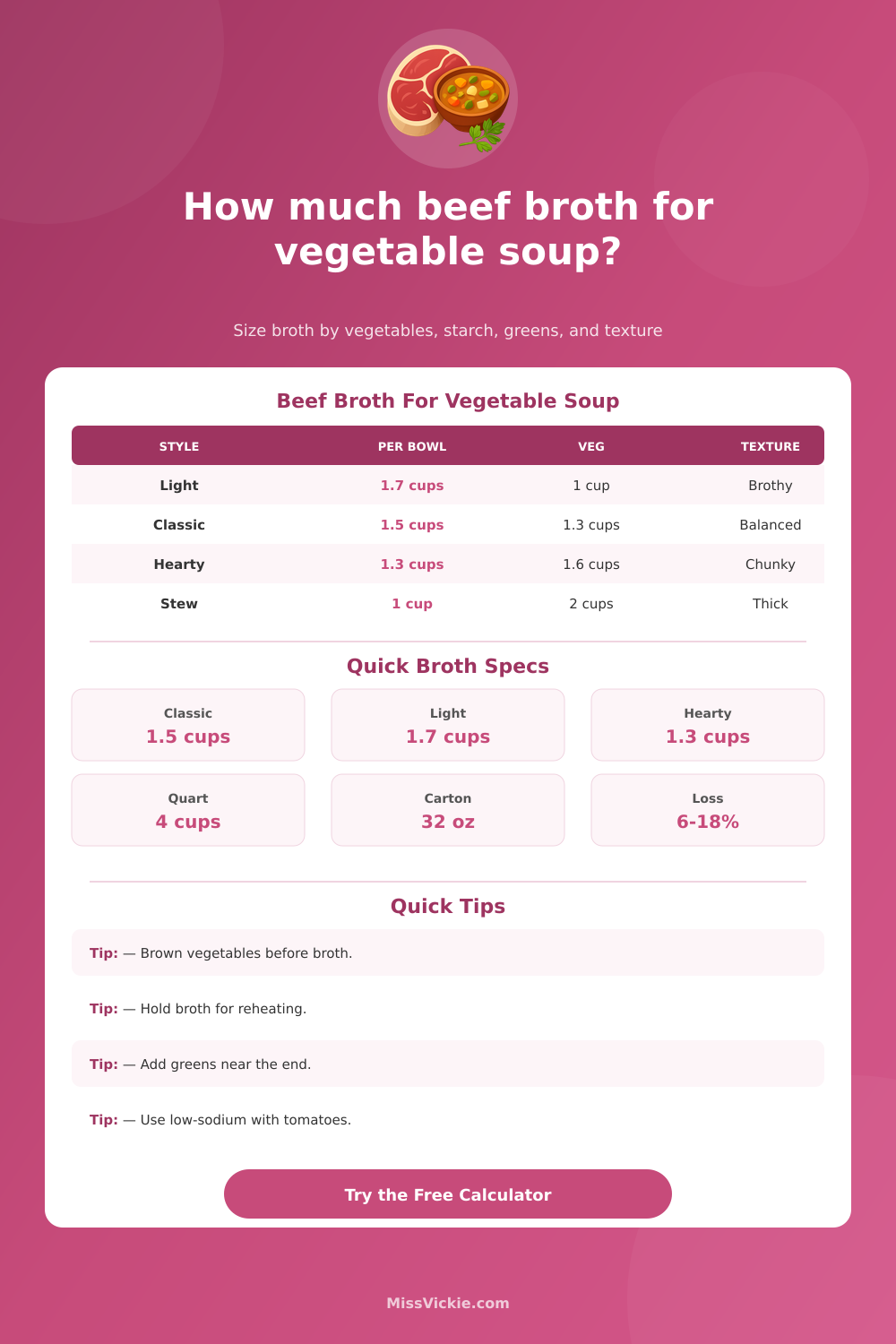
| Soup Style | Broth Per 2-Cup Bowl | Vegetables Per Bowl | Best Use |
|---|---|---|---|
| Light starter soup | 1.7 cups | 0.9 to 1.1 cups | Lunch, first course, or a thin sipping bowl. |
| Classic vegetable soup | 1.5 cups | 1.2 to 1.4 cups | Balanced dinner soup with carrots, celery, onion, potatoes, and tomatoes. |
| Chunky vegetable soup | 1.3 cups | 1.5 to 1.7 cups | Hearty bowls where vegetables are the main volume. |
| Stew-like vegetable soup | 1.0 to 1.15 cups | 1.8 to 2.1 cups | Dense root vegetable soup or spoonable cold-weather meals. |
| Add-In | How It Changes Broth | Planning Amount | Kitchen Note |
|---|---|---|---|
| Potatoes | Need a little extra liquid as starch softens. | Add 0.10 cup per bowl | Cut evenly so the soup does not overcook before potatoes soften. |
| Barley or rice | Absorbs broth during cooking and storage. | Add 0.20 to 0.30 cup per bowl | For leftovers, cook grains separately or reserve broth. |
| Leafy greens | Wilt down but release some water. | Subtract up to 0.05 cup per bowl | Add spinach, kale, or chard near the end for cleaner texture. |
| Tomatoes | Add liquid and acidity, so broth can be lower. | Subtract 0.05 to 0.15 cup per bowl | Use low-sodium broth when adding canned tomatoes. |
| Servings | Classic Broth | With Starch | Stockpot Size |
|---|---|---|---|
| 4 servings | 6 to 7 cups | 7 to 8 cups | 3 quart saucepan or Dutch oven. |
| 8 servings | 12 to 14 cups | 14 to 16 cups | 5 to 6 quart pot. |
| 12 servings | 18 to 21 cups | 21 to 24 cups | 8 quart stockpot. |
| 24 servings | 36 to 42 cups | 42 to 48 cups | 12 to 16 quart kettle. |
| Broth Type | Flavor Strength | Sodium Strategy | Best Vegetable Match |
|---|---|---|---|
| Unsalted beef broth | Clean and flexible | Season at the end | Sweet carrots, peas, corn, and squash. |
| Low-sodium broth | Balanced savory base | Safest default | Tomato vegetable soup and meal prep batches. |
| Regular beef broth | Bold and salty | Dilute or skip extra salt | Potato, cabbage, and root vegetable soups. |
| Bone broth | Rich body | Use herbs and acid carefully | Mushrooms, barley, kale, and roasted vegetables. |
More liquid, lighter vegetables, and easy sipping texture.
Classic spoonfuls with vegetables and broth in each bite.
More carrots, potatoes, beans, and greens than open broth.
Thick soup that reheats best with reserved broth.
When you prepare vegetable soup, the amount of beef broth that you add to the pot is a critical factor in the preparation of the soup. The amount of beef broth that you add will impact the texture and flavors of the finished soup. If you add too little beef broth to the pot, the vegetables will appear crowded together in the broth and the broth will have a thick textures.
Conversely, if you add too much beef broth to the soup, the flavor of the broth will be dilute, and the soup will taste like water. You need to consider the amount of beef broth that you use in your vegetable soup because the beef broth will interact with the other ingredients that you adds to the pot. For instance, some solid ingredient will change the volume of liquid that is present in the pot.
How Much Beef Broth to Add to Vegetable Soup
Vegetables like carrots, celery, and onions will contribute liquid to the pot as they cook, but vegetables like potatoes and barley will absorb some of the liquid from the beef broth. Finally, tomatoes will contribute both liquid and acidity to the pot that can change the flavor of the salt containing within the beef broth. Each of these ingredients will change the amount of liquid in the pot, so you must account for that when you prepare your recipe.
The amount of time that the soup simmers will also impact the amount of beef broth that you need for your pot of vegetable soup. If you simmer your soup for twenty minutes, you will lose less of the beef broth then if you simmer the soup for one hour. You may need to account for this in your recipe so that you dont need to adding extra beef broth after you have cooked the soup.
Adding extra broth after the cooking process may dilute the flavor of the soup. In addition to the ingredients that you use, you must also consider how you intend to store the soup. Starches and beans will continue to absorb some of the beef broth even after cooking.
If you plan to store the soup in the refrigerator or freeze it, the starches and beans will continue to absorbing some of the beef broth, thickening the soup. In this case, you will need to set aside an small amount of extra beef broth that you can later add to the soup when reheating it. Adding beef broth will be more effective than adding water to restore the texture of the broth and maintain it’s flavor.
Your preference for the texture of the soup is another variable that will impact the amount of beef broth that you use. For instance, you may prefer a texture that include the vegetables that float in the broth, as opposed to a broth that coats the vegetables. Your preference for the texture will impact the amount of broth that you use in comparison to the vegetables.
Although browning the vegetables before adding the beef broth will impact the flavor of the soup, it will not impact the amount of beef broth. Browning the vegetables will create a sweeter taste to the vegetables that will make the beef broth taste more intentional. An additional factor to consider is the amount of salt in the beef broth.
Since broth contains sodium, if you use a beef broth that contains alot of sodium, and you use vegetables that are also high in salt, your broth may become too salty to taste. To avoid this flavor issue, you can use low sodium or unsalted beef broth. Using low-sodium broth will allow you to have more control over the amount of salt in the finished soup.
Finally, when you create a recipe for a certain number of individuals, you must consider how you will scale that recipe. For instance, a batch of soup that you make for four individuals may be relatively easy to adjust if you find that the texture of the vegetables is either too thick or too thin within the broth. However, if you create a large batch of soup for twenty people, you may find it difficult to adjust the texture of the vegetables to the texture that you would like to provide to each individual.
You can prepare for this by creating a buffer of extra beef broth that you can add to the pot if the texture of the vegetables becomes too thick. You should never treat the amount of beef broth as a fixed number within your recipe, since the ingredients in the soup will change the amount of liquid that the broth will need to contribute to the pot. If you took the time to inspect each ingredient and simmer time for your recipe, you could of ensure that the amount of beef broth that you use for your recipe will be the correct amount for the type of soup that you are preparing.