Sauce volume, basil form, chopped density, simmer time, tomato strength, pesto boost, servings, and garnish reserve
Basil for Pasta Sauce Calculator
Estimate basil for pasta sauce from finished sauce volume, fresh or dried basil, chopped leaf density, cooking time, tomato intensity, pesto-style boost, serving count, and garnish reserve.
Choose a sauce style, then adjust the exact sauce volume, basil form, tomato intensity, simmer time, pesto boost, servings, and garnish reserve.
Basil Sauce Breakdown
| Meal Plan | Sauce Volume | Servings | Fresh Basil | Dried Basil |
|---|---|---|---|---|
| Light weeknight pasta | 3 cups | 3 to 4 | 7 to 10 g | 2 to 3 tsp |
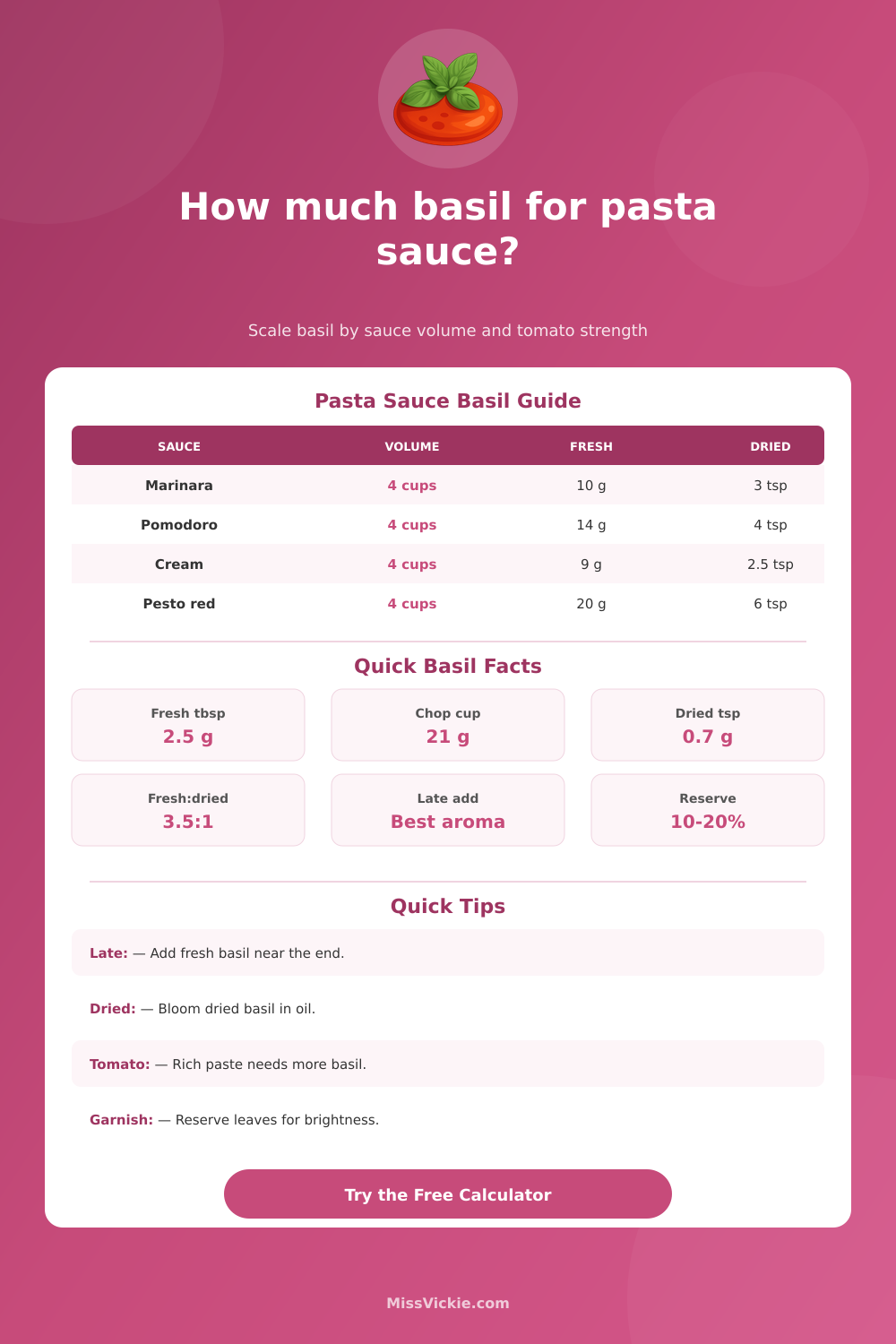
| Family marinara dinner | 4 cups | 4 to 6 | 10 to 14 g | 3 to 4 tsp |
| Two-jar sauce upgrade | 6 cups | 6 to 8 | 15 to 24 g | 4 to 7 tsp |
| Sunday sauce pot | 10 cups | 10 to 12 | 24 to 36 g | 7 to 10 tsp |
| Freezer batch | 16 cups | 16 to 20 | 38 to 60 g | 11 to 17 tsp |
| Basil Measure | Approx Fresh Weight | Dried Equivalent | Best Use | Kitchen Note |
|---|---|---|---|---|
| 1 tbsp chopped fresh | 2 to 3 g | 1 tsp dried | Small sauce adjustment | Stir in late for aroma. |
| 1/4 cup chopped fresh | 5 to 7 g | 2 to 3 tsp dried | One small sauce pan | Density changes with chopping. |
| 1/2 cup chopped fresh | 10 to 14 g | 1 to 1 1/2 tbsp dried | Family sauce pot | Reserve a spoonful to finish. |
| 1 cup chopped fresh | 18 to 28 g | 3 to 4 tbsp dried | Large batch or pesto-style | Packed basil weighs much more. |
| 1 cup loose leaves | 15 to 20 g | 2 1/2 to 3 tbsp dried | Fresh garden basil | Remove tough stems first. |
| Choice | Calculator Effect | Flavor Result | When to Use | Adjustment Hint |
|---|---|---|---|---|
| Off heat | Least basil needed | Bright, green, aromatic | Fresh pomodoro or garnish | Slice or tear leaves gently. |
| Last 5 minutes | Balanced baseline | Classic tomato basil | Most marinara sauces | Add half before serving. |
| Simmer 20 minutes | Moderate increase | Rounder herbal flavor | Jar sauce upgrades | Save a garnish reserve. |
| Long cooked | Largest increase | Softer, less fresh aroma | Sunday sauce or meat sauce | Use dried early, fresh late. |
| Paste-heavy tomato | More basil needed | Cuts deep tomato richness | Concentrated sauces | Boost oil and late basil. |
About 2 1/2 tbsp chopped fresh basil for a bright 2-cup sauce.
About 1/2 cup loose chopped basil with a small garnish reserve.
Dried basil amount for roughly 5 to 6 cups of classic sauce.
Basil-forward red sauce for 4 cups with a strong green finish.
The basil calculator help you to find the correct amount of basil to add to you pasta sauce. The basil calculator provide measurements based on several different variable. To use the basil calculator, you will have to input the total volume of the sauce, the form of basil that you will use, the intensity of the tomatoes in the sauce, and the total cooking time of the sauce.
The amount of basil that you need will change based off how long that the basil is exposed to heat. If you use fresh basil, it will lose its flavor very quick if you cook the sauce for long period of time. However, if you add fresh basil to the sauce at the very end of the cooking process, it will retain its flavor.
How to Use the Basil Calculator
Dried basil is different than fresh basil in that it need to absorb the oil in the sauce while it is cooking to release its flavor. If you dont allow enough time for the dried basil to absorb the oil in the sauce, it can taste dusty when tasted. The longer that the pasta sauce simmers, the more that the basil will lose its flavor due to the volatile oils in the basil evaporating during the cooking process.
Therefore, if you cook the sauce for a long period of time, you will have to add more basil at the beginning of the sauce cooking process to compensate for the flavor that will be lost during simmering. However, if you cook the sauce for a short period of time, there will be less loss of basil flavor during simmering. Thus, the basil calculator will adjust the amount of basil needed according to the cooking time that you select for your sauce.
If your sauce simmers for a long time, you will need more basil at the beginning of cooking than if the sauce simmers for a short time. However, you will need to use an additional amount of basil at the very end of simmering to act as a garnish for the sauce. The more intense the flavor of the tomatoes in the sauce, the less basil that you will need to use.
If you use delicate fresh tomatoes, they will have a much lighter flavor than tomato paste or roasted tomatoes. Thus, you can use more basil with strong flavored tomatoes since the flavor of the tomatoes will not overpower the flavor of the basil. Additionally, if you make a spicy sauce like arrabbiata, the flavor of the spice and acidity of the sauce will overpower the taste of the basil so you can use more basil in the sauce.
These different intensity of tomatoes can be accounted for in the basil calculator to provide the correct amount of basil for your sauce. If you are measuring the basil by volume, the way that you chop the basil will affect the measurement of basil that is needed. If you use loosely chopped basil, it will have less mass when measured by the number of cups of basil as compared to tightly pack chopped basil.
This factor has to be accounted for in the basil calculator as the density field for basil measurements. Many people makes mistakes with the amount of basil when they prepare their sauce. However, the amount of basil should of been a variable quantity that changes with the batch size of the sauce and the length of time that the sauce simmers.
The basil calculator provide two different measurements of basil that you must use in your sauce. You will need both cooked basil and garnish basil. The cook will add the garnish basil at the end of cooking to provide basil flavor and color to the sauce.
The garnish basil will remain fresh while the cooked basil lose its flavor while simmering. The basil calculator will display both the amount of cooked basil and garnish basil that you will need to add to your sauce. As you increase the number of servings of sauce that you are making, the amount of basil will increase in relation to the number of servings.
Additionally, if you change from using fresh to dried basil, the basil calculator will adjust the amount of basil needed to use as a standard ratio for dried basil to fresh basil measurements. Thus, the basil calculator allow you to transform a measurement of basil into a repeatable sauce recipe by adjusting the amount of basil according to each of the variable in the sauce making process.