Masa harina, fresh masa, fat, steam, griddle, and altitude
How Much Baking Powder for Masa Calculator
Calculate the right baking powder amount for tamales, gorditas, sopes, huaraches, arepas, pupusas, tortillas, and cornbread-style masa based on dough weight, masa type, fat level, texture goal, and altitude.
Pick a common masa project, then adjust the batch size, fat, hydration, altitude, and texture target for the way you cook it.
Masa Leavening Breakdown
teaspoons per pound for fluffy steamed masa with fat.
teaspoons per pound for lightness without a cakey bite.
teaspoons per pound when you want a sturdy rim and tender center.
teaspoons per pound for classic flexible corn tortillas.
| Masa Use | Typical Baking Powder | Best Texture | When to Reduce |
|---|---|---|---|
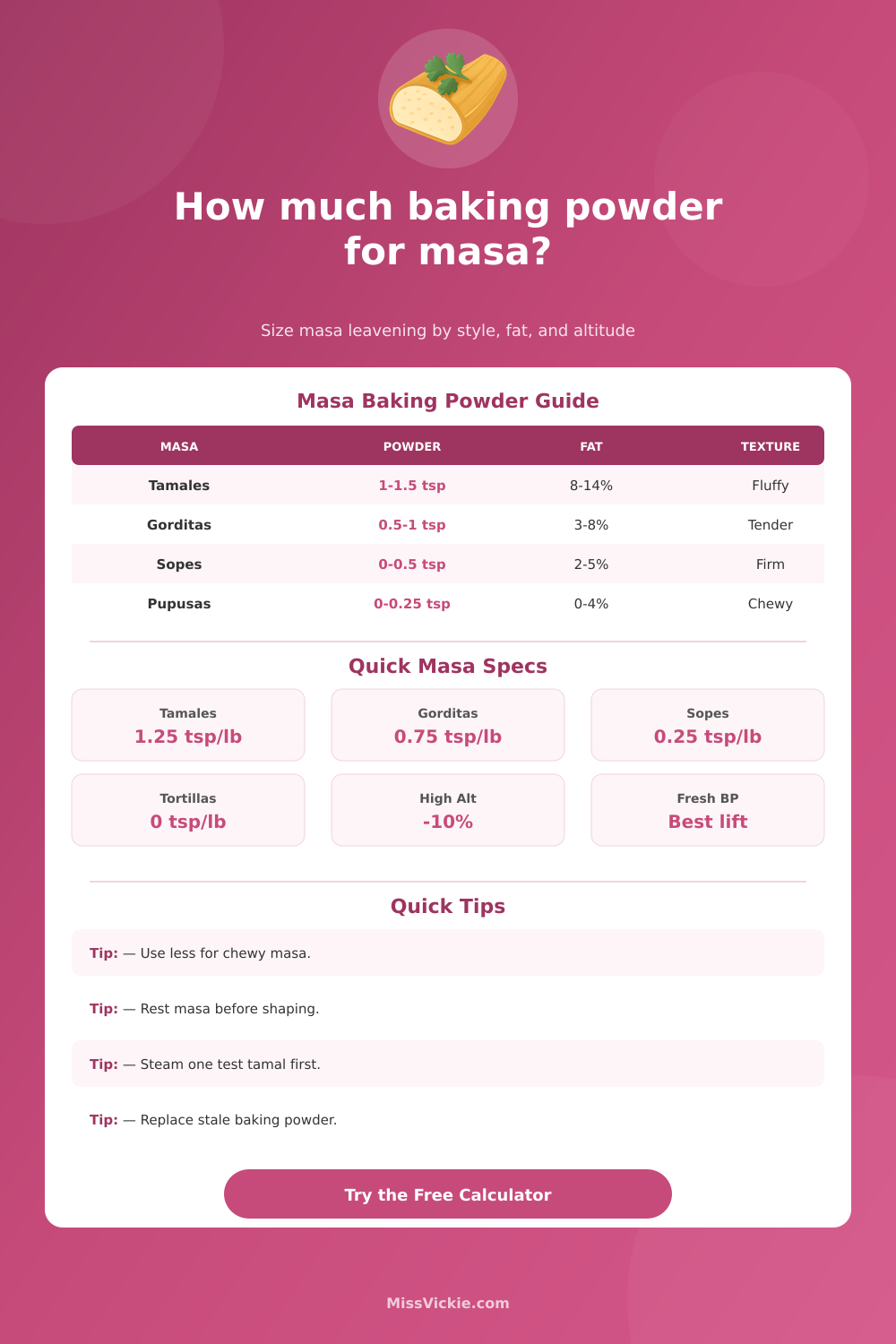
| Tamales | 1 to 1.5 teaspoons per pound prepared masa | Light, tender, fluffy steamed dough | Very wet masa, high altitude, or strong fresh powder |
| Gorditas | 0.5 to 1 teaspoon per pound prepared masa | Tender griddled pocket with slight puff | Thin gorditas, low fat dough, or extra long rest |
| Sopes and huaraches | 0 to 0.5 teaspoon per pound prepared masa | Firm enough to pinch and hold toppings | When crisp edges matter more than tenderness |
| Pupusas | 0 to 0.25 teaspoon per pound prepared masa | Chewy stuffed masa that seals cleanly | Cheese-heavy filling or very moist dough |
| Corn tortillas | Usually none | Flexible, corn-forward, clean bend | Almost always; leavening can make them brittle |
| Masa cornbread | 1.5 to 2 teaspoons per pound batter base | Cakey, sliceable, and visibly risen | Thin batter, high sugar, or very high altitude |
| Condition | Adjustment | Why It Matters | Practical Cue |
|---|---|---|---|
| Sea level to 2,999 ft | Use the normal rate | Gas expansion and steaming behavior are predictable | Follow the calculator result directly |
| 3,000 to 4,999 ft | Reduce about 5 percent | Leavening expands faster before the masa sets | Keep masa slightly firmer if steaming |
| 5,000 to 6,999 ft | Reduce about 10 percent | Too much powder can taste sharp and rise unevenly | Steam a sample before wrapping the whole batch |
| 7,000 ft or higher | Reduce about 15 percent | Fast lift needs less chemical leavening | Use fresh powder and avoid over-resting |
| Overnight rest | Add back about 5 percent only if needed | Single-acting lift fades during long rests | Double-acting powder is safer for rested masa |
| Prepared Masa | Tamales | Gorditas | Sopes |
|---|---|---|---|
| 1 pound / 454 g | 1 to 1.5 tsp | 0.5 to 1 tsp | 0 to 0.5 tsp |
| 2 pounds / 907 g | 2 to 3 tsp | 1 to 2 tsp | 0 to 1 tsp |
| 3 pounds / 1.36 kg | 3 to 4.5 tsp | 1.5 to 3 tsp | 0 to 1.5 tsp |
| 5 pounds / 2.27 kg | 5 to 7.5 tsp | 2.5 to 5 tsp | 0 to 2.5 tsp |
| 10 pounds / 4.54 kg | 10 to 15 tsp | 5 to 10 tsp | 0 to 5 tsp |
| Ingredient Factor | Add Lift When | Reduce Lift When | Texture Note |
|---|---|---|---|
| Fat or lard | Fat is above 10 percent of masa | Masa is lean or griddled thin | Fat tenderizes but can weigh down steam lift |
| Hydration | Masa feels stiff and cracks at the edge | Masa is loose, sticky, or batter-like | Loose masa rises quickly but can collapse |
| Fresh masa | Coarse grind feels heavy | Fresh masa already feels airy and moist | Fresh nixtamal may need less powder than masa harina |
| Fillings | Heavy meat or bean filling presses into masa | Cheese filling melts and adds moisture | Stuffed masa should stay sealable, not cakey |
| Cooking method | Steaming tamales or baking masa batter | Pressing tortillas or crisping thin sopes | Steam-friendly foods tolerate more lift |
Achieving the correct amount of lift in masa is critically important to the baking process because the amount of baking powder that is added to the masa will determine the texture of the masa that is produced. If there is too little baking powder in the masa, the masa will result in a dense texture to the masa. If there is too much baking powder in the masa, however, the texture of the masa will be spongy and similar to cornbread.
Due to such a significant effect of baking powder on the texture of the masa, cooks must adjust the amount of baking powder to find the perfect formula for there particular batch of masa. Masa is not a single type of dough; rather, the requirements for masa change according to the way in which the masa is cooked. For instance, the requirements for masa used to cook tamales are not the same as the requirements for masa that is pressed into tortillas or gridded into gorditas.
How Much Baking Powder to Use in Masa
Additionally, the fat levels in the masa are important; fats like lard or shortening will coat the corn particles in the masa. While fat adds richness to the masa, it also adds to the weight of the masa. Baking powder creates small pockets of steam and gas in the masa that allow the masa to maintain a light texture.
The moisture levels in the masa are also important; water will activate the baking powder. Stiffer types of masa require more lift than wet masa, and wet masa contains more steam than dry masa; too much lift may cause the wet masa to collapse. Additionally, the air pressure in the area in which the masa is cooked can alter the rate at which the gas in the masa expands; at higher altitudes, the air pressure is lower, so the same amount of baking powder may lead to a metallic aftertaste in the masa after it has cooled.
The calculator included in this article automatically computes the amount of baking powder that should be used according to the batch size, the type of masa, the fat percentage and the altitude at which the masa will be prepared. Furthermore, the calculator considers the freshness of the baking powder and how long the masa will rest prior to cooking. Baking powder loses strength over time.
Therefore, the calculator increases the amount of baking powder necessary for masa that will rest overnight to compensate for the possible loss of strength of the baking powder. While many cooks may have learned how to adjust the amount of baking powder through the mistakes that they made while cooking masa, cooks can avoid these mistakes altogether by preparing and cooking a single test piece of masa prior to cooking the entire batch. By steaming a single tamal or griddling a single small gordita, cooks can test the texture of the masa before adding it to their batch of masa to cook.
If the test piece of masa that you make feels heavy, then the masa needs more baking powder. However, if the test piece of masa tastes too sharp or if the test piece of masa structure collapses, this means you used too much baking powder or the moisture in the masa was too high. Testing one piece of masa will save the entire tray of masa from being incorrect.
Each type of masa require a different amount of baking powder than another type of masa. Tamales contain a high amount of baking powder because the long steaming process activates the baking powder and the fat content of the tamales ensures that they remain tender. Gorditas require a medium amount of baking powder to allow for the gorditas to be soft yet not cakey.
Sopes and pupusas require the least amount of baking powder because these foods require a sturdy base. Corn tortillas should almost never use baking powder or the tortillas may become brittle after cooling. The amount of fat content in the masa will affect the amount of baking powder that is required.
Masa that is lean may feel tight in the masa even with the normal amount of baking powder. Yet, if the masa contains alot of cheese or shortening, there will be less need for baking powder. High hydration in the masa will allow the masa to rise quickly with the baking powder yet also cause the masa to fall.
To compensate for this, the baking powder calculator will reduce the amount of baking powder if the moisture in the masa is too high. The type of baking powder that is used will also impact the masa. Double-acting baking powder will release the carbon dioxide gas twice when added to the masa and during the cooking process of the masa.
Aluminum-free and low-sodium baking powders may behave differently from regular baking powder thus needing a different amount of baking powder. Single-acting baking powder will work best for making masa that will be cooked immediately yet will lose its effectiveness if the masa sits for a long period of time. It is important to know what variables affect the masa in your own kitchen.
Batch size is only one variable yet there are others that may change the result of your batch of masa. With time, cooking numerous batches of masa with the same type of masa harina, you will begin to notice certain patterns with the masa. The recipe may have to change with time of year depending on the amount of humidity in the air or the amount of freshness of the baking powder.
Instead of trying to memorize the variables and the effects that they have on the masa, your goal should be to understand these variables and how they will affect the masa. With this knowledge, you can always adjust the amount of baking powder that is used so that the texture of the masa is as desired. When using a test piece of masa while considering the amount of fat and the altitude in the area, adjustments to the amount of baking powder will ensure that the next batch of masa will be correct.
You should of used a test piece to make sure the texture is right.