Bacon Dry Cure Calculator
Plan an equilibrium-style dry cure rub for pork belly with Cure #1 grams, salt and sugar balance, belly surface area, thickness-based cure days, flip schedule, purge estimate, pellicle drying time, and smoke weight loss.
🥓Dry cure presets
Pick a belly size and style, then adjust the rub percentages, Cure #1 ppm, thickness, flip interval, drying, and smoke plan for your actual slab.
⚖Dry cure units
🥩Belly slab and surface area
🧂Salt, Cure #1, sugar, and spice rub
⏱Diffusion, flipping, drying, and smoke loss
Dry cure plan
Dry cure breakdown
The calculator will flag excessive nitrite, very thick slabs, or short cure schedules.
📋Dry cure checkpoints
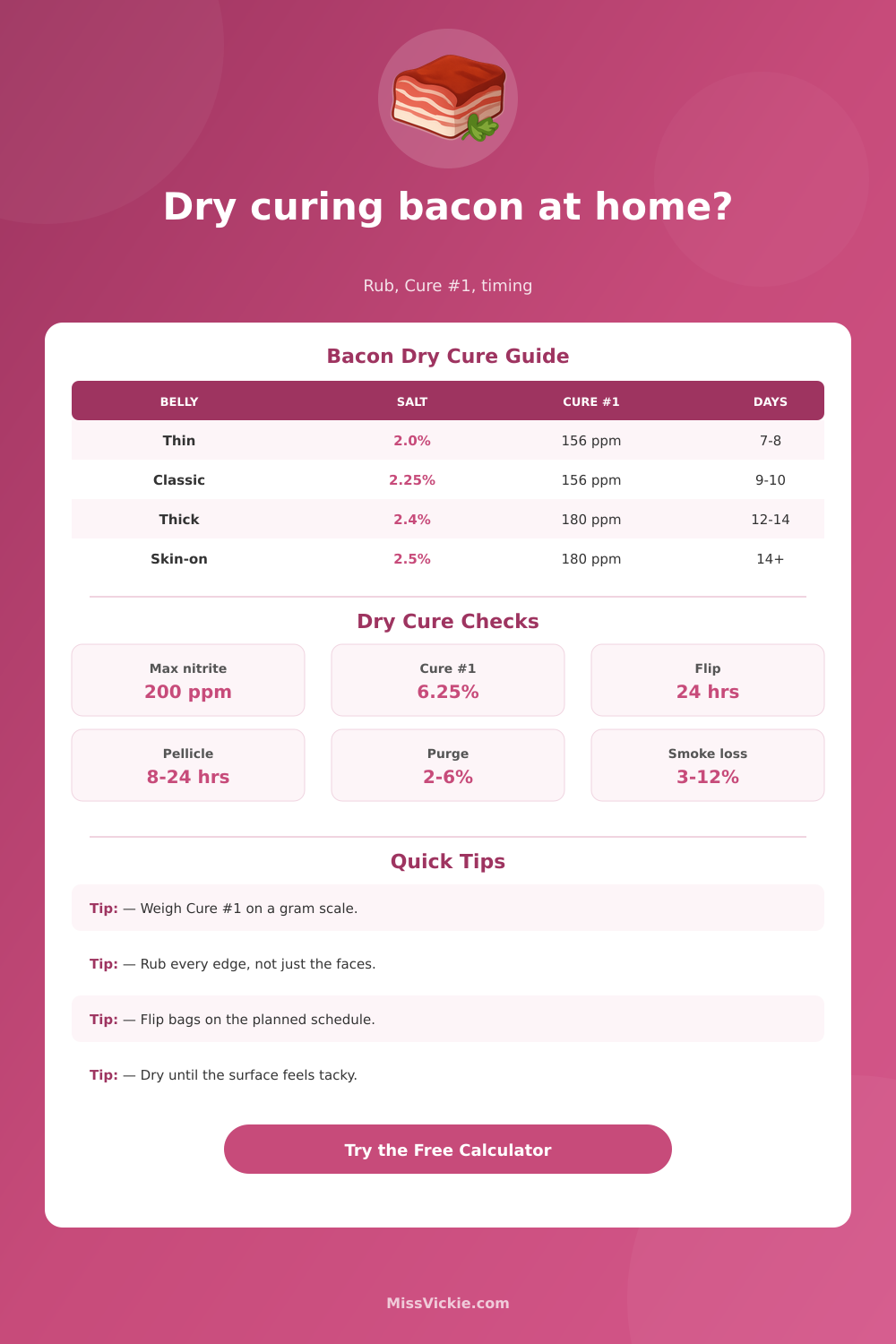
Maximum ingoing sodium nitrite used by this dry-cure calculator.
Standard Cure #1 nitrite strength for bacon dry rub math.
Common interval for redistributing dry cure and purge.
Typical surface drying window before smoke adheres cleanly.
📘Cure #1 and salt reference
| Dry cure target | Cure #1 grams per kg belly | Total salt range | Use case |
|---|---|---|---|
| 120 ppm nitrite | 1.92 g/kg | 2.00% to 2.25% | Mild cure flavor with careful measuring and full refrigeration. |
| 156 ppm nitrite | 2.50 g/kg | 2.25% to 2.50% | Common home bacon target for equilibrium-style dry curing. |
| 180 ppm nitrite | 2.88 g/kg | 2.35% to 2.65% | Thicker slabs where the cure time and rub coverage are conservative. |
| 200 ppm nitrite | 3.20 g/kg | 2.50% to 2.75% | Upper limit used only when a tested dry-cured bacon recipe calls for it. |
📏Thickness and flipping reference
| Maximum thickness | Minimum cure days | Flip interval | Pellicle target |
|---|---|---|---|
| Up to 1 in / 2.5 cm | 7 to 8 days | Every 24 hours | 8 to 12 hours, tacky surface. |
| 1.25 to 1.75 in / 3 to 4.5 cm | 9 to 11 days | Every 24 hours | 10 to 18 hours, dry edges. |
| 2 in / 5 cm | 12 to 14 days | Every 24 to 36 hours | 14 to 24 hours before smoke. |
| Over 2.5 in / 6.4 cm | 14 or more days | Every 24 hours | Dry longer and check the center. |
🔥Pellicle and smoke weight loss reference
| Smoke plan | Typical time | Weight loss range | Calculator note |
|---|---|---|---|
| No smoke | 0 hours | 0% to 2% | Only pellicle drying loss is estimated. |
| Cold smoke | 4 to 12 hours | 2% to 6% | Long time, low heat, slow moisture loss. |
| Warm smoke | 3 to 6 hours | 4% to 9% | Moderate drying with a clear smoke color. |
| Hot smoke | 2 to 4 hours | 7% to 14% | Highest loss because the slab cooks and renders. |
💡Dry cure notes
Use accurate weight: Cure #1 is calculated from belly weight, not surface area. Weigh the trimmed slab and use a gram scale.
Coverage matters: Surface area helps show rub density so every face, corner, and edge gets the premeasured cure mix.
Thickness sets time: A wide but thin slab cures faster than a narrow thick slab, so the thickest point drives the schedule.
Keep it cold: Cure under refrigerator conditions, then dry until tacky before smoking for better color and smoke adhesion.
Making your own bacon requires attention to detail. The balance between sweet and salty is naturaly about little adjustments in the cure itself. This dry cure calculator take out the guessing game and lets you put in the details of the size of your belly (weight), how thick you want it, and what flavor profile you’re looking for. It will tell you exactly how much salt, sugar, and curing salt to use, so that each piece turn out right.
You no longer need a one-size-fits-all approach; it is time to start planning. The real-world conditions of your meat are linked to the calculator’s input lines: Belly weight controls the overall cure load (salt and nitrite diffuse into meat). Thickness establishes the minimum cure period required for the entire piece, so that the outside isn’t overcured and the inside isn’t underprotected. Surface area governs the evenness with which the rub coats the meat, this is why you flip that bag. Temperature and flip frequency controls both purge rate and moisture-loss rate. Switching from a fat belly to a thick slab change all these numbers. It is not hard to do, but be sure not to underestimate it.
How to Make Perfect Bacon
It spits out a workable plan. Your Cure #1 quantity is derived from your nitrite target, keeping you safe AND keeping bacon looking good at regulation levels. Your salt and sugar values is a percentage of the belly weight, so adding sugar won’t throw off your salt balance. They are also part of the total rub weight, so you can decide how to divide them. Your schedule includes when to turn the slab over and how long it requires. It also tracks how much weight it’ll drop during dry, smoke, or cure. You can also plan whether you might need to start thicker than normal to hit your desired slices.
Another common misstep is thinking you can fudge the cure time after rubbing the surface and putting the slabs in refrigerator. Surface rub isn’t like thickness. No amount of massaging the slab’s edges will get a 5-centimeter-thick cut to cure as fast as a 2.5-centimeter-thick slab. That relationship becomes clear before even refrigerating the meat based off the calculator. Then there’s the fact that Cure #1 itself include salt. Adding the whole salt percentage on top of the curing salt (instead of subtracting out the salt it includes) results in bacon that’s more saltier than planned.
You don’t need to memorize range information because this tool includes reference tables. These tables helps you quickly understand what each decision means so you can make choices based off the given context. In a simple table, it demonstrates which nitrites are targeted, the thickness bands, smoke style, etc., as applied to various types of bellies. Look them up, enter one value into the calculator, and instantly notice how the whole plan changes.
When you start running a few batches and get an idea for what tastes best to you, that’s when things realy come together. Do some people prefer a slightly more mild cure so that pork flavor comes through? Or do they like a saltier, firmer slice that holds up well to extended cooking times? With this tool you can play around with those preferences on paper before ever having to put meat in the bag. After a couple runs you’ll know if you’re pushing the upper end of the salt range, or if you’re leaning towards being conservative on nitrite and extending the time. Having a good sense of those numbers makes it a repeatable process rather than just a one-time experiment you could of adjusted confidently.