Bacon Cure Calculator
Plan pork belly salt, sugar, Cure #1, cure days, bag or brine setup, skin-on adjustment, smoke loss, and nitrite safety checks for homemade bacon batches.
🥓Bacon cure presets
Pick a belly size and curing style, then adjust the thickness, Cure #1 ppm target, salt, sugar, brine water, and smoke loss.
⚖Bacon cure units
🥩Pork belly and curing method
🧂Salt, sugar, Cure #1, and smoke loss
Bacon cure plan
Batch breakdown
Check Cure #1, salt, temperature, brine coverage, and cure days before starting.
📊Bacon curing quick reference
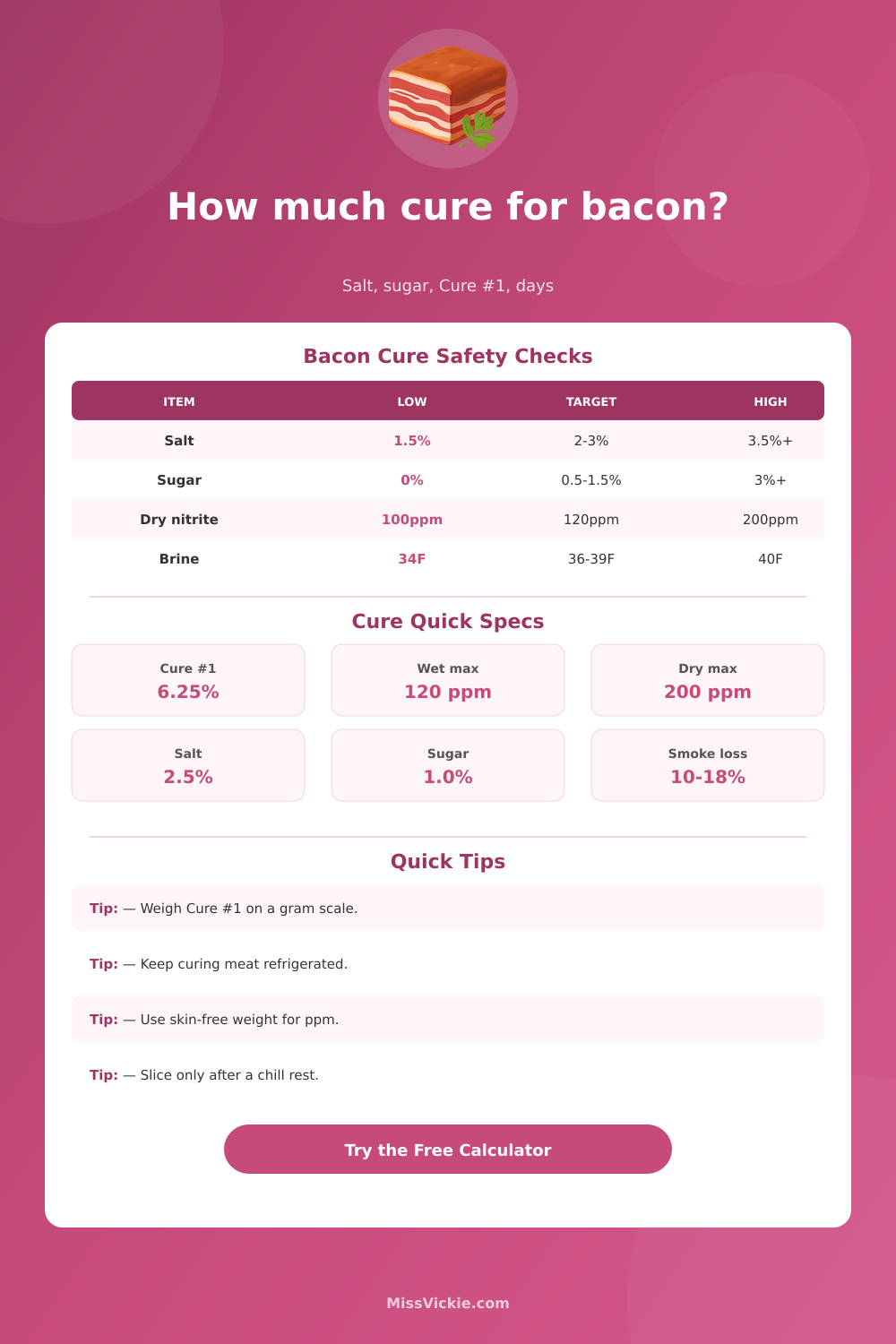
Prague Powder #1 is commonly 6.25% sodium nitrite and 93.75% salt.
Immersion or pumped bacon is checked against a 120 ppm nitrite ceiling.
Dry-cured bacon has a higher listed maximum ingoing sodium nitrite limit.
Keep the curing belly refrigerated and below standard cold-holding limits.
🛡Food-safety reference tables
| Curing item | Typical calculator range | Safety check used here | Reference basis |
|---|---|---|---|
| Cure #1 concentration | 6.25% sodium nitrite | All Cure #1 grams are based on 62.5 mg sodium nitrite per gram of Cure #1. | Standard Cure #1 formulation used for ingoing nitrite calculations. |
| Dry-cured bacon nitrite | 120 to 156 ppm common target; 200 ppm maximum check | Warnings appear above the dry bacon maximum or when entered very low. | 9 CFR 424.22 lists 200 ppm sodium nitrite maximum for dry-cured bacon. |
| Immersion or pumped bacon nitrite | 100 to 120 ppm target | Warnings appear above 120 ppm for wet, cover-brine, or bag-brine bacon. | 9 CFR 424.22 lists 120 ppm sodium nitrite maximum for immersion-cured bacon. |
| Refrigerated curing temperature | 34 to 40°F / 1 to 4°C | Risk rises above 40°F or below the zone where curing slows sharply. | FSIS cold food handling guidance uses 40°F as a key refrigeration limit. |
| Cooked pork temperature | 145°F / 63°C with 3 minute rest for whole cuts | This calculator sizes cure only; cooking still needs a food thermometer. | FSIS safe minimum internal temperature chart for pork whole cuts. |
References: 9 CFR 424.22 bacon nitrite limits and FSIS safe temperature chart. This tool is for kitchen planning and is not legal, medical, HACCP, or process-authority advice.
📝Salt, sugar, brine, and yield guide
| Bacon style | Salt range | Sugar range | Water amount | Smoke loss |
|---|---|---|---|---|
| Dry equilibrium slab | 2.0% to 2.75% | 0.5% to 1.5% | 0% | 8% to 16% |
| Pepper or savory bacon | 2.25% to 3.0% | 0% to 0.75% | 0% | 10% to 18% |
| Maple or brown sugar bacon | 2.0% to 2.5% | 1.25% to 2.5% | 0% to 15% | 10% to 20% |
| Equilibrium bag brine | 1.8% to 2.5% | 0.5% to 1.5% | 10% to 35% | 8% to 16% |
| Cover immersion brine | 2.5% to 4.0% in brine system | 0.5% to 2.0% | 40% to 100% | 8% to 15% |
⏱Thickness and cure-day planning table
| Thickest belly point | Dry bag estimate | Bag brine estimate | Cover brine estimate | Turn or massage note |
|---|---|---|---|---|
| 1 inch / 2.5 cm | 5 to 7 days | 4 to 6 days | 4 to 6 days | Turn daily for even surface contact. |
| 1.5 inches / 3.8 cm | 7 to 9 days | 6 to 8 days | 6 to 8 days | Massage sealed bags gently during turns. |
| 2 inches / 5.1 cm | 9 to 12 days | 8 to 10 days | 8 to 10 days | Keep cover brine fully submerged. |
| 2.5 inches / 6.4 cm | 12 to 15 days | 10 to 13 days | 10 to 13 days | Extra-thick bellies need conservative timing. |
💡Bacon cure calculation notes
Use weight, not spoons: Cure #1 and salt should be weighed. Different kosher salts have very different spoon volume.
Base ppm on meat: This calculator checks nitrite against estimated skin-free belly weight, not finished bacon weight.
Keep it cold: Cure in the refrigerator, keep brines covered, and discard batches with off odors, slime, or temperature abuse.
Rest before slicing: Chill smoked bacon thoroughly so fat firms, smoke equalizes, and slice thickness stays consistent.
So what’s the magic number? When will that pork belly turn from bland and potentially dangerous to delicious and ready for slicing? The truth is: It all depends.
The amount of cure to apply depend on the desired level of flavor/saltiness and size of meat. It also depends on whether you choose dry or wet curing and which specific curing technique you use. Get math wrong, and you’ve either got a oversalted sausage that no one wants to eat, or worse yet, you’ll undercure it and have yourself a pork belly full of pathogens.
How to Use the Curing Calculator
Plug in amount of belly you want to cure and its thickness. Add whether you’re using a wet or dry cure and target level of nitrites you want in your product. The calculator do the rest. It spits out how many precise grams of each ingredient, sugar, salt, and Cure #1; to keep it within safe parameters. Nitrite limits differs between brines and dry cures, and both time and temperature affect result. It even factors in weight of skin on meat, how much it loses to smoke, and how dilute brine will be. This ensures the final result accurate predicts what you’ll end up slicing into.
It’s also important to know that cure time are far more dependent than most folks realize. For instance, a two inch thick slab might take around 10 days until the cure has fully penetrate into middle of meat whereas a single inch belly will be done within a week if steady conditions prevail. Your calculation depend entirely on thickest part of what you are curing and method you select, which gives you a rough estimate of days rather than a specific number. This prevents pulling meat too early or letting it cure too long and ruining texture.
Another option is using a brine versus a dry rub. For a brine, a bag brine adds measured water that carries salt and nitrite into the meat more evenly, which shorten the time needed for thicker pieces. With an immersion brine, there must be sufficient liquid to cover all of the meat; the calculator will warn you if it appears otherwise, and adjust the water percentage accordingly.
Dry rubs skip the water altogether and depend based off direct contact. This is good for thinner bellies, for example. It is also good if you prefer a strong seasoning on the outside.
Behind all good batches is temperature control. Refrigeration for curing is key, because even a few degrees above safe zone can allow unwanted bacterial growth or slow down salt penetration. So if your temps are outside normal cold range, the calculator will flag them so you could of caught it before putting the meat in.
The final variable most home curers neglect is smoke loss. A belly will lose anywhere from 10-18% of its weight as it dries, smokes and chills. To account for smoke loss in the final yield, the calculator includes this loss, so you can anticipate how much meat to expect after curing and decide if you should start with a bigger belly based off how many people you want to serve.
By combining all of these inputs, you go from guesswork to a repeatable process. Weigh your ingredient and plug the numbers into the app. You will get a plan that considers taste, safety, and what you can actualy do in your kitchen.