
Staring at a wall of apples in grocery store can be enough to make you crazy, how do you know which one’s going to hold up to baking in a tart (or even just look nice in a bowl)? You probably don’t, and this isn’t uncommon. You treat all your fruits the same, even if a sliced apple for salad is very different than the one you’ll bake in a warm pie filling. Knowing the sweet scale makes snacking and cooking so much more different.
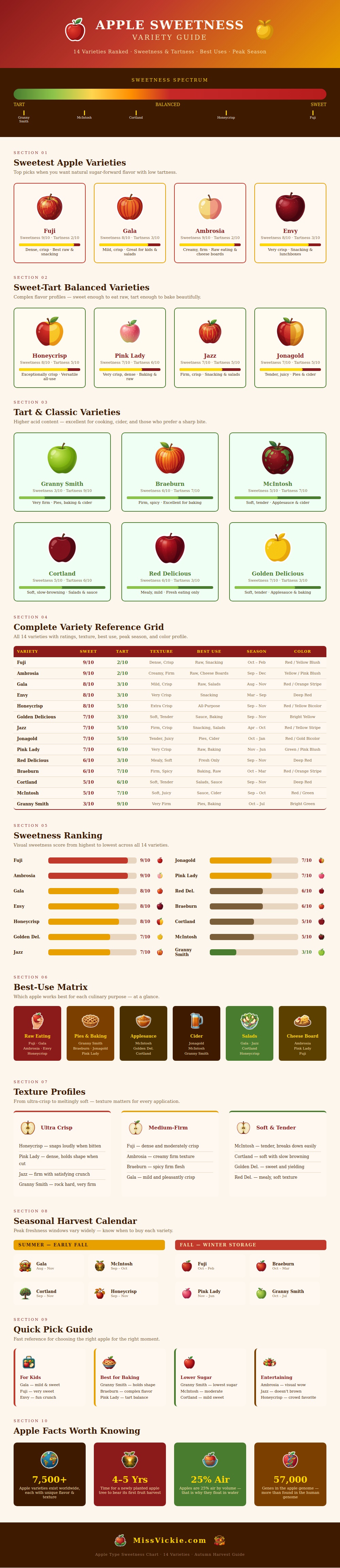
Sweet to Sharp: How do we put it all into context? Here’s a chart ranking 14 popular varieties by taste, sweet to sharp (and then also tart to low-tart). It’ll teach you to choose by more than just color and instead by purpose and texture; and it will help you quit guessing!
How to Choose the Right Apple
On one end of the scale are sweet apples like Ambrosia and Fuji, which has a lot of sugar but not much tartness. Because of this combination of density and crunch, these is great apples for eating out-of-hand, or paired with strong cheeses. Consider using them as an indulgent but guilt-free snack. Their firm flesh holds up nicely, meaning it doesn’t turn to goo in your palm or on a cheese plate.
Below that (moving down the sweetness/tartness spectrum) is the well-balanced range, which include varieties that will work for baking. Think Honeycrisp, Pink Lady, varieties that has both sweetness and something tangy. This create a rich, rounded flavor for a pie, not one that’s overly sweet. Without the acidity to cut against the fat in the crust and butter, it would of just be unpleasantly over-sweet.
A lot of folks fail at baking because they assume they must use only the most sugary-tasting apple. But if you’re going to add lots of sugar, you want a little bit of bite to offset it. And these mid-range apples is very sweet to the tongue, but they makes an extremely loud snapping sound when you take a bite. They satisfy your mouth with a great crunch, no matter if you enjoy them fresh or lightly cooked.
Then there are the tart classics, like the Granny Smith. Why? Because it’s an apple that delivers both: It has very low sweetness, but also high acidity. That means structure in desserts, and it means the go-to for pies (why else would you use a Granny Smith?) is because they holds their shape when heated. Bake a soft, mealy apple in your pie and you’ll end up with soup rather than slices.
As the chart shows, not only do apples differ by flavor but by texture, and texture determines usage. Soft apples like McIntosh are ideal for cider or sauce; firm ones like Granny Smith and Braeburn can stands up to longer cooking time. Respect the fruit’s structure.
Seasonality also plays a huge role in what you should buy: Not all apples is equally fresh throughout the entire year. Some store longer and stay crisp when other fruits has turned to mush (hello, Braeburn and Fuji). Some have limited windows each year to be harvested (early fall finds include McIntosh and Gala). If you know what’s currently in season, you’ll know you’re getting your apple at its tastiest, most delicious state. You won’t have to settle for mealy, bruised Honeycrisps that lost their crunchy nature by being picked too late.
We don’t talk much about texture. But really: How do you like your apple? Rock hard, or meltingly soft? Creamy-firm, but still firm enough? Many people complain that Red Delicious has a mealy texture, but if you like that particular mouthfeel, use it just for fresh eating, the guide advises; it doesn’t holds up as well baked.
On the other hand, those super-crunchy apples offers a kind of experience you can’t get from a softer one. You can tell just by looking at them which ones go on the cutting board and which go in the saucepan.
In short: The perfect apple isn’t necessarily the sweetest; it’s whatever will work best for what you’re doing with it. If your little ones requires their sugar fix or you’re making a pie where acidity balances flavors, there’s an apple for each of those tasks. What do you want at the end? That’s the question to ask yourself before picking up a bag.
A crisp, meaty crunch is just the thing for an uncomplicated snack, while a tangy pucker can make the sweet even sweeter. It makes all the difference when you have the right apple in hand.