How Much Alfredo Sauce For Pasta Calculator
Estimate Alfredo sauce for pasta by servings, dry pasta amount, pasta shape, coating style, add-ins, and reserve pasta water so creamy dinners land right.
Choose a common meal, then adjust the pasta shape, sauce richness, add-ins, and extra buffer to fit the way you serve Alfredo.
Full Sauce Breakdown
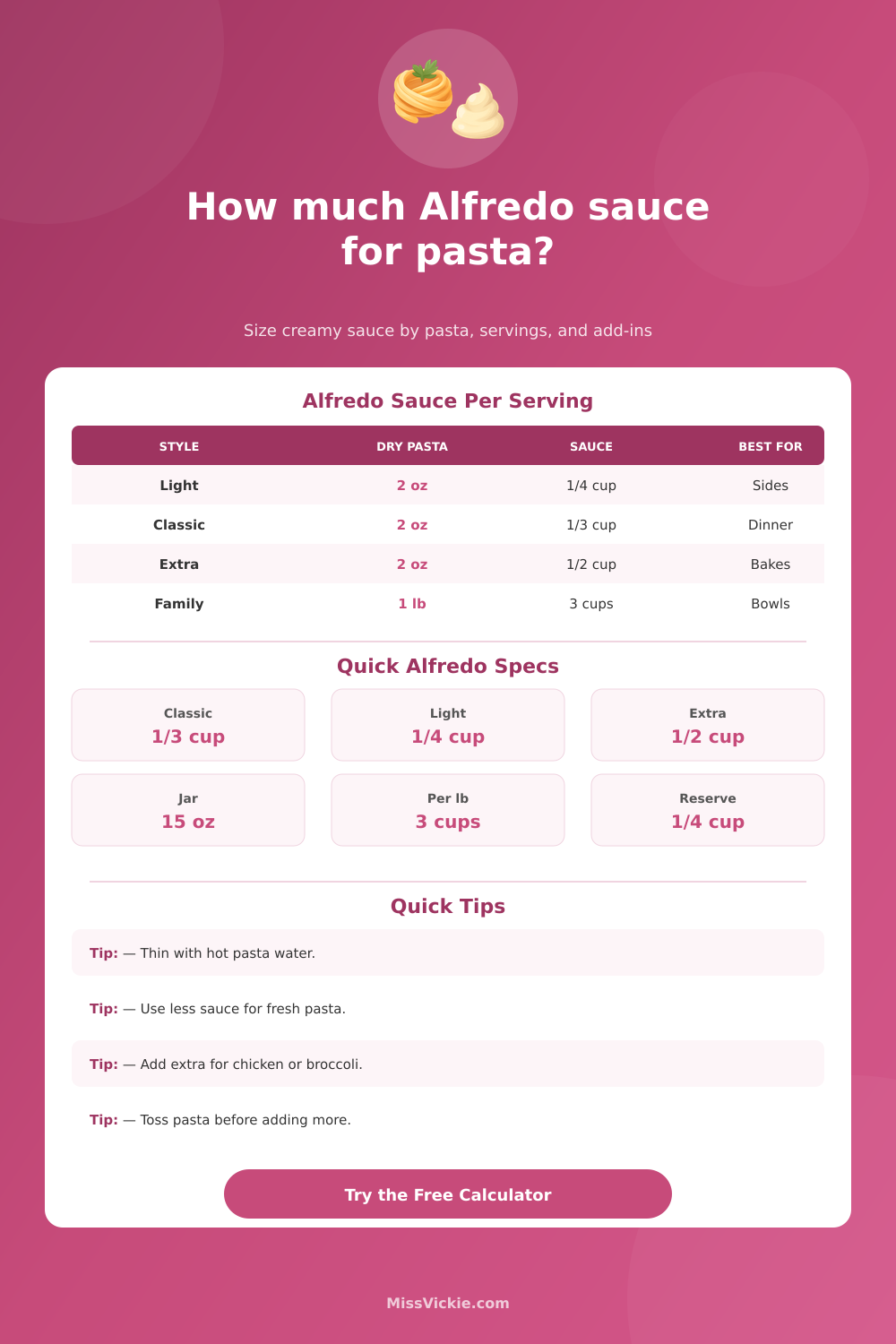
| Coating Style | Sauce Per 2 oz Dry Pasta | Sauce Per 1 lb Dry Pasta | Best Use |
|---|---|---|---|
| Lightly coated | 1/4 cup / 60 ml | 2 cups / 475 ml | Side dishes, rich homemade sauce, fresh pasta |
| Classic creamy | 1/3 cup / 80 ml | 2 2/3 cups / 630 ml | Fettuccine Alfredo, weeknight dinners, family bowls |
| Extra saucy | 1/2 cup / 120 ml | 4 cups / 950 ml | Restaurant-style plates, leftovers, protein add-ins |
| Baked Alfredo | 1/2 to 5/8 cup / 120 to 150 ml | 4 to 5 cups / 950 to 1185 ml | Casseroles, tray bakes, pasta held warm |
| Pasta Shape | Sauce Adjustment | Why It Changes | Tossing Note |
|---|---|---|---|
| Fettuccine or tagliatelle | Base amount | Wide ribbons hold creamy sauce evenly | Toss off heat with small splashes of pasta water |
| Penne or rigatoni | Add 8 to 12% | Tubes trap sauce inside and between ridges | Stir longer before judging the final sauce level |
| Spaghetti or linguine | Use 95 to 100% | Long strands coat quickly with less cling | Add sauce gradually so strands do not turn heavy |
| Fresh egg pasta | Use 85 to 90% | Fresh pasta is tender and usually served lighter | Finish gently so the pasta does not break |
| Group Size | Dry Pasta | Classic Sauce | Jar Estimate |
|---|---|---|---|
| 4 servings | 8 oz / 227 g | 1 1/3 cups / 315 ml | About 0.7 of a 15 oz jar |
| 6 servings | 12 oz / 340 g | 2 cups / 475 ml | About 1 jar |
| 12 servings | 24 oz / 680 g | 4 cups / 950 ml | About 2 jars |
| 25 servings | 50 oz / 1.4 kg | 8 1/3 cups / 2 L | About 4.2 jars |
| Add-In | Extra Sauce | Reason | Practical Cue |
|---|---|---|---|
| Chicken | Add 10% | Cooked chicken absorbs creamy sauce on the surface | Coat chicken separately before combining |
| Shrimp | Add 6% | Shrimp needs shine without much absorption | Fold in at the end to avoid overcooking |
| Broccoli or vegetables | Add 12% | Vegetable florets hold sauce in small pockets | Drain vegetables well before tossing |
| Mixed protein and vegetables | Add 18% | More surface area needs more coating | Keep a little sauce back for final finishing |
Classic coating for about 8 standard dinner servings.
Usually covers 10 to 12 oz dry pasta at classic coating.
Per pound is safer when the pasta absorbs sauce in the oven.
Per pound helps loosen sauce without making it taste flat.
Determining teh correct amount of Alfredo sauce is important because the amount of Alfredo sauce that you use will affect the quality of the meals. If you use too little Alfredo sauce, the pasta will end up being dry and not flavorful. If you use too much Alfredo sauce, the pasta will be heavy with the sauce pooling at the bottoms of the bowl.
The amount of Alfredo sauce you need will depend upon a few different factors. The first of these factors is the shape of the pasta you will be using for your Alfredo sauce dish. For example, wide pasta shapes will require a different amount of Alfredo sauce than hollow pasta shapes.
How Much Alfredo Sauce to Use
For pasta with a wide shape, such as fettuccine, a moderate amount of Alfredo sauce will work best. For hollow pasta shapes, like penne or rigatoni, you will need more Alfredo sauce so that each piece of pasta is coat in the sauce. For long and thin pasta shapes, like spaghetti, you will need a medium amount of Alfredo sauce.
Additionally, if using fresh egg pasta, you will need less Alfredo sauce. This is due to the moisture content of fresh egg pasta. You can use the calculator to select a pasta shape so that the calculator can adjust the amount of Alfredo sauce that is needed automatically.
Another factor that will impact the amount of Alfredo sauce is the ingredient that you add to the pasta. If you add proteins and vegetables to the pasta, you will need to increase the amount of Alfredo sauce. This is due to the fact that the proteins and vegetables will increase the total surface area of the food being prepared.
For example, chicken will require more Alfredo sauce than shrimp due to the increased surface area of the chicken. Additionally, vegetables with crevices, like broccoli, will require more Alfredo sauce so that the sauce can coat the entire vegetable. These add-ins can be selected on the calculator to add the needed amount of Alfredo sauce for these ingredients.
The type of Alfredo sauce that is used will change the amount of Alfredo sauce that you need to add to the pasta. For example, homemade Alfredo sauce can become thicker as it sits and prepares, so you may need less Alfredo sauce with this type of sauce. Jarred Alfredo sauce can be thinner than homemade Alfredo sauce, so more of this type of sauce may be needed.
Additionally, milk-based Alfredo sauce will spread well on the pasta, but dairy-free alternatives, like cashew Alfredo sauce, may require an entirely different amount of sauce to adhere to the pasta. You can choose the type of Alfredo sauce on the calculator for the sauce to become a factor in determining the amount of sauce needed. Another consideration for Alfredo sauce is the use of reserved pasta water.
This pasta water contains starch that will help the Alfredo sauce bind to the pasta. Using a small amount of pasta water will help loosen the Alfredo sauce to coat the pasta, but using too much pasta water will dilute the Alfredo sauce. A setting on the calculator allows you to choose how much pasta water you wish to reserve for your Alfredo sauce.
An extra buffer of Alfredo sauce can be added to account for the pasta sauce drying out. This may happen if you are making a casserole or if you are taking the pasta to a potluck for others to share. This extra buffer will ensure that the pasta will stay moist.
Additionally, an extra buffer can account for the Alfredo sauce that may remain on the serving spoon or that may evaporate while heating. The percentage of an extra buffer can be selected on the calculator to ensure that there is enough Alfredo sauce for the whole meal. Many people make the mistake of adding too much Alfredo sauce because they judge the level of the sauce while the pasta is still in the pan.
When the pasta is hot, the Alfredo sauce may appear to be too loose for the pasta. However, as the cheese from the sauce melts, the sauce will become thicker. Tossing the pasta for one minute will allow the sauce to even out.
Do not drain all of the pasta water when preparing the Alfredo sauce dish. Leaving a small amount of pasta water allows the Alfredo sauce to reach all areas of the pasta. The number of people that will eat the pasta will impact the amount of Alfredo sauce needed.
For example, four servings can be prepared for a small dinner, but forty servings may be needed for a large group. Additionally, if serving a large group, more Alfredo sauce may be needed so that the guests can have second helping. The number of servings can be changed on the calculator to adjust for the number of people that will be eating the pasta.
The reference tables provide the same information as the calculator with the information presented in a different format. These tables will be of help if you would like to confirm the amount of Alfredo sauce needed before you go to the store to purchase the sauce. Additionally, these reference tables will help you to understand the sauce and pasta quantities if you are preparing multiple amount of the pasta dish.
The goal is to ensure that every bite of pasta has the same amount of Alfredo sauce. By understanding the factors that will impact the amount of Alfredo sauce for the pasta, the calculator will determine the proper amount of sauce to add to the pasta. The calculator will ensure that the sauce amount is correct so that the meal isnt too dry or too heavy with the Alfredo sauce.