
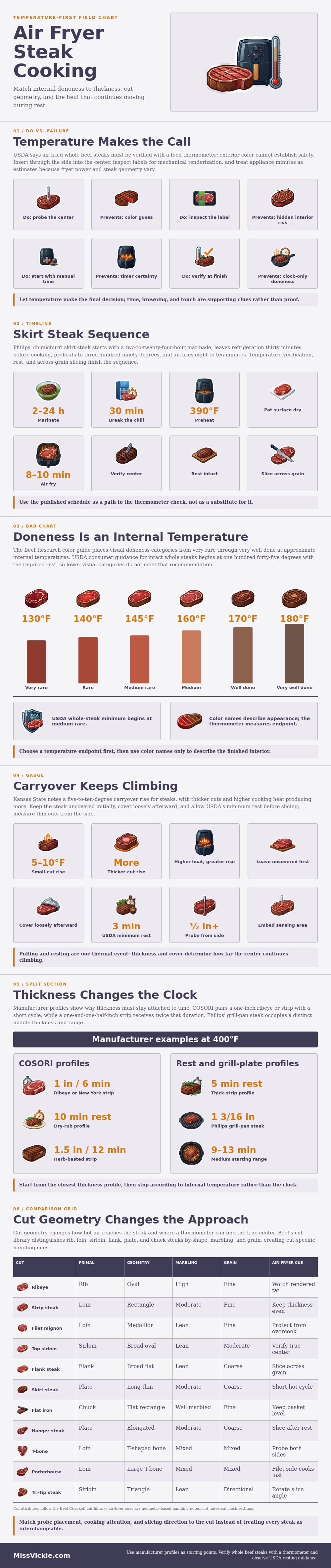
With steak, the air fryer will alter your cooking forever. A crusty restaurant-quality steak without any mess? No problem. And no splattering grease. But most people trip up when they try to cook their strip steak or ribeye in the thing. They treat it as if it’s a microwave. They follow the timer, trusting device over their own taste buds. They set it for 12 minutes then pick up their cellphones and wait.
Wrong. The timer is just a guide. The actual event occur within the piece of meat. There’s no connection between the time on the air fryer’s digital display and what takes place inside. It’s all in your head. “But it looks cooked.” That’s what you see when you cut open steak: brown, right? Not so much. According to the USDA, nope. Color isn’t an indicator; not at all. And there is no such thing as judging doneness by eye (or smell).
How to Cook Perfect Steak in an Air Fryer
Bring out the meat thermometer. This is really simple stuff, and yet why do we ignore it? Because it’s too difficult, right? Well, insert probe into center of biggest section of the meat. How else will you know when it’s finished? By guessing. Guessing doesn’t always mean delicious. By matching the inner temperature with the doneness level it eliminates that grey area we are used to: “I want medium”. What one person calls well done might be medium to someone else. When you take the emotion away and focus on a numerical goal (typically ~145 degrees for medium rare) it all comes together better.
Why? Because not all meats is shaped alike. An oval shaped, thick cut ribeye is different than a thin cut, flat flank steak. Heat moves through both in different ways based off how air flows around it. Respect the meat’s shape. Don’t try to cook a thick New York strip the same way you would a thin skirt steak. One will end up being undercooked while the other is overcooked.
Another variable that trips up even the most veteran cook are carryover cooking. When you remove the steak from the basket, the heat doesn’t just stop. Heat radiates from the outside (hotter) to the inside (cooler). That’s maybe a degree or two for a thin cut. It might be a lot more for a thick cut seared at high temps. Pulling it at your target temp means you’ll overshoot by the time it rests. So pull it a little early and then let it rest. Don’t cover it tightly in foil; allow it to breathe, as trapped steam cause the crust to get soggy. Allow it to spread its juices while letting heat even out. Resting also lets the final bite be what you intended, rather than what timer told you.
Air frying steak isn’t really a recipe thing; it’s an “okay, what do I need to do here” kind of deal. First, you look at the time recommended by the appliance’s maker (that’s your starting point). Then, you listen to thermometer (stop there). Next, you remember if it is thicker or thinner and adjust accordingly. Then, you think ahead to the fact that things will still cook after being removed from the fryer (account for this). Afterward, you cut it against grain to make it tender.
The entire process requires more active work than tossing it into the oven and forgetting about it. But man does it pay off. What you get is a deliciously seared exterior and perfectly medium-rare interior. The key is to trust the tool, not the clock. You should of used a thermometer from the start. It would of helped avoid mistakes. Actualy, making sure you use one is moddern way to cook steak perfectley.