Adobo Seasoning Per Pound of Meat Calculator
Scale adobo seasoning for chicken, pork, beef, seafood, turkey, tofu, or mixed meats with salt control, garlic, oregano, cumin, chile heat, vinegar or citrus marinade, cooking method, servings, and batch reserve.
Choose a real cooking setup, then fine-tune the meat weight, protein, adobo style, salt level, spice ratios, marinade liquid, heat, method, servings, and reserve.
Your Adobo Seasoning Plan
Calculated for your selected meat, seasoning style, and cooking method.
Batch Breakdown
Seasoning Components
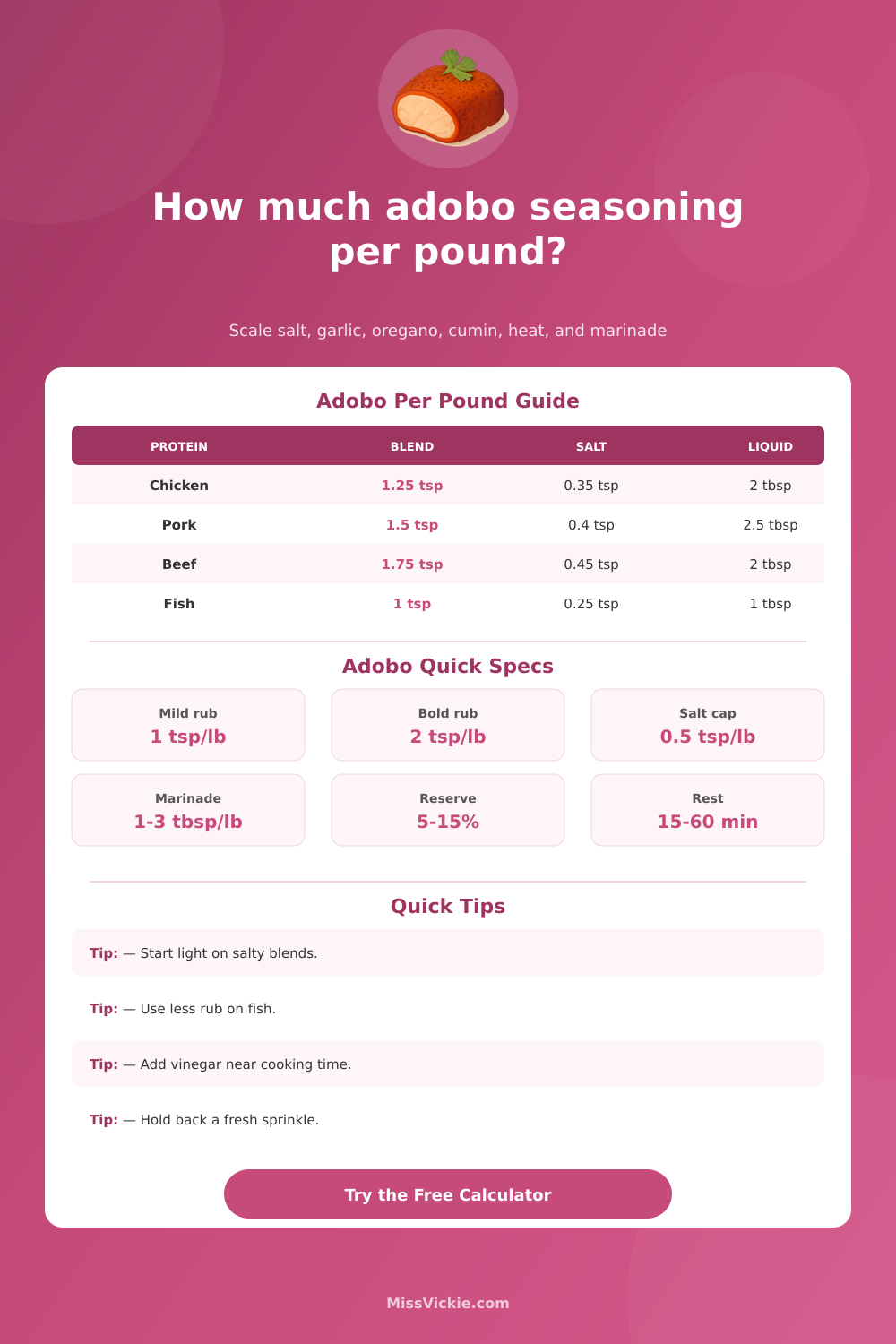
| Protein | Dry adobo per pound | Salt comfort zone | Vinegar or citrus | Rest before cooking |
|---|---|---|---|---|
| Chicken thighs or drumsticks | 1.25 to 1.75 tsp | 0.30 to 0.45 tsp | 1.5 to 2.5 tbsp | 30 minutes to overnight |
| Chicken breast or turkey | 1.1 to 1.5 tsp | 0.25 to 0.38 tsp | 1 to 2 tbsp | 20 minutes to 4 hours |
| Pork shoulder, ribs, or chops | 1.5 to 2 tsp | 0.35 to 0.50 tsp | 2 to 3 tbsp | 1 hour to overnight |
| Beef steaks or roasts | 1.4 to 2.1 tsp | 0.35 to 0.50 tsp | 1 to 2.5 tbsp | 30 minutes to overnight |
| Fish, shrimp, or scallops | 0.75 to 1.25 tsp | 0.18 to 0.30 tsp | 0.5 to 1.5 tbsp | 10 to 25 minutes |
| Tofu or tempeh | 1.25 to 1.75 tsp | 0.25 to 0.40 tsp | 1.5 to 3 tbsp | 30 minutes to 8 hours |
These ranges assume fine salt in the seasoning blend. If your bottled adobo is already salty, choose a lighter salt level and add more garlic, oregano, cumin, or chile instead.
| Adobo style | Best fit | Garlic lean | Oregano lean | Cumin lean |
|---|---|---|---|---|
| Balanced everyday adobo | Chicken, pork, turkey | Medium | Medium | Medium |
| Puerto Rican style | Pork, chicken, beans | High | High | Low to medium |
| Mexican dry adobo | Beef, pork, tacos | Medium | Medium | High with chile |
| Citrus grill adobo | Chicken, shrimp, fish | High | Low to medium | Light |
| Smoky roast adobo | Roasts and ribs | Medium | Medium | Warm |
| Wet adobo marinade | Slow cooking and braises | High | Medium | Medium |
| Method | Dry blend adjustment | Liquid adjustment | Why it helps | Watch point |
|---|---|---|---|---|
| Grill or broiler | Use full amount | Keep moderate | Dry spices brown well | Too much sugar can scorch |
| Skillet or saute | Slightly lighter | Light splash | Fast cooking concentrates salt | Deglaze before spices burn |
| Oven roast | Use full amount | Moderate paste | Long contact seasons deeply | Reserve some for finishing |
| Slow cooker or braise | Add 10% more | Use standard acid | Liquid dilutes dry rub | Taste sauce before serving |
| Fish or shrimp | Use 20% less | Keep acid short | Delicate flesh seasons fast | Long acid makes texture firm |
| Tofu or tempeh | Use full amount | Use higher liquid | Porous pieces absorb marinade | Press tofu first |
| Raw meat | Light adobo | Balanced adobo | Bold adobo | Standard liquid |
|---|---|---|---|---|
| 1 lb | 1 tsp | 1.5 tsp | 2 tsp | 2 tbsp |
| 2 lb | 2 tsp | 1 tbsp | 4 tsp | 4 tbsp |
| 3 lb | 1 tbsp | 4.5 tsp | 2 tbsp | 6 tbsp |
| 5 lb | 5 tsp | 2.5 tbsp | 3.3 tbsp | 10 tbsp |
| 10 lb | 3.3 tbsp | 5 tbsp | 6.7 tbsp | 1.25 cups |
| 25 lb | 8.3 tbsp | 12.5 tbsp | 1 cup | 3.1 cups |
Best when the meat will also meet salty sauces, bouillon, olives, or cured pork.
A steady all-purpose target for chicken thighs, pork chops, turkey, and mixed grill plates.
Works well for taco meat, grilled steak, ribs, and roasted vegetables served with rice.
Turns the dry blend into a paste with vinegar, citrus, oil, or sour orange for deeper contact.
A good adobo have a balanced taste of earthy spice, garlic, savory notes, and tang. That’s a flavor profile you probably already understand, which means most people use the packet as if it were some kind of magic wand, dumping shake-on powder everywhere with abandon. The problem? It’s just bad math.
Double the amount of meat without doubling the amount of vinegar, and what do you get? Blah and dried out. Forget to account for all the hidden salt in your spice blend, and bye-bye tasty meat before it even hits the pan. But the calculator takes care of that for you. Instead of spitting out a general “seasoning” number, it breaks it out into usable components.
Why You Need This Adobo Calculator
Why? Because various type of protein will take to flavor differently. For example, chicken thighs has some fat on them so they’re pretty forgiving; they’ll handle more cumin and more garlic powder just fine. But fish fillets is tender and relatively lean, which means they can absorbs being easily overwhelmed by too much spice or acidity. It adjusts for this structure automatically.
Let’s focus on the salt factor for example. Most commercial adobo mixes is pretty heavy on salt. You will need to use different proportions if you add your own spice blend (oregano, pepper) or use a low-sodium blend. That’s why we separate the salt input from the spice volume. It allows for a more precise flavour and gives you some degree of control over your diet. Maybe you want pork shoulder that’s spicy-hot with cayenne but not so salty. Being able to vary these inputs separately help create a specific taste for your kitchen.
Another common mistake is how you manage acid. While acid adds brightness to dishes, it also breaks down proteins. Citrus and vinegar do this. Even if you have a small amount of liquid in your slow cooker, that will happen over time as it cooks (hours). Add acid just prior to grilling, because otherwise it’s gone, no more acid, just notes of sweetness and salt. How much liquid? That depends on how you cook it, so the tool takes that into account.
Grilled foods gets that nice crispy crust without losing any flavor. Braising meat stay tender. Reserve seasoning: Home cooks usually overlook this one until their dinner’s already on the plate and under seasoned. It is a wise move to reserve 10-15 percent of your rub. Apply most of it when first rubbing for surface penetration. Sprinkle what’s reserved post-shredding or browning to add depth (you can’t get that by just using one dose). The calculator factors in your reserves so that you remember not to consume all of it at once.
And there’s rest time. For dry rubs, let them sit long enough for the flavor to get deeper than the outer muscle fibers. For wet marinades that are heavy on acid, too much contact will change surface proteins, giving your fish or chicken a weird, cooked-on-the-surface texture even before you apply any heat. Again, density and fat content of the ingredients affect the resting window, which is why it’s all laid out in the tool’s reference tables. It is not just about waiting around; it is about knowing when you have waited long enough so you do not mess with texture while pursuing intensity.
Since cooking depends on working with the limits of your ingredients, how can you coax flavor out of tough meat that needs time? And how do you showcase delicate seafood without overpowering it? Sure, the calculator doesn’t make dinner for you, but it takes the guessing out of proportions. Why add too much salt when it will only compete against heat? Why add too much vinegar when there’s no hope of soaking into dense meat?
Begin with presets if you’re new to this and adjust variables along the way until you know what works for you. The point is to be satisfied every single time, without throwing away meat while panicking in the middle of cooking. You should of used the tool more often. Actualy, the process could of been easier.
Making adobo can be luxurius if done right, but most people just make it different than they should. It’s naturaly hard to get it perfect.